
No products in the cart.
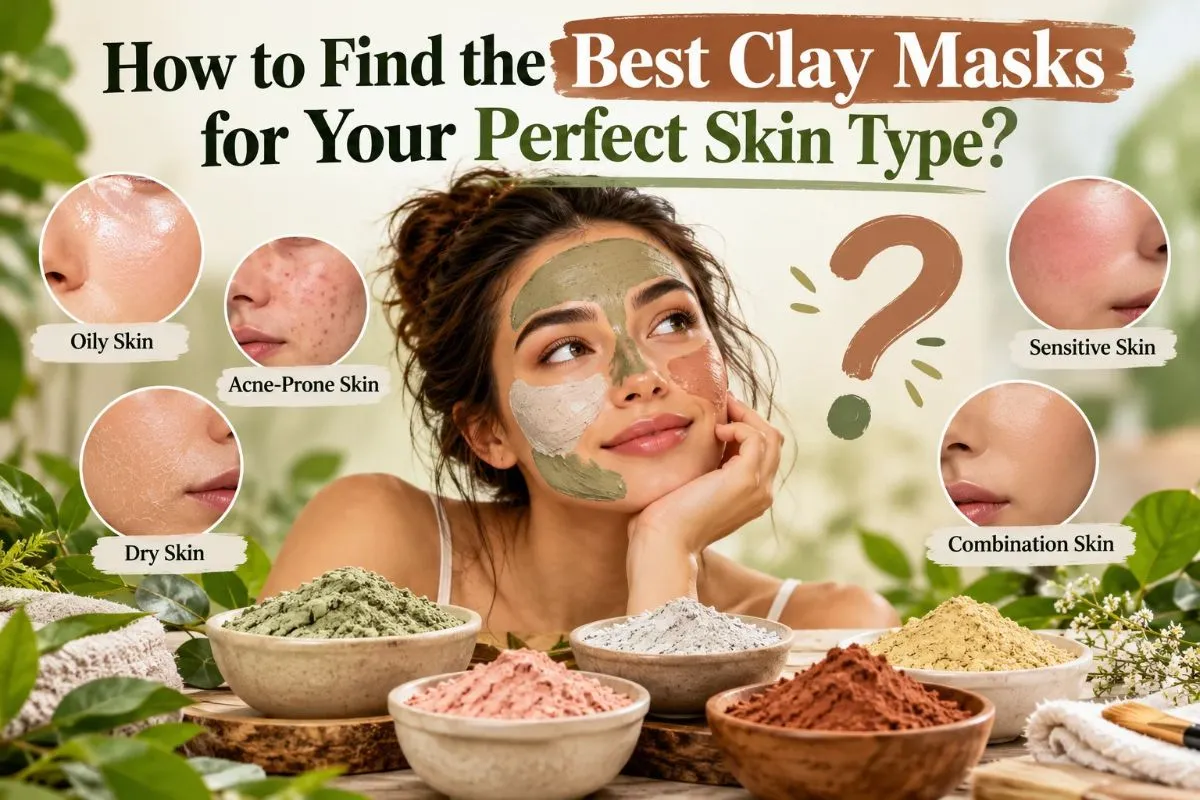
Choosing from the best clay masks can feel surprisingly confusing. Bentonite promises serious oil absorption, kaolin sounds gentler, Multani Mitti has generations of traditional use behind it, and pink or green clays seem to appear everywhere. Yet the best clay mask for face care is not necessarily the strongest or most expensive one. The right choice depends on your skin type, how oily or dry your skin feels, the concerns you want to target, and what other ingredients are included in the formula. Even good clay masks can leave skin uncomfortable when they are poorly matched to what your skin actually needs.
Here is where things get interesting: two people can use the exact same clay mask and have completely different experiences. One may love the fresh, balanced finish, while the other is left feeling tight and dry. So, what actually separates the best facial clay mask from one that sits forgotten in your bathroom cabinet? The answer has less to do with trendy colors and more to do with the clay’s absorbency, your skin barrier, supporting ingredients, and one choice many people overlook. Let’s find out which clay truly belongs on your skin.
Quick Answer: Which of the Best Clay Masks Does Your Skin Need?
If you want the short version, choose clay for skin according to both your skin type and your main concern.
| Skin Type or Concern | Clays to Consider | What to Look For |
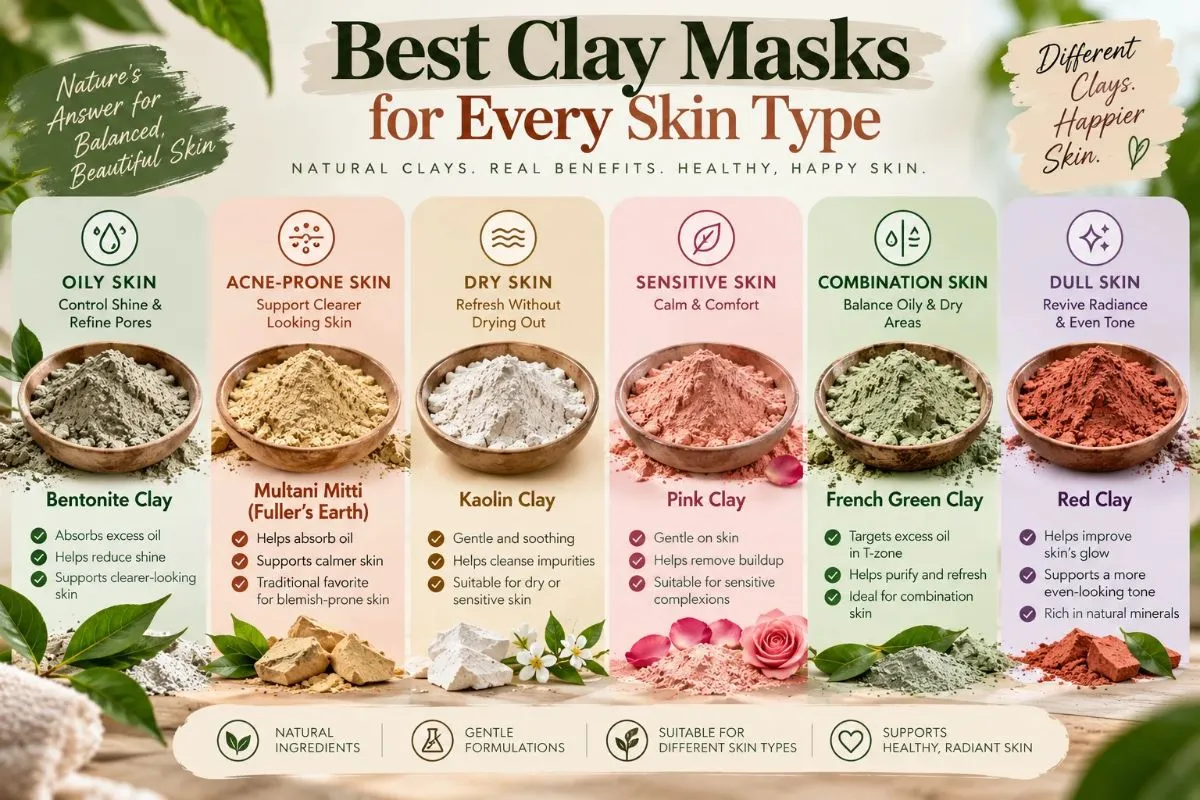
| Oily skin | Bentonite, Multani Mitti, French green clay | Oil absorption plus gentle hydrating ingredients |
| Acne-prone skin | Bentonite, kaolin, Multani Mitti | Clay combined with ingredients such as niacinamide or salicylic acid where appropriate |
| Dry skin | White kaolin, pink clay | Gentle clay plus glycerin, aloe vera or hyaluronic acid |
| Sensitive skin | White kaolin, pink clay | Simple formulas with soothing, fragrance-conscious ingredients |
| Combination skin | Kaolin plus stronger clay on oily areas | Multi-masking or targeted application |
| Dull-looking skin | Kaolin, Multani Mitti or gentle mineral blends | Antioxidants and brightening botanical ingredients |
| Very oily T-zone | Bentonite, green clay, Multani Mitti | Target the T-zone rather than automatically masking the entire face |
The best clay masks should leave your skin feeling refreshed and comfortable—not painfully tight, itchy or stripped.
What Does a Clay Mask Actually Do?
A clay mask is primarily valued for its ability to interact with surface oils and buildup. Certain mineral clays can absorb or adsorb excess sebum, which is one reason they are popular with people who experience shine, congestion and oily-feeling skin.
Kaolin and bentonite are among the most familiar clays for face products. However, different clays have different properties, and the finished formula matters enormously.
A facial clay product is rarely just clay. It may also contain humectants, botanical extracts, exfoliating acids, soothing ingredients, oils or other components that affect how the formula behaves on your skin.
This is important because stronger is not automatically better.
Removing too much surface oil can leave your skin feeling tight or uncomfortable. Someone with oily skin may appreciate a highly absorbent mask, while the same formulation could feel excessive on dry or reactive skin.
Therefore, when looking for good clay masks, think beyond the color of the clay. Look at the whole ingredient list and ask what the formulation is designed to accomplish.
Types of Clay: Which One Is Right for You?
Understanding the major clay varieties is one of the simplest ways to narrow down the best clay masks for your routine.
1. Kaolin Clay: The Gentle All-Rounder
Kaolin is one of the most widely used cosmetic clays and is generally considered gentler than highly absorbent bentonite. White kaolin is particularly popular in formulas intended for normal, dry or more sensitive skin. Different forms and colors of kaolin exist depending on their mineral composition.
Kaolin may help:
- absorb moderate amounts of surface oil;
- remove surface buildup;
- leave skin feeling cleaner;
- support a smoother-looking finish.
If your skin becomes uncomfortable whenever you use clay, a carefully formulated kaolin product may be a better starting point.
For many beginners, kaolin makes a good clay mask ingredient because it can provide the clay-mask experience without automatically going to the strongest possible option.
2. Bentonite Clay: Powerful Oil Absorption
Bentonite is famous for its high absorbency and is often found in products designed for oily skin. If you struggle with a shiny T-zone or excess surface oil, bentonite may deserve a place on your shortlist.
However, its strength is exactly why it needs thoughtful use. People with naturally dry or sensitive skin may find some bentonite-heavy formulas too drying.
The best clay mask for face use containing bentonite should still be well formulated and appropriate for your skin, not simply a container of the strongest clay available.
3. Multani Mitti: A Traditional Favorite
Multani Mitti, commonly called Fuller’s Earth, has a long history of use in South Asian beauty routines.
It deserves more attention because many international clay guides focus almost entirely on kaolin and bentonite. Also you can try Hudira’s Anti-Acne Face Mask for managing oily-looking skin and excess shine.
Multani Mitti is commonly used for its oil-absorbing and cleansing properties. This makes it appealing for oily or combination complexions. However, people with dry or sensitive skin should be cautious with frequent use because highly absorbent masks can sometimes leave skin feeling tight.
Instead of assuming that raw powder is automatically better, look at the entire formulation. A thoughtfully developed mask can combine Multani Mitti with botanicals and other ingredients to create a more balanced skincare experience.
4. French Green Clay: For Oily-Feeling Skin
French green clay is another popular choice for oil-control masks. Its distinctive color comes from its mineral composition and other naturally occurring components. It is typically favored by people with oily or combination skin rather than very dry complexions.
When comparing good clay masks, consider French green clay if your priority is excess shine. Still, apply it according to product directions and watch how your skin responds.
5. Pink Clay: A Gentler Option
Pink clay is often associated with gentler skincare formulations. Some pink clays are blends involving white and red kaolin. They are frequently marketed for normal, dry or sensitive complexions.
The color itself is not proof that a product is gentle, though. Always check the supporting ingredients. For someone who loves the ritual of a facial clay mask but dislikes that “cement face” feeling, pink clay may be worth exploring.
6. Rhassoul Clay: Mineral-Rich and Versatile
Rhassoul clay, traditionally associated with Morocco, is used in both skin and hair care. It can absorb oil while often being positioned as a more balanced option than some extremely strong clays.
It may work well for normal, combination or moderately oily skin, depending on the formulation.
Best Clay Masks for Oily Skin
When skin becomes shiny shortly after cleansing, your goal should be managing excess oil without turning masking into a battle against your skin.
The best clay masks for oily complexions often contain bentonite, French green clay or Multani Mitti. Look for formulations that also contain ingredients that support comfortable skin.
For example, aloe vera or lightweight humectants can help prevent a mask from feeling excessively harsh.
A best facial clay mask candidate for oily skin should:
- absorb excess surface sebum;
- rinse away without aggressive scrubbing;
- avoid leaving your face painfully tight;
- fit comfortably into your normal routine.
More masking does not necessarily equal less oil. Following the product’s recommended frequency is a far smarter approach.
Best Clay Mask for Acne-Prone Skin
Finding the best clay mask for face concerns related to acne requires a little more care.
Clay can help manage surface oil, but acne has multiple causes and cannot be solved simply by “pulling impurities” from the skin.
For oily, acne-prone complexions, kaolin or bentonite can be useful components of a supportive routine. A well-formulated product may also contain ingredients such as niacinamide, aloe vera or appropriately formulated exfoliating acids. Multani Mitti is another option frequently chosen for oily, breakout-prone skin.
However, avoid stacking multiple strong treatments without thinking about irritation. Using a powerful exfoliant, retinoid and aggressive mask in the same routine can be too much for some skin.
Best Clay Masks for Dry Skin
Yes, dry skin can sometimes use clay.
The secret is choosing carefully. The best clay masks for dry complexions are usually gentler formulas rather than intensely absorbent masks. White kaolin or a mild pink clay may be more suitable. Then look beyond the clay itself.
Ingredients such as:
can make a mask more appropriate for skin that needs additional comfort and hydration. A good clay mask for dry skin should not make tightness the goal. If your face feels dramatically drier after rinsing, your current product or frequency may not be right for you.
Best Facial Clay Mask for Sensitive Skin
Sensitive skin deserves a minimalist approach.
When looking for the best facial clay mask, start with formulas that use gentler clays such as white kaolin and avoid unnecessary ingredients that you already know irritate your skin.
Patch testing can also be valuable before applying a new product across the whole face. Most importantly, pay attention to what your skin tells you.
Burning, strong stinging or significant itching should not be interpreted as evidence that a mask is “working.” Wash the product off if irritation occurs.
Best Clay Mask for Combination Skin: Try Multi-Masking
Combination skin may benefit more from strategy than from buying the strongest product. Imagine that your nose and forehead become oily, but your cheeks feel dry. Using the same intense clay for skin across your whole face does not necessarily make sense. Instead, try multi-masking.
Apply a more absorbent formula to your oily T-zone while using a gentler mask on your cheeks or simply leave the dry areas alone. This approach can make even good clay masks more useful because you are matching the product to specific zones instead of treating your face as if every area behaves identically.
What About Dull or Uneven-Looking Skin?
People sometimes search for whitening clay, but healthy skincare should not be about bleaching or changing your natural skin color. A more useful goal is improving the appearance of dullness, uneven-looking tone and surface buildup.
Clay can help remove excess surface oil and residue, while complementary ingredients such as turmeric, niacinamide, vitamin C derivatives or antioxidant-rich botanicals may be included in formulas intended to support a brighter-looking complexion.
The best clay mask for face brightening should improve freshness and radiance without promising unrealistic changes to your natural complexion.
A Crucial Secret: Don’t Judge a Mask by Its Clay Alone
Here’s the part many skincare guides miss. Two masks can both contain bentonite and behave completely differently.
Why?
Because you’re applying a finished formulation, not an ingredient label. One product might combine clay with glycerin, aloe vera and soothing ingredients. Another may pair it with strong exfoliants or ingredients that your skin dislikes.
Consequently, the search for good clay masks should always include the supporting ingredients.
For oily skin, you might appreciate niacinamide, aloe vera or carefully formulated salicylic acid.
For dry skin, look for humectants and barrier-supportive ingredients.
For sensitive skin, simplicity often matters more than having the longest ingredient list.
That is what separates an average product from the best facial clay mask for your individual needs.
Should You Let a Clay Mask Dry Completely?
You do not need to deliberately wait until your face feels like cracked pavement. Follow the instructions provided with your particular product. Leaving a mask on substantially longer than recommended can increase the chance of dryness or irritation.
The American Academy of Dermatology similarly advises following mask-label timing because extended use may cause unwanted irritation. If the product tells you to rinse after a certain number of minutes, more time is not automatically more effective.
7 Clay Mask Mistakes That Can Ruin a Good Routine
Even the best facial clay mask cannot perform well if you use it incorrectly.
1. Assuming Stronger Means Better
Your goal is balanced skin, not maximum dryness.
2. Leaving the Mask on Longer Than Directed
More time may simply mean more irritation.
3. Using Clay Too Frequently
Daily masking is rarely necessary for most people.
4. Scrubbing Aggressively When Rinsing
Use lukewarm water and gentle motions.
5. Ignoring the Rest of Your Routine
A mask containing exfoliating ingredients combined with several other strong actives may overwhelm sensitive skin.
6. Skipping Moisturizer
Apply an appropriate moisturizer after rinsing unless the product directions say otherwise.
7. Treating Burning as a Positive Sign
Burning and significant stinging are warnings, not trophies.
Learning these simple habits can turn good clay masks into far more comfortable additions to your skincare routine.
Discover a More Thoughtful Skincare Ritual With Hudira
Ready to turn your skincare routine into something simpler, more mindful and naturally inspired?
Explore Hudira best face masks and discover face masks and botanical skincare created to support different skin concerns without turning self-care into a complicated guessing game. Whether you’re looking for an oil-balancing mask, a brighter-looking complexion or a refreshing weekly ritual, choose products according to what your skin genuinely needs.
FAQs
Q. Which clay mask is best for oily skin?
Bentonite, Multani Mitti and French green clay are commonly found in products aimed at oily skin because of their oil-absorbing properties. However, the best clay mask for face care should also contain ingredients that keep the formulation comfortable and appropriate for your individual skin.
Q. Can I use a clay mask if I have dry skin?
Yes, but choose carefully. Gentler kaolin or pink-clay formulas with ingredients such as glycerin, aloe vera or hyaluronic acid may be more appropriate. Start conservatively and stop using any mask that repeatedly leaves your skin uncomfortable or excessively dry. Many good clay masks are formulated with more than oil absorption in mind.
Q. Is kaolin or bentonite better for acne-prone skin?
Neither is universally better. Bentonite is generally more absorbent, making it attractive for very oily skin. Kaolin is typically gentler. The best facial clay mask for acne-prone skin depends on whether your complexion is oily, dry, combination or sensitive, as well as the complete formulation.
Q. How often should I use a clay mask?
Follow the instructions for your particular product. Some people use clay masks once or twice per week, but your ideal frequency depends on skin type, formula and the rest of your skincare routine. Using even the best clay masks too frequently can potentially cause dryness or irritation.
Q. Is Multani Mitti better than bentonite clay?
Both can absorb oil, but they are different mineral materials and should not be treated as interchangeable. Bentonite is known for strong absorbency, while Multani Mitti has a long history in South Asian skincare and is widely used for oily-looking skin. The best clay mask for face care is whichever well-formulated option suits your skin type, concern and tolerance.

Add comment