
No products in the cart.
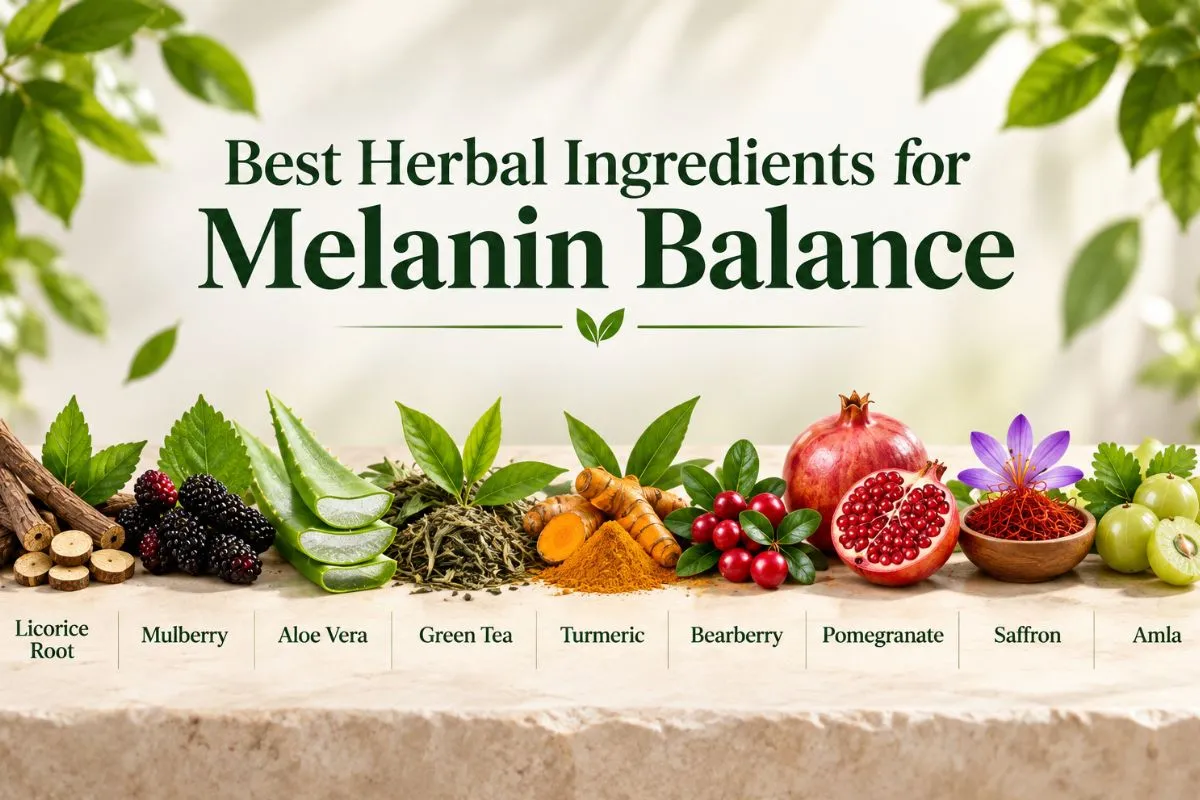
Uneven pigmentation can linger long after acne, sun exposure, or irritation has disappeared. That is why interest in a melanin supplement, botanical extracts, and herbs for lightening skin keeps growing. Yet melanin itself is not the enemy. It gives skin its natural color and helps protect it from ultraviolet radiation. A smarter goal is to support a more even-looking complexion when melanin production becomes concentrated in certain areas, creating dark spots, post-inflammatory marks, or patchy tone.
Here is the surprising part: a melanin food supplement and a topical herbal extract are not automatically doing the same job. Some botanicals have human evidence for hyperpigmentation, others are supported mainly by laboratory studies, and several are popular because of traditional use. So which ingredients deserve your attention? Below, we explore nine promising herbs, what their active compounds may do, how to use them, and how to approach melanin balance without harsh whitening claims or unrealistic promises.
What Does Melanin Balance Mean?
Melanin is produced by specialized cells called melanocytes and transferred through tiny structures called melanosomes. It contributes to the color of skin, hair, and eyes while also playing a protective role against UV radiation. Because of this, completely stopping melanin production would not be a sensible skincare goal.
When people search how to reduce melanin, they are often really asking how to improve hyperpigmentation, sun spots, melasma, or post-acne marks. The healthier approach is to support even-looking pigmentation while protecting the skin barrier and reducing triggers such as UV exposure and inflammation.
This is also why the phrase natural skin bleaching can be misleading. Good botanical skincare should not aim to erase a person’s natural complexion. It should focus on areas where pigment appears uneven or excessive.
Melanin Supplement vs Topical Herbal Ingredients
The term melanin supplement may suggest that one capsule can simply turn pigment up or down. In reality, pigmentation is influenced by genetics, UV exposure, hormones, inflammation, skin injury, and cellular signaling. There is no universally accepted oral product that can predictably “balance” melanin for everyone.
Likewise, melanin food supplement is not a standardized medical category. Products marketed around pigmentation may contain vitamins, antioxidants, minerals, or plant extracts, but their usefulness depends on their individual ingredients and evidence. Oral products can also interact with medicines or health conditions, so supplementation deserves more caution than a catchy label suggests.
Topical botanicals are different because several plant-derived compounds have been studied directly in relation to pigmentation pathways. Research has identified licorice, mulberry, aloe-derived aloesin, arbutin, green tea, turmeric, and ellagic acid as promising ingredients, although the quantity and quality of evidence differ between them.
How Do Herbs Influence Melanin Production?
Before choosing herbs for lightening skin, it helps to understand the science. One important target is tyrosinase, an enzyme involved in the biochemical steps that create melanin. Natural tyrosinase inhibitors have therefore become an important area of pigmentation research.
Other botanicals work more indirectly. Antioxidants may help reduce oxidative stress associated with UV exposure, while anti-inflammatory plant compounds can support skin affected by acne or irritation. Some ingredients may also influence pigment dispersion or the gradual removal of pigmented surface cells.
These different pathways explain why one herb rarely does everything. A thoughtful routine combines complementary botanical actions rather than relying on one “miracle” ingredient.
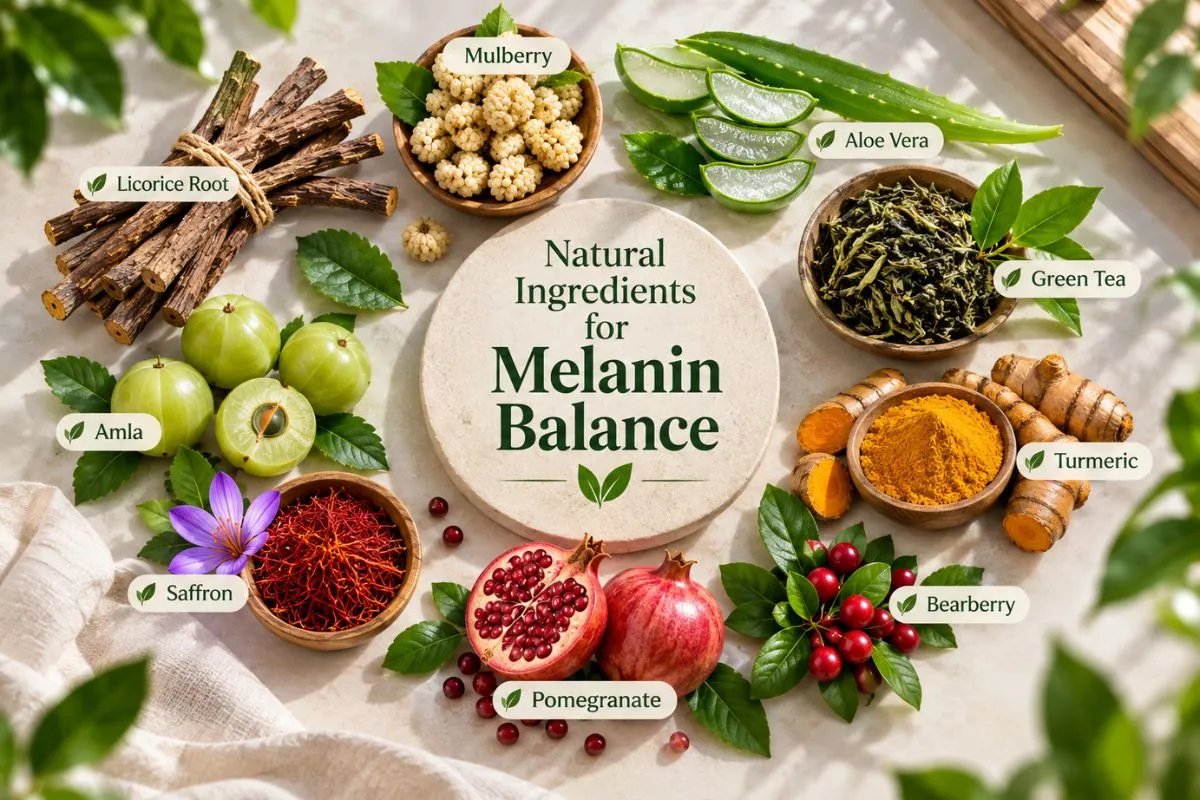
1. Licorice Root: A Leading Botanical for Uneven Tone
Licorice root, or Glycyrrhiza glabra, is one of the most compelling botanicals for pigmentation. Its best-known compounds include glabridin and liquiritin. Glabridin has been studied for tyrosinase-inhibiting, antioxidant, and anti-inflammatory activity, while liquiritin may help disperse existing pigment.
Clinical reviews consistently place licorice among the better-studied herbal approaches to melasma and hyperpigmentation. For readers researching herbs for lightening skin, it may therefore be especially useful for post-acne marks, uneven tone, and visible dark spots.
How to use it: Choose a serum, cream, mask, or targeted treatment containing standardized licorice extract and use it according to the product directions. A formulated extract is preferable to applying concentrated raw licorice powder directly to facial skin.
2. Mulberry: Promising Tyrosinase and Antioxidant Support
Mulberry, particularly Morus alba, contains plant compounds associated with antioxidant activity and tyrosinase inhibition. Research has identified it as a promising natural option for hyperpigmentation, with some clinical evidence involving melasma.
Mulberry also appears among natural whitening ingredients for skin, although “whitening” should mean reducing the appearance of unwanted dark spots or uneven tone rather than changing someone’s natural skin color.
How to use it: Look for mulberry extract in a brightening serum, moisturizer, or mask. It can fit particularly well into routines that also contain antioxidants or soothing botanicals.
3. Aloe Vera and Aloesin: Gentle Support for Sensitive Skin
Aloe vera is best known for soothing skin, yet aloesin, a compound derived from aloe, has also been studied for pigmentation. Research suggests aloesin may influence tyrosinase-related melanogenesis, although clinical evidence remains limited.
Its soothing properties make aloe particularly appealing when inflammation or irritation contributes to post-inflammatory dark marks. This is an important consideration for anyone wondering how to control melanin, because repeatedly irritating the skin can make uneven pigmentation more difficult to manage.
How to use it: Choose a fragrance-free aloe gel, serum, or moisturizer formulated for facial use. It works especially well as a calming step alongside other targeted pigmentation ingredients.
4. Green Tea: Antioxidant Support for Pigmentation
Green tea contains polyphenols such as EGCG, which are widely studied for antioxidant and anti-inflammatory properties. These compounds have also attracted attention for their potential influence on melanogenesis and environmental skin stress.
Among herbs for lightening skin, green tea is particularly useful as a supportive botanical because it addresses oxidative stress and inflammation in addition to pigment-related pathways.
How to use it: Choose skincare containing a stabilized green tea extract, such as a serum, toner, moisturizer, or mask. This provides a more reliable concentration than applying homemade tea preparations to the skin.
5. Turmeric: Traditional Brightening Meets Modern Research
Turmeric has a long history in South Asian beauty rituals. Its major compound, curcumin, is known for antioxidant and anti-inflammatory properties and has also been investigated for its effects on melanogenesis.
This makes turmeric one of the most familiar herbs for lightening skin. However, strong DIY mixtures containing lemon juice, baking soda, or abrasive ingredients can trigger irritation and may worsen post-inflammatory pigmentation.
How to use it: Use turmeric in a professionally formulated mask, cleanser, cream, or botanical treatment. Follow the recommended contact time because excessive amounts of raw turmeric can temporarily stain skin.
6. Bearberry and Arbutin: A Botanical Tyrosinase Route
Bearberry is associated with arbutin, a compound widely used in brightening skincare. Arbutin can influence tyrosinase activity and has been studied for its potential role in reducing visible hyperpigmentation.
That makes bearberry relevant for people comparing herbs for lightening skin with more conventional cosmetic brightening ingredients. However, botanical origin does not automatically mean that every concentration or preparation is suitable.
How to use it: Choose a professionally formulated serum or pigmentation treatment containing arbutin or bearberry-derived ingredients rather than preparing concentrated bearberry remedies at home.
7. Pomegranate: Ellagic Acid and Antioxidant Potential
Pomegranate is rich in polyphenols and contains ellagic acid, an antioxidant studied in relation to pigmentation and tyrosinase activity. This gives pomegranate an interesting role in both topical skincare and nutrition.
Eating antioxidant-rich foods can support overall health, while standardized topical extracts allow formulators to target the skin more directly. However, eating pomegranate will not selectively switch off pigment synthesis in individual dark spots.
How to use it: Apply pomegranate through antioxidant serums, moisturizers, or masks, while enjoying the fruit as part of a balanced diet for broader nutritional support.
8. Saffron: Traditional Radiance With Emerging Evidence
Saffron contains carotenoids and other antioxidant compounds and has been used traditionally in beauty preparations for generations. It may help support radiance and an even-looking complexion, although its clinical evidence for hyperpigmentation is not as strong as that of licorice.
For this reason, saffron is better positioned as a complementary botanical
How to use it: Look for saffron in botanical masks, creams, or facial blends that pair it with moisturizing and soothing ingredients rather than using highly concentrated DIY preparations.
9. Amla: Antioxidant-Rich Indian Gooseberry
Amla, or gooseberry, is rich in antioxidant compounds and has a long history in Ayurvedic wellness. It has also appeared in clinical research investigating herbal approaches to melasma, sometimes as part of formulas containing several botanical ingredients.
Amla offers an interesting bridge between traditional plant use and emerging scientific research, but it should still be viewed as supportive rather than a proven method for eliminating pigmentation.
How to use it: For topical care, choose facial masks, creams, or extracts specifically formulated with amla. It can also be eaten as a food or used in appropriately formulated nutritional products for antioxidant support.
Which Herbal Ingredients Have the Strongest Evidence?
Not every botanical deserves the same level of confidence. Licorice has comparatively strong herbal clinical support. Mulberry, aloesin, arbutin, ellagic acid, green tea, and turmeric are also promising, but study sizes, formulations, and outcomes vary.
| Herbal ingredient | Key compound or feature | Main pathway | Evidence perspective |
| Licorice | Glabridin, liquiritin | Tyrosinase, pigment dispersion, inflammation | Relatively strong botanical evidence |
| Mulberry | Polyphenols | Tyrosinase, antioxidant activity | Promising |
| Aloe vera | Aloesin | Tyrosinase-related melanogenesis | Promising but limited |
| Green tea | EGCG/polyphenols | Antioxidant and inflammatory pathways | Supportive |
| Turmeric | Curcumin | Antioxidant, inflammation, melanogenesis | Promising but limited |
| Bearberry | Arbutin | Tyrosinase | Established cosmetic interest |
| Pomegranate | Ellagic acid/polyphenols | Tyrosinase, antioxidant activity | Promising |
| Saffron | Carotenoids/polyphenols | Antioxidant support | Emerging |
| Amla | Antioxidant compounds | Antioxidant support | Emerging clinical interest |
Which Food Supplements May Support Healthy Skin?
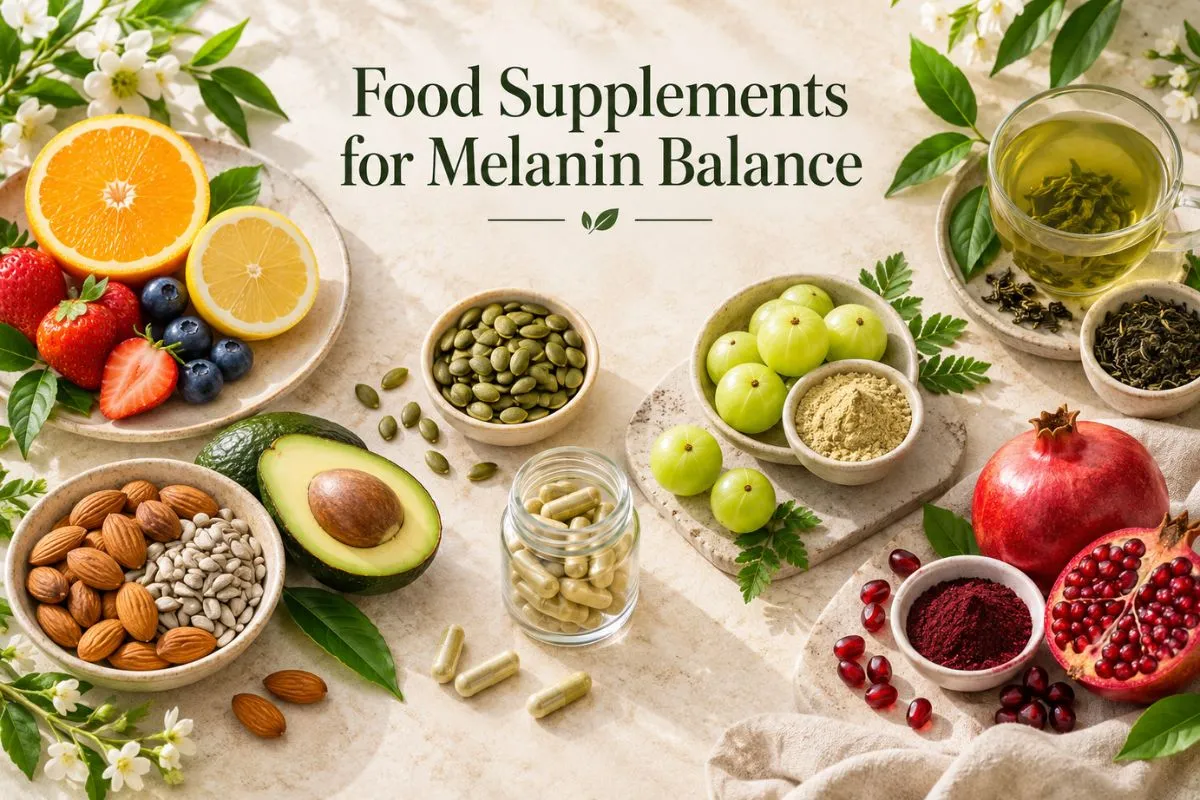
Rather than searching for a capsule that “switches off” melanin, focus on nutrients that contribute to normal skin health and antioxidant defenses.
Vitamin C
Vitamin C supports antioxidant protection and normal collagen formation. Good food sources include amla, guava, citrus fruits, berries, kiwi, and peppers. Supplementation may be useful when dietary intake is inadequate, but more is not automatically better.
Vitamin E
Vitamin E contributes to antioxidant protection and is found naturally in nuts, seeds, avocado, and vegetable oils. High-dose supplementation should not be used casually because it may interact with certain medicines.
Zinc
Zinc supports normal skin repair and immune function. Meat, seafood, dairy products, legumes, nuts, and seeds are useful dietary sources. Supplementation is generally most meaningful when intake is low or a deficiency is present.
Green Tea and Plant Polyphenols
Green tea provides antioxidant polyphenols such as EGCG. Drinking green tea offers a food-based source, while concentrated extracts should be used more cautiously because large supplemental doses can carry risks.
Amla and Pomegranate
Both provide antioxidant plant compounds and can form part of a nutrient-rich diet. They may also appear in supplements, but neither should be presented as a guaranteed treatment for pigmentation.
A melanin food supplement therefore makes the most sense when it is evaluated for its actual nutrients and evidence rather than marketed as a quick way to change skin color.
How to Control Melanin Naturally and Safely
The safest strategy is to reduce triggers of excessive or uneven melanin production rather than trying to eliminate normal pigment.
Protect skin from UV exposure with broad-spectrum sunscreen, because ultraviolet radiation is one of the strongest pigmentation triggers. At the same time, control acne and irritation since inflammation can leave post-inflammatory dark marks.
Use suitable botanical ingredients consistently rather than switching between aggressive treatments. Also avoid harsh DIY remedies involving lemon juice, baking soda, bleach-like ingredients, or excessive scrubbing, because barrier damage can increase inflammation.
A gentle cleanser, moisturizer, suitable brightening ingredients, and sunscreen create a much stronger foundation for long-term pigment care.
An antioxidant-rich diet containing colorful fruits, vegetables, leafy greens, nuts, seeds, pomegranate, citrus fruits, and green tea can support overall skin health alongside topical care.
The Bottom Line
Melanin balance is not about bleaching the skin or removing a pigment the body naturally needs. It is about understanding why pigmentation becomes uneven and choosing ingredients that may support a healthier-looking tone.
Licorice has comparatively strong botanical evidence, while mulberry, aloe-derived aloesin, green tea, turmeric, bearberry, pomegranate, saffron, and amla provide different forms of pigment, antioxidant, or soothing support.
A melanin supplement or melanin food supplement may provide nutritional support depending on its ingredients, but neither replaces sunscreen, appropriate topical care, patience, and a healthy skin barrier.
The smarter goal for melanin production is simple: protect healthy pigment while addressing areas where pigmentation has become uneven.
Discover Botanical Care With Hudira Organic Products
If you prefer plant-powered skincare without harsh whitening trends, explore Hudira organic products. Hudira brings botanical ingredients into thoughtful skincare routines designed to support radiance, skin comfort, and a naturally even-looking complexion.
Healthy-looking skin is not about becoming lighter. It is about caring for dullness, visible pigmentation, and your skin barrier while respecting your natural tone.
FAQs
Q. What is the best melanin supplement for dark spots?
There is no single oral supplement proven to remove dark spots for everyone. Hyperpigmentation has different causes, so sunscreen and appropriate topical skincare provide a more targeted approach. Evaluate supplements by their individual ingredients rather than their marketing claims.
Q. Which herbs are best for uneven pigmentation?
Licorice is one of the better-studied herbs for lightening skin in the context of uneven pigmentation. Mulberry, aloe-derived aloesin, green tea, turmeric, bearberry, pomegranate, saffron, and amla also have varying levels of supporting evidence.
Q. Can a melanin food supplement stop melanin production?
No melanin food supplement should be expected to completely stop melanin production. Melanin has important biological functions, including helping protect skin from UV radiation. The better goal is managing excess or uneven pigmentation.
Q. How long do herbal ingredients take to improve dark spots?
Pigmentation changes gradually. Noticeable improvement may require several weeks or longer depending on the cause, depth of pigmentation, formulation used, skin type, and consistency with sun protection.
Q. Can herbs permanently reduce melanin?
Herbs cannot permanently switch off healthy melanin production. UV exposure, hormones, inflammation, acne, and other triggers can stimulate pigmentation again, which is why long-term sun protection and gentle maintenance care remain important.
Add comment