
No products in the cart.
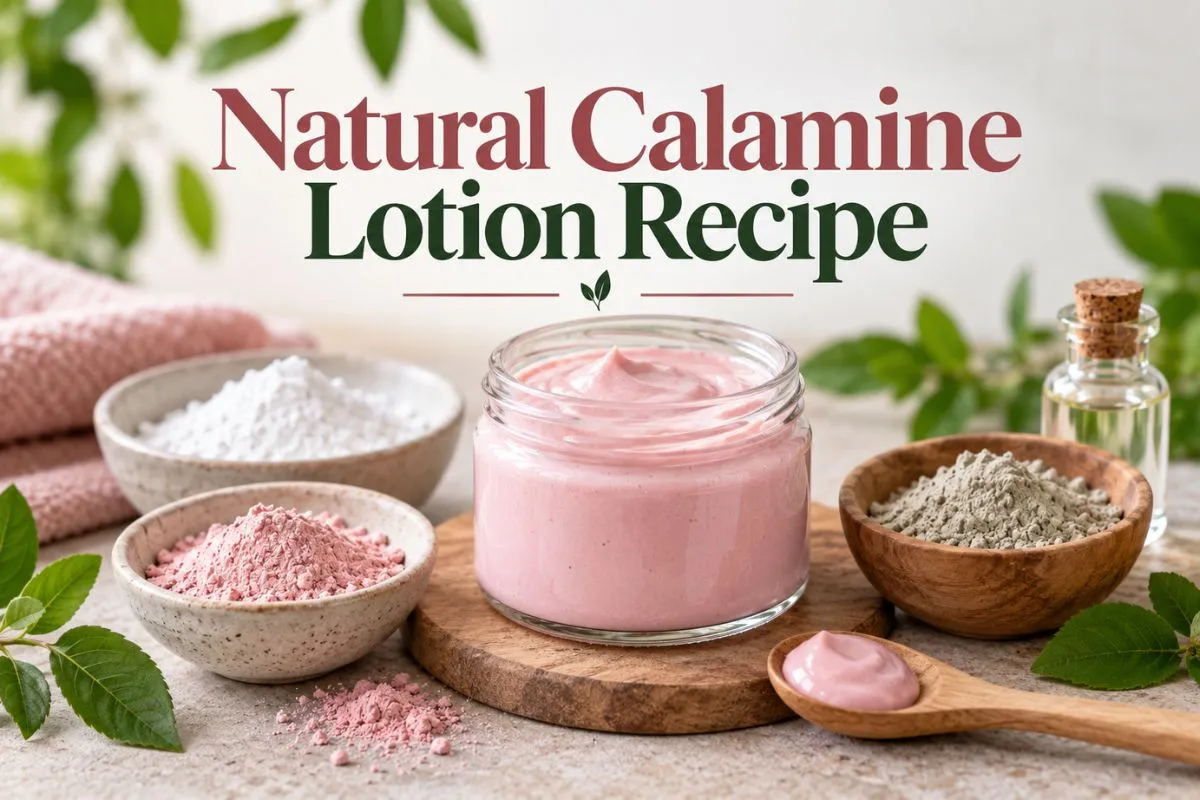
When itchy, uncomfortable skin suddenly appears, reaching for something cooling and soothing can feel like an instant priority. A natural calamine lotion can be a simple addition to your DIY skincare routine when you want a gentle, mineral-based topical preparation for minor everyday skin discomfort. Instead of relying on a mystery mixture, making homemade calamine allows you to understand exactly what goes into the jar while keeping the formula simple and practical. This DIY calamine lotion guide explains not only how to prepare it but also what each ingredient contributes and how to use a homemade water-based product responsibly.
But here is something many DIY recipes do not explain: not every pink clay mixture online is actually calamine. Some recipes are better described as calamine-inspired alternatives because they contain clay and soothing ingredients but no true calamine or zinc oxide. So, what should a trustworthy natural calamine lotion contain, and how can you avoid the storage mistakes that can turn a helpful DIY into a questionable skincare product? Let’s uncover the difference before mixing your first batch.
What Is Natural Calamine Lotion?
Calamine lotion is traditionally a mineral-based topical preparation recognized by its pale pink appearance. Commercial formulas commonly contain calamine and zinc oxide suspended in a liquid base. The characteristic pink shade comes from iron oxide associated with calamine.
A calamine lotion made at home aims to create a simple mineral suspension using skin-appropriate ingredients while avoiding unnecessary fragrance or complicated additives.
However, there is an important distinction.
A recipe containing only bentonite clay, baking soda, water, and similar household ingredients may feel cooling or drying on the skin, but technically it is better described as a calamine-inspired clay lotion rather than true homemade calamine.
Understanding that difference makes your lotion safer, clearer, and more transparent.
Why Do We Need to Make Homemade Calamine?
Making homemade calamine gives you control over the ingredients and allows you to prepare a small batch only when you need it.
Some people prefer DIY skincare because they want:
- A fragrance-free formula
- Fewer unnecessary ingredients
- Control over texture and consistency
- A small freshly prepared batch
- A better understanding of what goes onto their skin
Another advantage of preparing natural calamine lotion yourself is that you can avoid adding strong essential oils or unnecessary botanical extracts that may irritate already sensitive skin.
Still, homemade skincare is not automatically safer simply because it is natural. Clean preparation, correct ingredients, careful storage, and sensible use matter just as much.
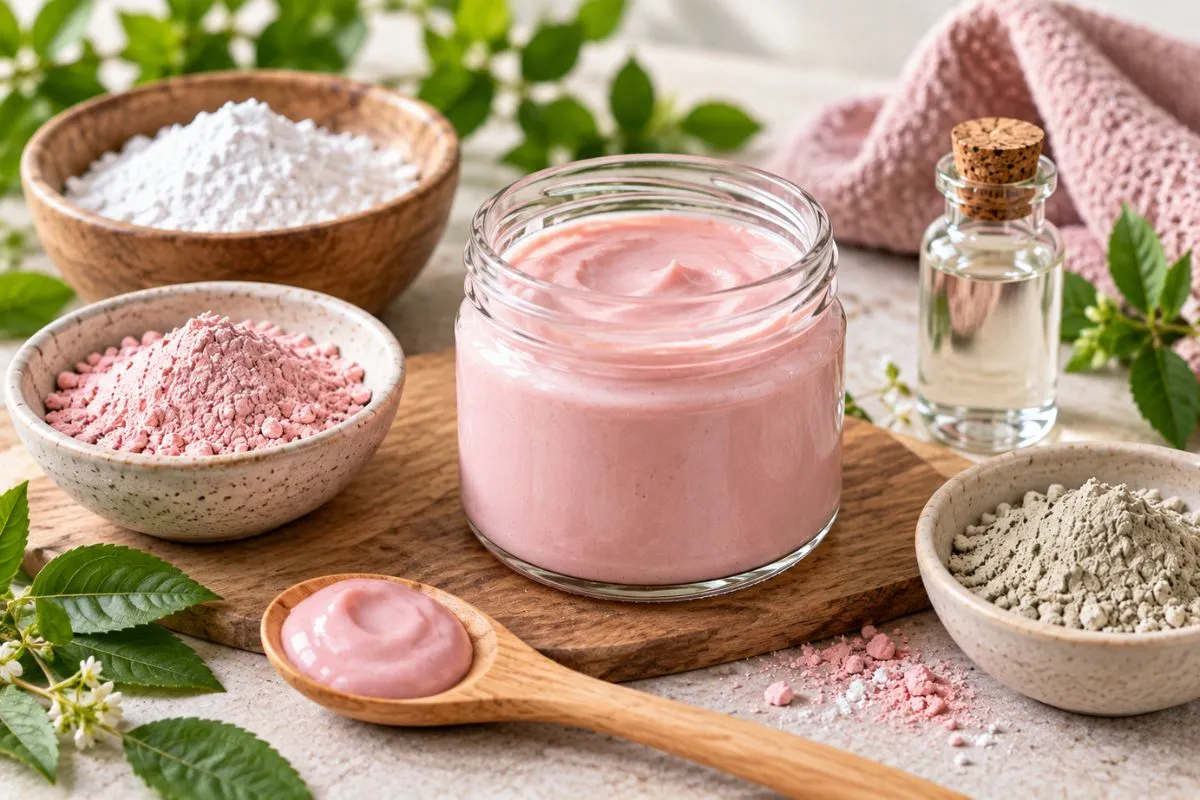
Natural Calamine Lotion Ingredients
For a simple mineral-based preparation, you will need:
Zinc Oxide Powder
Zinc oxide is commonly used in skin-protective products and gives the lotion its familiar opaque appearance. Always choose cosmetic- or pharmaceutical-grade zinc oxide intended for topical products.
Calamine Powder
Calamine powder provides the characteristic mineral composition and pink appearance associated with calamine preparations.
If genuine calamine powder is available from a reputable cosmetic or pharmaceutical ingredient supplier, it is more appropriate than trying to reproduce the color with craft pigments.
Bentonite or Kaolin Clay
Clay helps create body and keeps the preparation from feeling excessively runny. Bentonite absorbs more strongly, while kaolin generally feels softer and gentler.
Vegetable Glycerin
Glycerin is a humectant that helps prevent a DIY calamine lotion from feeling excessively dry or chalky.
Distilled Water
Always use distilled water rather than tap water when making water-based skincare. Tap water may introduce minerals and microorganisms that can make a homemade formula less predictable.
Easy Natural Calamine Lotion Recipe
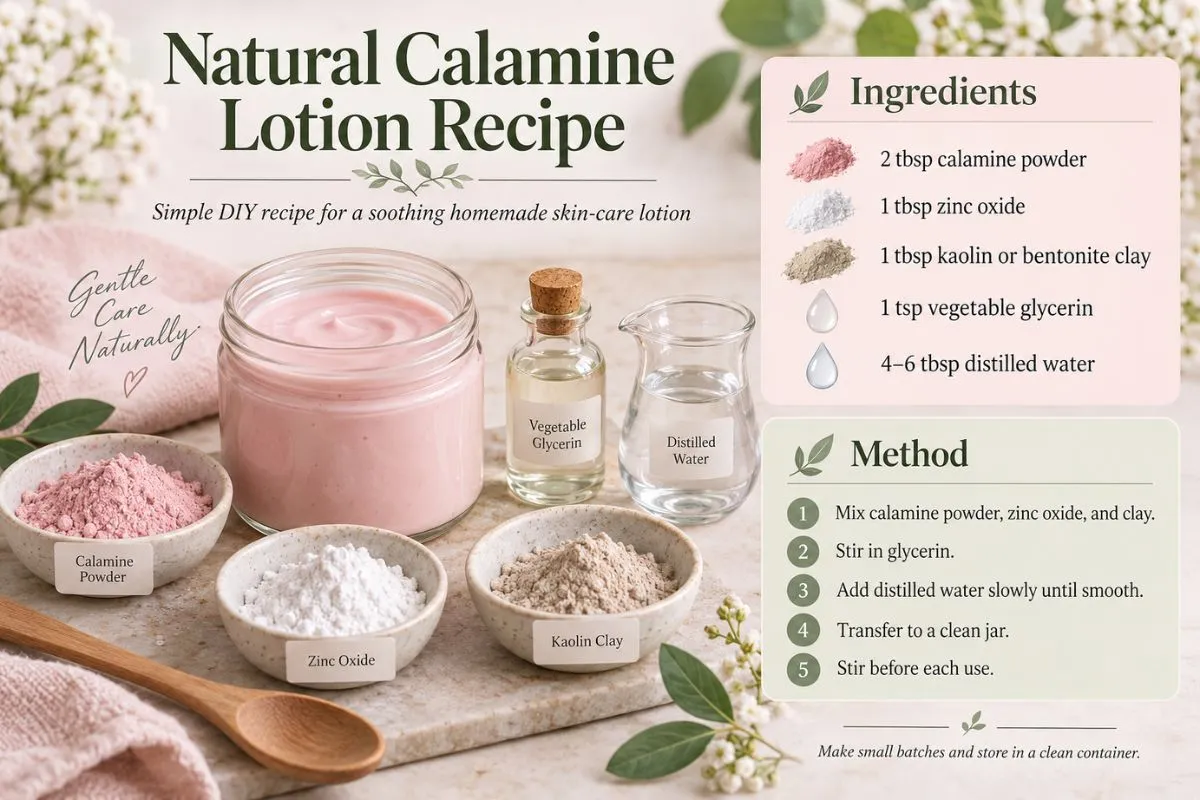
Ingredients
- 2 tablespoons cosmetic-grade calamine powder
- 1 tablespoon cosmetic-grade zinc oxide
- 1 tablespoon kaolin or bentonite clay
- 1 teaspoon vegetable glycerin
- 4–6 tablespoons distilled water
This recipe creates a small batch of natural calamine lotion intended for short-term household use.
Step 1: Prepare Your Equipment
Wash your bowl, spoon, and storage container thoroughly.
Allow everything to dry completely before beginning.
Clean equipment is especially important when preparing homemade calamine because water-containing mixtures can support microbial growth.
Step 2: Combine the Powders Carefully
Add calamine powder, zinc oxide, and clay to a small bowl.
Mix gently. Avoid creating airborne powder. Fine cosmetic powders should not be deliberately inhaled, so work slowly rather than vigorously whisking them.
Step 3: Add the Glycerin
Mix in the vegetable glycerin. The mixture will initially look thick and uneven, which is completely normal.
Step 4: Slowly Add Water
Add distilled water one tablespoon at a time while stirring.
Continue until your calamine lotion reaches a pourable but creamy consistency.
You may need slightly more or less water depending on the clay you use.
Step 5: Transfer to a Clean Container
Place the mixture in a small sanitized container with a secure lid.
Label it with the date you made it.
Because mineral powders naturally settle, shake or stir your calamine lotion before each use.
Natural Calamine Lotion vs Calamine-Inspired Clay Lotion
This distinction is worth understanding because many internet recipes use the same name for two different preparations.
A true or mineral-based homemade calamine recipe contains calamine itself or ingredients that closely reflect a traditional calamine preparation.
A calamine-inspired recipe may contain ingredients such as:
- Bentonite clay
- Kaolin clay
- Baking soda
- Aloe vera
- Witch hazel
- Glycerin
These ingredients can create a cooling or drying clay mixture, but they do not magically become calamine.
For readers who cannot source cosmetic-grade calamine powder, Alternative for calamine lotion made with clay can still be an option, provided it is described honestly.
Simple Natural-Inspired Substitute for Calamine Lotion
If calamine powder is unavailable, try this simple clay preparation.
Ingredients
- 2 tablespoons kaolin clay
- 1 tablespoon bentonite clay
- 1 teaspoon vegetable glycerin
- 3–5 tablespoons distilled water
Combine the dry ingredients first. Add glycerin, followed gradually by distilled water until a smooth lotion develops.
This is not technically homemade calamine, but it can serve as a simple mineral clay preparation for people who prefer a minimalist DIY formula.
Avoid adding unnecessary essential oils to irritated skin. Fragrance, even when naturally derived, may cause sensitivity in some individuals.
The Important Truth About Preserving Homemade Calamine
Once water is added to homemade skincare, bacteria, yeast, and mold can potentially begin to grow. Refrigeration may slow this process, but it does not replace a properly tested broad-spectrum cosmetic preservative.
For this specific unpreserved recipe, make only a very small batch, keep it tightly covered in the refrigerator, and use it within 3 days. After the third day, discard any remaining lotion even if it still looks or smells normal.
This 3-day limit is a conservative home-DIY recommendation rather than a laboratory-tested shelf life. A homemade product cannot be guaranteed microbiologically safe for a longer period unless its preservation system has been properly formulated and tested.
To reduce contamination:
- Store the lotion in a clean, sanitized container.
- Refrigerate it immediately after making it.
- Use a clean spoon or spatula instead of dipping fingers into the jar.
- Close the container securely after every use.
- Write the preparation date on the container.
- Discard all remaining lotion after 3 days.
Throw your DIY calamine lotion away sooner if you notice an unusual smell, mold, bubbling, discoloration, separation that looks abnormal, or an unexpected change in texture.
When in doubt, make a fresh batch. With homemade water-based skincare, smaller and fresher is the smarter approach.
How to Apply Natural Calamine Lotion
Shake or stir the mixture before use because minerals naturally settle. Apply a small amount of lotion in a thin layer to the desired external skin area and allow it to dry. Wash your hands afterward.
Do not apply the mixture:
- Inside the eyes
- Inside the mouth or nose
- To genital areas
- Over deep wounds
- To serious burns
- To obviously infected skin
Homemade preparations should not replace medical care for persistent, severe, spreading, or unexplained skin conditions.
Should You Add Essential Oils?
Many homemade calamine recipes recommend lavender, tea tree, peppermint, or other essential oils. More ingredients are not always better.
Essential oils are concentrated substances and may irritate sensitive or already inflamed skin. For a minimalist DIY calamine lotion, leaving them out is often the simpler choice.
If you decide to use an essential oil, it must be appropriate for topical use and properly diluted.
Children, pregnant individuals, people with allergies, and anyone with highly sensitive skin should be especially cautious.
Can Natural Calamine Lotion Replace Medical Treatment?
No homemade skincare product should be presented as a cure for eczema, psoriasis, skin infections, severe allergic reactions, or other medical conditions.
Commercial calamine is generally used as a skin protectant and for temporary relief associated with minor skin irritation.
If itching or irritation becomes severe, spreads rapidly, involves swelling or breathing difficulty, shows signs of infection, or does not improve, seek professional medical advice.
Responsible natural skincare is not about rejecting conventional care. It is about knowing when simple home care is appropriate and when your skin needs expert attention.
Final Thoughts
Making your own natural calamine lotion can be an empowering way to understand the ingredients behind a familiar skincare product. With cosmetic-grade minerals, distilled water, careful preparation, and realistic storage expectations, you can create a simple formula without turning your kitchen into a chemistry lab.
Most importantly, remember that homemade calamine and clay-based calamine alternatives are not always the same thing. A trustworthy DIY guide should tell you the difference rather than hiding it behind a pink-colored recipe.
Discover Hudira Organic Products
Love clean, thoughtful skincare but do not always have time to mix it yourself? Explore Hudira organic products for carefully selected skincare designed to make natural self-care easier, simpler, and more enjoyable.
Bring intention back to your routine with Hudira and discover products made for people who value both nature and smarter skincare choices.
FAQs
Q. Can I Make Natural Calamine Lotion at Home?
Yes. You can prepare a small natural calamine lotion using cosmetic-grade calamine, zinc oxide, clay, glycerin, and distilled water. Because the recipe contains water and does not have a professionally validated preservative system, make small batches and practice careful storage.
Q. Is Homemade Calamine the Same as Store-Bought Calamine Lotion?
Not exactly. Homemade calamine may use similar mineral ingredients, but commercial products are standardized, manufactured under controlled conditions, and typically have established stability and labeling requirements.
Q. Is Bentonite Clay the Same as Calamine?
No. Bentonite clay is not calamine. A recipe containing only bentonite, baking soda, water, and glycerin is better described as a calamine-inspired clay preparation rather than genuine homemade calamine.
Q. How Long Can I Keep DIY Calamine Lotion?
A water-based DIY calamine lotion without a validated broad-spectrum preservative does not have a reliably established long shelf life. Prepare a small amount, refrigerate it, use clean utensils, and discard it whenever its smell, color, or texture changes and use it within 3 days.
Q. Can I Use DIY Calamine Lotion on My Face?
Facial skin can be more sensitive than body skin. Patch test first and avoid the eyes, lips, and broken skin. If you have persistent acne, dermatitis, eczema, or another diagnosed skin condition, speak with a qualified healthcare professional rather than relying solely on DIY preparation.

Add comment