
No products in the cart.
Your skin is far more alive than it looks. Every inch of it is home to a microscopic community of bacteria, fungi, viruses, and other organisms that interact with your skin barrier every day. Learning how to improve skin microbiome health is not about eliminating bacteria, it is about creating the right environment for helpful microbes to coexist while your skin stays calm, hydrated, and resilient. The relationship between microbiome and skin health is surprisingly powerful, especially when harsh routines, pollution, stress, or over-exfoliation disturb that delicate ecosystem.
But here is the fascinating part: the answer may not be another “miracle” serum or aggressive antibacterial treatment. Small changes in cleansing, hydration, product choice, lifestyle, and barrier care can influence the conditions in which your skin microbes live. So, what actually supports microbiome balance and which popular habits may quietly be working against it? Keep reading, because some of the simplest changes can make the biggest difference.
What Is the Skin Microbiome?
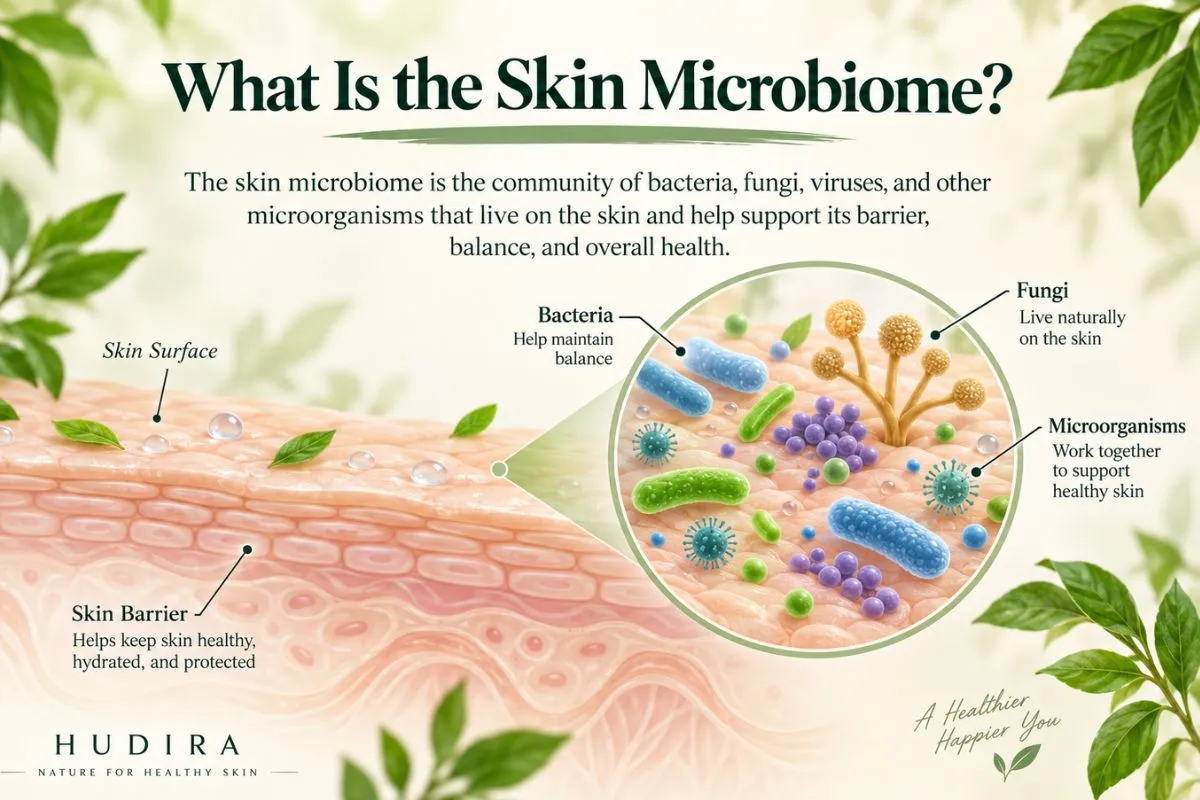
The skin microbiome is the community of microorganisms living on the surface of your skin and within its tiny folds, pores, and follicles. These organisms are not automatically harmful. Many live alongside us without causing trouble, while others can contribute to normal skin defense, immune signaling, and barrier function.
A healthy microbial ecosystem is not identical for everyone. Age, hormones, genetics, climate, body location, hygiene habits, skincare, and environment can all shape it. Even oily areas such as the forehead can differ from dry areas such as the forearms.
This is why the relationship between microbiome and skin should not be reduced to “good bacteria versus bad bacteria.” A healthier ecosystem is about stability and appropriate proportions, not trying to eliminate one microbe entirely.
Researchers use the term dysbiosis when the normal microbial ecosystem becomes disturbed. Dysbiosis has been associated with conditions such as acne, atopic dermatitis, rosacea, and other inflammatory skin problems, although it is not always clear whether microbial changes are a cause, a consequence, or both. Current research also shows that products, environmental exposures, skin pH, and barrier conditions can influence the microbial environment.
What Does Microbiome Balance Really Mean?
Microbiome balance does not mean your skin needs an equal number of every type of microorganism. It also does not mean you should try to “add bacteria” to your face every day. Instead, it refers to maintaining an environment in which your natural microbial community can remain relatively stable without being repeatedly disturbed by irritation, excessive cleansing, harsh chemicals, or damage to the skin barrier.
Think of your skin like a garden. A healthy garden needs suitable soil, moisture, protection, and variety. Constantly stripping the soil or pouring disinfectant over it would not create a thriving ecosystem. In a similar way, repeatedly over-cleansing or aggressively exfoliating the skin may disturb the conditions that support healthy microbes.
The key to learning how to improve skin microbiome health is therefore surprisingly simple: protect the skin first, then choose products and habits that respect its natural environment.
Signs Your Skin Barrier and Microbiome May Be Under Stress
There is no home test that can reliably tell you your skin microbiome is “unbalanced.” Still, persistent tightness after cleansing, unusual sensitivity, dryness, rough patches, redness, burning, dehydration, or breakouts after introducing too many active products can signal that your skin barrier is under stress.
These signs do not prove dysbiosis. Eczema, acne, allergies, contact dermatitis, and other conditions can look similar, so persistent or severe symptoms deserve professional evaluation.
How to Improve Skin Microbiome with 9 Natural, Practical Habits
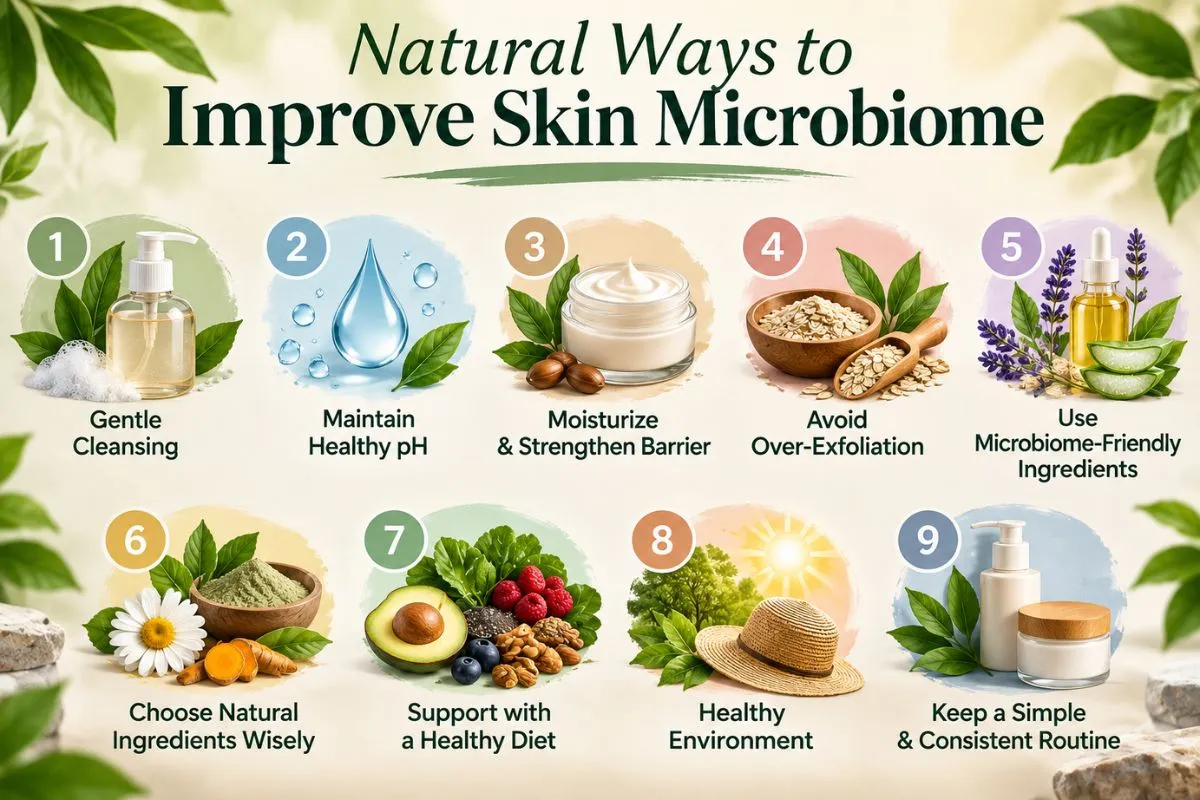
1. Cleanse Gently Instead of Trying to Sterilize Your Skin
One of the most effective ways to support microbiome balance is to stop treating every bacterium as an enemy.
Strong soaps, repeated washing, harsh surfactants, and unnecessary antibacterial cleansers can strip away natural lipids and increase dryness or irritation. Your goal should be to remove dirt, sunscreen, excess oil, makeup, and environmental debris without leaving your skin feeling squeaky, tight, or uncomfortable.
Choose a mild cleanser suited to your skin type. Lukewarm water is generally kinder than very hot water, and cleansing once or twice daily is enough for many people.
If you have acne, do not assume antibacterial products are always the best choice. Acne is complex and involves sebum, follicular blockage, inflammation, hormones, immune responses, and microbial factors. The organism Cutibacterium acnes is commonly found even on healthy skin, so acne care is not simply about killing every C. acnes bacterium.
Gentle cleansing creates a calmer starting point for the interaction between microbiome and skin.
2. Protect Your Skin’s Mildly Acidic Environment
Healthy skin naturally has an acidic surface environment often referred to as the acid mantle. Product pH can influence skin comfort, barrier function, and microbial conditions.
You do not need to test every bottle. Simply avoid frequent use of strongly alkaline facial soaps and choose properly formulated skincare made for regular use.
A stable surface environment may help support both barrier function and a healthier microbial environment. Current reviews of microbiome-friendly cosmetics also identify formulation factors such as final product pH as relevant to the skin’s microbial environment.
3. Moisturize to Strengthen the Skin Barrier
A strong skin barrier is one of the most important foundations of a healthy-looking complexion. When the barrier is compromised, water escapes more easily and irritants can penetrate more readily, creating an environment in which inflammation and discomfort can increase.
Use a moisturizer appropriate for your skin type, especially after cleansing.
Helpful moisturizer components may include:
- glycerin;
- ceramides;
- squalane;
- hyaluronic acid;
- oat-derived ingredients;
- suitable plant oils;
- fatty acids and other barrier-supportive lipids.
Choose a moisturizer texture that suits your skin type, from richer creams for dryness to lighter lotions or gels for oily or combination skin.
When considering how to improve skin microbiome function, moisturizing may seem basic but basic barrier care is often more valuable than chasing trendy microbiome products.
4. Stop Over-Exfoliating
Exfoliation can make skin feel smoother, but more is not always better.
Frequent scrubbing, strong acids, repeated peels, retinoids, exfoliating cleansers, and polishing tools can easily become too much when combined. Over-exfoliation may weaken the barrier and leave the skin irritated, tight, shiny, red, or unusually sensitive.
If your skin becomes uncomfortable, simplify your routine temporarily. Focus on gentle cleansing, moisturizing, and sunscreen while reducing unnecessary exfoliating products.
This approach can support the connection between microbiome and skin by protecting the physical environment microorganisms live on rather than constantly disrupting it.
5. Choose Microbiome-Friendly Ingredients Thoughtfully
Prebiotic, probiotic, fermented, and postbiotic skincare has exploded in popularity. However, these terms are not interchangeable.
Prebiotic ingredients are intended to support selected beneficial microorganisms or influence the microbial environment. Examples used in cosmetics can include ingredients such as inulin or alpha-glucan oligosaccharide.
Probiotics technically refer to live microorganisms that provide a benefit when administered in adequate amounts. Keeping live microbes viable inside conventional skincare is difficult because cosmetic formulas usually need preservation systems to remain safe and stable.
For this reason, many products marketed as “probiotic skincare” contain ferments, lysates, or non-living microbial derivatives instead of live bacteria. Postbiotic approaches use non-living microorganisms, microbial components, or their products.
Research is promising, but current reviews emphasize that studies vary considerably and there is not yet one standardized definition or test proving that a cosmetic is “microbiome-friendly.”
So judge the complete formula not the microbiome buzzword on the label.
6. Use Natural Ingredients Without Assuming “Natural” Means Gentle
Natural skincare can be supportive when it is thoughtfully formulated, but plant-derived does not automatically mean soothing or microbiome-friendly. Essential oils, concentrated extracts, fragrance, citrus oils, and strong herbal preparations can irritate sensitive skin. Homemade water-based mixtures can also become unsafe without proper preservation.
Choose professionally formulated products at appropriate concentrations. Colloidal oatmeal is especially interesting because it has been studied in barrier-supportive, microbiome-conscious formulas. Other botanicals may offer soothing, moisturizing, antioxidant, or anti-inflammatory benefits without needing a “probiotic” label.
The smartest natural routine respects both microbiome and skin instead of using “natural” as proof of safety.
7. Support the Gut-Skin Connection with a Varied Diet
Researchers increasingly study communication between the gut and skin through immune, metabolic, and inflammatory pathways—the gut-skin axis. No single food has been proven to “fix” the skin microbiome, but a varied diet can support general health and gut microbial diversity.
Build meals around vegetables, fruits, whole grains, beans, lentils, nuts, seeds, omega-3-rich foods, and fermented foods such as yogurt if tolerated. Fiber is especially valuable because many gut microbes ferment it into biologically active compounds.
Skip restrictive “skin microbiome diets.” Variety and consistency are more sustainable while scientists continue studying the relationship between the gut microbiome and skin.
8. Give Your Skin a Healthy Environment
Climate, humidity, pollution, ultraviolet radiation, hygiene, and environmental contact can influence the skin’s microbial community. Emerging research suggests biodiverse outdoor environments may affect microbial diversity, but there is no proven number of outdoor hours that “rebalances” skin.
Enjoy nature for overall well-being, but do not treat it as a replacement for skincare or medical care. Protect against excessive UV exposure with broad-spectrum sunscreen, shade, and protective clothing. Natural care should never mean skipping sun protection.
9. Simplify Your Routine and Give It Time
One overlooked way to improve microbiome balance is simply to stop changing products constantly.
When you introduce multiple cleansers, acids, serums, masks, peels, and spot treatments at once, it becomes difficult to know what is helping and what is irritating your skin.
A simple routine might include:
Morning: gentle cleanse or rinse, moisturizer, sunscreen.
Evening: gentle cleanser, targeted treatment if needed, moisturizer.
Introduce new products gradually and patch-test when appropriate.
If your skin is already irritated, a short period of simplification can help you identify triggers. However, avoid promises that your microbiome will be “fully restored” in a fixed number of days. Skin microbial communities differ from person to person, and research has not established a universal recovery timeline.
Consistency, patience, and barrier support create a more realistic pathway toward healthier skin.
The Relationship Between the Skin Microbiome and Common Skin Conditions
Researchers have observed microbial changes in acne, atopic dermatitis, rosacea, psoriasis, and seborrheic dermatitis. For example, atopic dermatitis flares are often associated with increased Staphylococcus aureus, while acne research increasingly examines different Cutibacterium acnes strains rather than treating the species itself as simply “bad.”
Still, association does not prove that dysbiosis alone causes a skin condition. Genetics, hormones, immune responses, barrier function, environment, and microbial activity interact. Microbiome-focused products should therefore complement—not replace—appropriate medical care. Current reviews describe these approaches as promising but still evolving.
Prebiotics, Probiotics, and Postbiotics: Know the Difference
Prebiotics are ingredients intended to be used selectively by microorganisms in a beneficial way. In skincare, they may help create favorable conditions for selected microbes.
Probiotics are live microorganisms that provide a benefit when used appropriately. Keeping them alive in a safe, preserved cosmetic is technically challenging.
Postbiotics are preparations of non-living microorganisms and/or their components that may provide a benefit and can be easier to formulate.
Ferments and lysates are microbial-derived cosmetic ingredients, but their presence does not automatically make a product a true probiotic.
These categories are exciting, but they are additions to not replacements for gentle cleansing, moisturizing, barrier protection, and appropriate medical treatment.
How to Improve Skin Microbiome Without Falling for Myths
Social media can turn microbiome care into extremes: stop washing your face, avoid all preservatives, put fermented foods on your skin, or replace acne treatment with probiotics. None is a sensible universal rule.
Water-containing cosmetics need effective preservation because contamination by bacteria, yeast, or mold can make them unsafe. Likewise, yogurt or kombucha may be foods, but that does not make them safe facial treatments. Antimicrobial medicines can also be appropriate when prescribed for a specific condition.
Microbiome-conscious skincare should respect skin ecology while still prioritizing hygiene, product safety, sunscreen, and evidence-based treatment.
When Should You See a Dermatologist?
Natural skincare can support healthy skin, but persistent problems deserve proper assessment. Seek professional care for severe acne, painful cysts, worsening rashes, intense itching, oozing or crusting lesions, swelling, suspected infection, or symptoms that continue despite simplifying your routine.
A dermatologist can distinguish barrier irritation from acne, eczema, rosacea, allergy, infection, or another condition requiring targeted treatment.
Final Thoughts
Learning how to improve skin microbiome health can be refreshingly simple: cleanse gently, moisturize, protect the barrier, avoid over-exfoliation, eat a varied diet, manage stress, use sunscreen, and choose well-formulated products instead of chasing every microbiome trend.
Most importantly, microbiome balance is not about making skin bacteria-free. It is about supporting a resilient ecosystem. As our understanding of microbiome and skin evolves, thoughtful care remains more powerful than constant disruption.
Discover Gentle Care with Hudira Organic Products
Ready for a simpler, kinder skincare ritual? Explore Hudira organic products for thoughtfully formulated, botanical-focused care that complements a balanced routine. Choose intentional skincare that supports healthy-looking skin without unnecessary complexity—and make every step feel naturally confident.
FAQs
Q. How to restore your skin microbiome naturally?
Start with the basics: use a mild cleanser, moisturize regularly, avoid over-exfoliation, protect your skin from UV exposure, a varied diet, adequate sleep and reduce unnecessary antibacterial products.
Q. How long does it take to improve the skin microbiome?
There is no scientifically established number of days that applies to everyone. Your skin microbiome is influenced by products, climate, age, hormones, health, medications, and individual biology, follow a gentle routine consistently and monitor improvements in comfort, hydration, and irritation.
Q. Can probiotics improve skin bacteria?
Some topical and oral probiotic, prebiotic, and postbiotic approaches are being studied for skin benefits, and recent research is promising. However, evidence varies by strain, formulation, condition, and route of use.
Not every product labeled “probiotic” contains live bacteria, so read ingredient and product information carefully.
Q. What foods are good for a healthy skin microbiome?
No single food can guarantee microbiome balance. A varied diet containing vegetables, fruits, legumes, whole grains, nuts, seeds, omega-3-rich foods, and fermented foods if tolerated can support overall nutrition and gut microbial health.
Q. Should I avoid antibacterial skincare completely?
No. Unnecessary or overly harsh antibacterial products may irritate some skin, but antimicrobial ingredients and medicines can be important when used for the right condition.

Add comment