
No products in the cart.

From morning emails to late-night scrolling, our skin is surrounded by screens more than ever before. Phones, laptops, tablets, LED lights, and digital devices are now part of daily life, but many people do not realize that this constant exposure may affect the skin’s natural glow. That is why understanding the effects of blue light on skin has become a powerful topic in modern beauty. Today, people want gentle, natural, and effective ways to support their skin against screen stress, dullness, dryness, and early signs of aging.
But here is the part most people miss: the real issue is not only the screen in your hand. The deeper story is about oxidative stress, weakened skin barrier, dark spots, tired-looking skin, and how your routine responds every single day. Could your daily skincare be missing one important protection step? In this guide, you will discover how blue light skincare, natural antioxidants, hydration, and smart habits can help your skin look calmer, brighter, and more resilient.
What Is Blue Light for Skin Care?
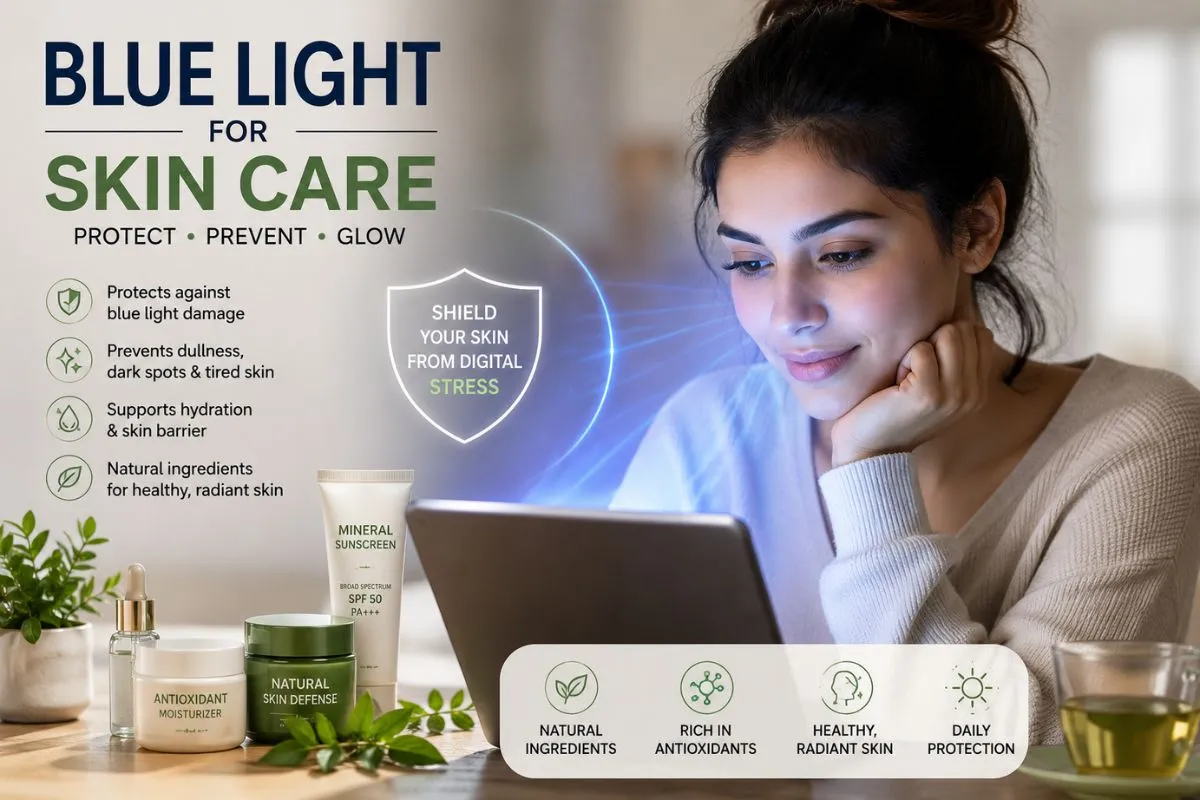
Blue light for skin care refers to skincare practices and ingredients that help support the skin against exposure to blue light, also known as high-energy visible light or HEV light. Blue light comes mainly from the sun, but it is also emitted by smartphones, laptops, tablets, televisions, LED bulbs, and other digital screens.
Unlike UV rays, blue light does not usually cause an instant sunburn. However, the effects of blue light on skin may appear gradually. Over time, repeated exposure may contribute to oxidative stress, uneven skin tone, dullness, and visible signs of digital aging. This is why more people are now searching for blue light skin protection and natural ways to keep their skin healthy in a screen-heavy lifestyle.
It is important to stay balanced. Screens are not the only or strongest source of blue light. Sunlight remains the biggest source. Still, because many people spend long hours in front of phones and computers, a smart skincare routine can help protect and support the skin.
Effects of Blue Light on Skin
The effects of blue light on skin are mostly connected to oxidative stress. Oxidative stress happens when unstable molecules, often called free radicals, build up and disturb the skin’s natural balance. When this happens repeatedly, the skin may look dull, tired, uneven, or less firm.
Here are some possible effects of blue light on skin:
- Dull and tired-looking skin
- Uneven skin tone
- Dark spots or pigmentation
- Skin dryness
- Weakened skin barrier
- Fine lines appearing more visible
- Loss of natural radiance
- Increased sensitivity in some skin types
Blue light may also affect the look of skin around the eyes because this area is thinner and more delicate. That is why people who spend long hours in front of screens may notice tired eyes, dryness, or a dull under-eye area.
However, it is important to understand that skincare cannot erase all damage overnight. The best approach is prevention, consistency, and gentle daily support. That is exactly where blue light blocking skincare and natural antioxidant care can help.
What Is Blue Light Blocking Skincare?
Blue light blocking skincare usually refers to products designed to reduce the impact of visible light exposure or support the skin against screen-related stress. Some products use tinted mineral sunscreen ingredients, such as iron oxides, zinc oxide, or titanium dioxide. Others use antioxidants to help fight free radical damage.
But here is the truth: not every product that says “blue light protection” truly blocks blue light. Some formulas may only support the skin with antioxidants, while others may offer more direct visible-light defense through tinted mineral protection. That is why you should look carefully at ingredients.
A good blue light blocking skincare routine may include:
- Antioxidant serum
- Vitamin C or vitamin E
- Green tea extract
- Niacinamide
- Aloe vera
- Mineral sunscreen
- Tinted sunscreen with iron oxides
- Barrier-supporting moisturizer
Natural skincare can play a beautiful role because many botanical ingredients are rich in antioxidants. These ingredients do not work like a screen shield, but they may help your skin stay stronger, calmer, and more radiant.
Best Natural Ingredients for Blue Light Skin Protection
The right ingredients can make your routine stronger. For blue light skin protection, choose ingredients that support antioxidant defense, hydration, and barrier repair.
1. Vitamin C
Vitamin C is one of the most popular ingredients in blue light skincare because it helps brighten the skin and supports antioxidant protection. It may help reduce the look of dullness and uneven tone caused by environmental stress.
2. Vitamin E
Vitamin E works beautifully with vitamin C. It supports the skin barrier, helps improve softness, and adds extra antioxidant care. In natural skincare, vitamin E is often found in oils, creams, and serums.
3. Green Tea Extract
Green tea is rich in polyphenols, which are known for their calming and antioxidant properties. It is a wonderful ingredient for people looking for natural blue light skin protection without harsh chemicals.
4. Niacinamide
Niacinamide is a skin-loving form of vitamin B3. It supports the skin barrier, helps improve uneven tone, and can reduce the look of redness. It is gentle and works well in many blue light skincare routines.
5. Aloe Vera
Aloe vera hydrates, cools, and soothes the skin. If your skin feels dry after long screen time, aloe can help restore comfort and freshness.
6. Licorice Root
Licorice root is often used for uneven tone and dark spots. Since pigmentation is one of the possible effects of blue light on skin, licorice root can be a helpful natural ingredient.
7. Rosehip Oil
Rosehip oil is rich in fatty acids and helps support skin repair. It is especially useful in nighttime skincare routines for screen-stressed skin.
8. Sea Buckthorn Oil
Sea buckthorn oil contains antioxidants and nourishing fatty acids. It supports glow, softness, and a healthy-looking skin barrier.
9. Zinc Oxide
Zinc oxide is a mineral sunscreen ingredient. It helps protect against UV rays and is often used in mineral SPF products.
10. Iron Oxides
Iron oxides are usually found in tinted sunscreens. They are important because tinted formulas may offer better visible-light support than non-tinted formulas. This makes them useful in blue light blocking skincare routines.
Morning Blue Light Skincare Routine
A morning routine should focus on protection. Your skin faces sunlight, screens, pollution, and dryness throughout the day. A smart morning routine can create a strong foundation for blue light skin protection.
Step 1: Use a Gentle Cleanser
Start with a mild cleanser that removes sweat and oil without stripping your skin. Avoid harsh cleansers because they can weaken your barrier and make your skin more sensitive.
Step 2: Apply an Antioxidant Serum
This is one of the most important steps in blue light skincare. Choose a serum with vitamin C, green tea, niacinamide, or vitamin E. Antioxidants help support the skin against free radical stress and keep the complexion looking bright.
Step 3: Hydrate With a Barrier-Friendly Moisturizer
Use a moisturizer that contains aloe vera, glycerin, squalane, ceramides, or plant oils. Hydration is essential because dry skin can look more tired and dull after long screen time.
Step 4: Use Mineral or Tinted SPF
For strong daily protection, use SPF every morning. If you are concerned about visible light and pigmentation, a tinted mineral sunscreen with iron oxides is a smart option. This step is very important for blue light blocking skincare and overall skin protection.
Step 5: Reapply If Needed
If you sit near windows, go outside, sweat, or spend long hours in bright light, reapply SPF. Skincare works best when it is consistent.
Night Repair Routine for Screen-Stressed Skin
At night, your skin needs comfort, hydration, and repair. After hours of screen exposure, the goal is to calm the skin and restore moisture.
Step 1: Cleanse Gently
Remove sunscreen, makeup, oil, and pollution. A gentle cleanser helps refresh the skin without damaging the barrier.
Step 2: Use a Hydrating Mist or Toner
A calming toner with aloe, rose water, or green tea can help prepare the skin for the next steps.
Step 3: Apply Niacinamide or Antioxidant Serum
Niacinamide is great for barrier support and uneven tone. If your skin feels dull, an antioxidant serum can help bring back radiance.
Step 4: Moisturize Deeply
Use a nourishing moisturizer with natural oils, ceramides, or botanical extracts. This helps reduce dryness and supports skin recovery.
Step 5: Add a Face Oil If Needed
Rosehip oil, jojoba oil, or sea buckthorn oil can be helpful for dry or tired-looking skin. Use only a few drops and avoid heavy oils if your skin is acne-prone.
This night routine supports the skin after daily exposure and strengthens your overall blue light for skin care strategy.
Blue Light Blocking Skincare vs Regular Skincare
Regular skincare focuses on cleansing, moisturizing, and treating common concerns. Blue light blocking skincare focuses more on antioxidants, visible-light defense, SPF, and barrier repair.
The difference is not always huge, but the intention matters. If you want skincare that supports your skin against screens and modern environmental stress, choose formulas with antioxidants and protective ingredients.
Regular skincare may include:
- Basic cleanser
- Basic moisturizer
- Occasional serum
Blue light blocking skincare may include:
- Antioxidant-rich serum
- Barrier-supporting moisturizer
- Tinted mineral SPF
- Green tea, vitamin C, vitamin E, or niacinamide
- Night repair ingredients
A strong routine does not need 10 products. Even 3 to 4 well-chosen products can make a real difference.
Natural Lifestyle Tips for Blue Light Skin Protection
Skincare is powerful, but lifestyle habits also matter. To improve blue light skin protection, combine your routine with smart screen habits.
Use Night Mode
Turn on night mode or warm screen settings, especially after sunset. This may help reduce harsh screen brightness.
Keep Screens Away From Your Face
Do not hold your phone too close for long periods. A little distance can reduce direct exposure and help prevent eye strain.
Take Screen Breaks
Every 20 to 30 minutes, look away from your screen. This helps your eyes, posture, and overall wellness.
Avoid Scrolling in the Dark
Scrolling in a dark room can feel harsh on your eyes and may disturb your sleep routine. Better sleep supports better skin.
Drink Water
Hydrated skin starts from within. Drink enough water and eat antioxidant-rich foods like berries, citrus fruits, leafy greens, nuts, and seeds.
Sleep Well
Sleep is when the skin repairs itself. Poor sleep can make the skin look dull, puffy, and tired. This is why nighttime screen habits matter.
These habits work beautifully with blue light skincare and help your skin look naturally healthy.
Common Myths About Blue Light for Skin Care
Myth 1: Blue Light Is Worse Than the Sun
This is not true. Sunlight is still the strongest source of blue light and UV exposure. Screens may contribute to daily exposure, but sun protection remains essential.
Myth 2: Antioxidants Fully Block Blue Light
Antioxidants do not work like a physical wall. They help support the skin against oxidative stress. For direct visible-light support, tinted mineral SPF with iron oxides may be more useful.
Myth 3: You Only Need Blue Light Skincare If You Work Online
Even if you do not work online, you may still use phones, LED lights, and laptops daily. A simple blue light skincare routine can benefit many people.
Myth 4: Natural Oils Can Replace Sunscreen
Natural oils can nourish the skin, but they cannot replace SPF. Sunscreen is still necessary for daily protection.
Myth 5: Blue Light Damage Appears Overnight
The effects of blue light on skin usually appear gradually. That is why prevention and consistency matter.
Best Routine for Different Skin Types
For Dry Skin
Choose aloe vera, rosehip oil, squalane, vitamin E, and creamy moisturizers. Dry skin needs extra barrier support.
For Oily Skin
Use lightweight serums, gel moisturizers, niacinamide, and non-comedogenic SPF. Avoid heavy oils if they clog your pores.
For Sensitive Skin
Choose fragrance-free, gentle formulas. Green tea, aloe vera, oat extract, and niacinamide can be helpful.
For Pigmentation-Prone Skin
Use vitamin C, licorice root, niacinamide, and tinted mineral SPF. Since pigmentation is one of the possible effects of blue light on skin, this skin type needs consistent protection.
For Mature Skin
Look for antioxidants, peptides, vitamin C, vitamin E, and nourishing moisturizers. Mature skin benefits from both hydration and protection.
Final Thoughts
Blue light for skin care is more than a beauty trend. It is part of modern skincare because our lifestyle has changed. We work on screens, relax on screens, study on screens, and communicate through screens. Naturally, our skincare needs to evolve too.
The best approach is simple: do not panic, but do protect. Use antioxidant-rich formulas, hydrate your skin, strengthen your barrier, apply SPF, and create healthier screen habits. With the right routine, blue light skincare can help your skin stay bright, calm, and confident.
If you want a natural, gentle, and effective routine for modern skin, Hudira organic products are created to support your glow with plant-powered care. Explore Hudira’s organic skincare collection and give your skin the daily love, protection, and nourishment it deserves.
FAQs
Q. How to prevent blue light skin damage naturally?
To prevent blue light skin damage naturally, use antioxidant skincare in the morning, apply mineral or tinted SPF, hydrate your skin, and repair your barrier at night. Ingredients like vitamin C, green tea, aloe vera, niacinamide, and rosehip oil can support your natural routine.
Q. Does blue light age you?
Blue light may contribute to oxidative stress, dullness, pigmentation, and early signs of aging over time. However, sunlight is still a stronger source of light exposure than screens. A good blue light skin protection routine can help support healthier-looking skin.
Q. What is the best blue light skincare routine?
The best blue light skincare routine includes a gentle cleanser, antioxidant serum, moisturizer, and mineral or tinted SPF in the morning. At night, cleanse, hydrate, apply a calming serum, and use a barrier-repair moisturizer.
Q. Does blue light blocking skincare really work?
Blue light blocking skincare can help when it contains the right ingredients. Antioxidants support the skin against oxidative stress, while tinted mineral sunscreens with iron oxides may help protect against visible light exposure.
Q. What are the main effects of blue light on skin?
The main effects of blue light on skin may include oxidative stress, dullness, uneven tone, dark spots, dryness, and early signs of digital aging. Consistent skincare and healthy screen habits can help reduce these concerns.

Add comment