
No products in the cart.
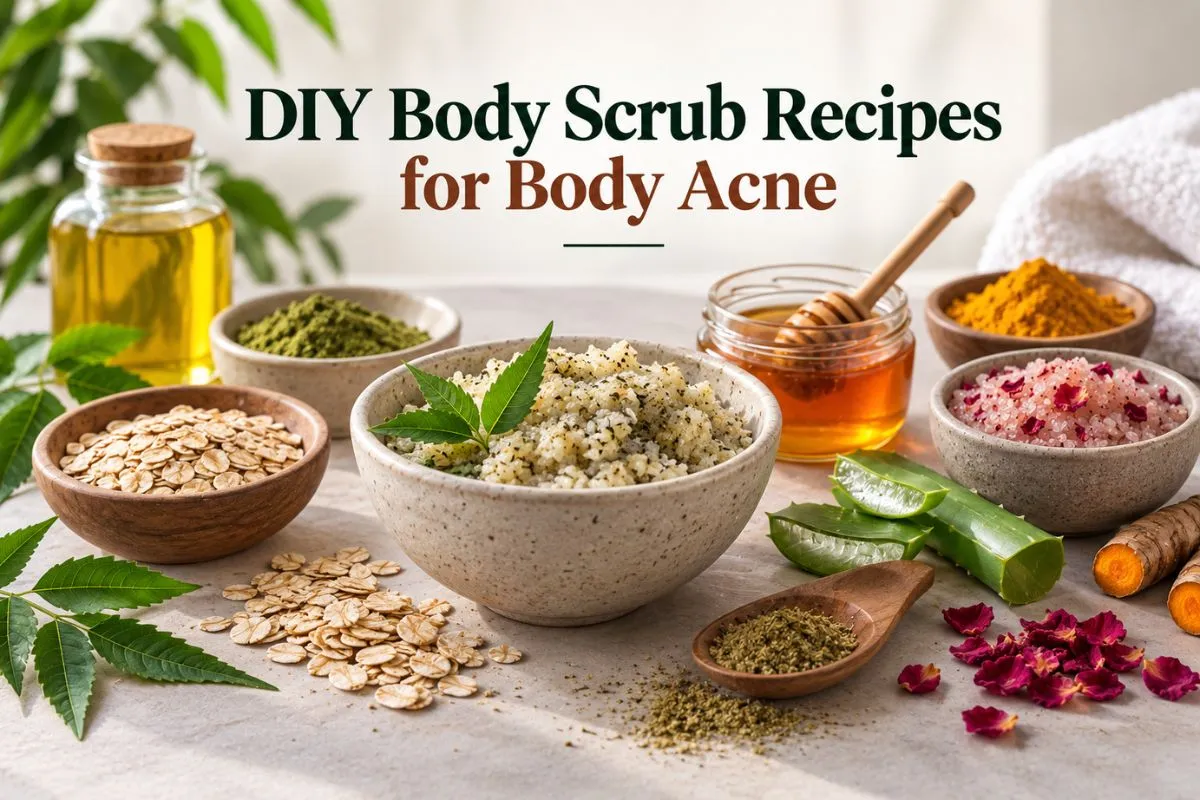
Body acne can turn a simple shower into a frustrating skincare puzzle. Sweat, excess oil, dead skin, friction from clothing, and clogged follicles can all contribute to breakouts across the back, chest, shoulders, and arms. That is why a carefully made diy body scrub can be tempting: it may lift away surface buildup and leave rough skin feeling smoother. But acne-prone skin needs a gentler strategy than aggressive rubbing. The goal is not to “scrub acne away”; it is to exfoliate without damaging the skin barrier or irritating active pimples.
The good news is that herbal skincare gives you plenty of thoughtful options. From soothing oats and green tea to traditional neem, turmeric, rose, and chickpea flour, the right ingredients can turn homemade body peeling into a calm, satisfying self-care ritual. Below, you will find eight practical recipes, learn what makes a safe body scrub recipe, and discover how to choose a diy body exfoliator according to your skin’s needs. One small detail—the texture of your scrub—may matter even more than the number of “powerful” herbs inside it.
Can Herbal Body Scrubs Help Body Acne?
Body acne develops when pores and hair follicles become clogged with oil, dead skin cells, sweat, and other debris. Friction from tight clothing, backpacks, workout gear, and sweaty fabric can also make back and chest breakouts worse.
Physical exfoliation can help remove loose surface cells and improve rough texture, but it is not a treatment for inflamed acne. Dermatologists warn that harsh scrubbing can irritate acne-prone skin and cause acne to flare.
If you have painful cysts, open pimples, bleeding spots, or very red and swollen breakouts, skip physical scrubbing and focus on gentle cleansing and appropriate acne treatment.
That distinction matters. Body scrubs exfoliating healthy, rough skin may feel refreshing; scrubbing directly over inflamed lesions can do the opposite. For mild roughness between breakouts, however, a soft diy body exfoliator can have a useful place in a balanced body-care routine.
What Makes a Good Herbal Body Scrub?
The best scrub for acne-prone body skin is not the roughest one. It should have small, smooth particles, a simple ingredient list, and enough moisture to glide over damp skin with almost no pressure.
A smart body scrub recipe should ideally include:
- A finely milled exfoliating base, such as oats, chickpea flour, or green gram flour
- One or two supportive botanicals rather than many strong ingredients
- A soothing wet ingredient such as aloe vera gel, plain yogurt, honey, or cooled green tea
- No sharp nut shells, coarse salt, or jagged seed particles
- No fresh lemon juice, undiluted essential oils, or baking soda on sensitive acne-prone skin
- A single-use quantity if the mixture contains water, tea, yogurt, or aloe
A good diy body scrub should feel creamy or softly textured rather than rough and scratchy.
8 Herbal Body Scrub Recipes for Acne-Prone Skin
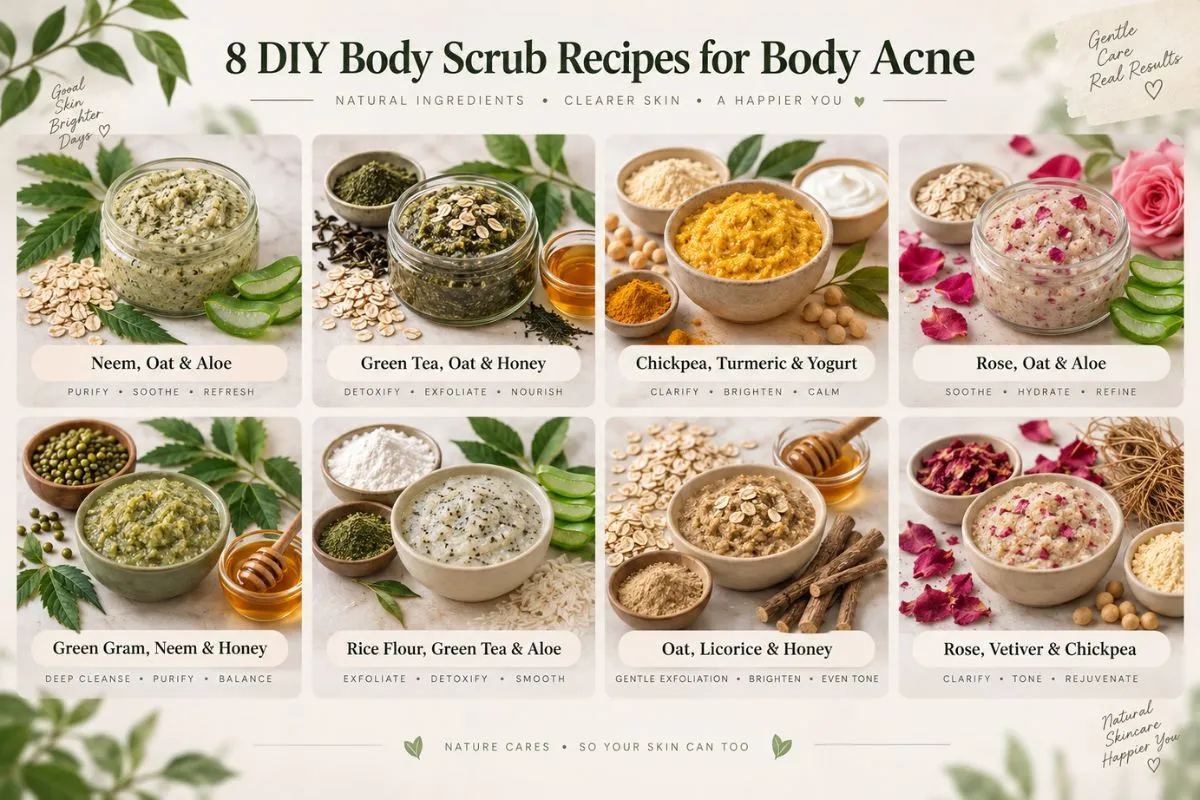
These recipes are designed for gentle surface exfoliation on intact skin. They are not acne medicines and should not be rubbed over painful, broken, infected, or highly inflamed areas.
For every recipe, grind dry ingredients extremely finely and patch-test unfamiliar botanicals first.
1. Neem, Oat and Aloe Gentle Scrub
This is an excellent starting option when your skin feels oily, rough, or congested but is not actively inflamed.
Oats provide a soft polishing texture, aloe helps the mixture glide across the skin, and neem adds a traditional botanical ingredient widely used in South Asian skincare.
Ingredients
- 2 tablespoons finely ground oats
- 1 teaspoon neem powder
- 1 tablespoon plain aloe vera gel
- 1–2 teaspoons water, if needed
Method
Mix the oat and neem powders first.
Slowly stir in the aloe vera gel until you create a creamy paste. Add only enough water to improve spreadability.
Apply to damp skin and massage with feather-light circular movements for approximately 20–30 seconds per area.
Rinse thoroughly with lukewarm water.
This body scrub recipe is intentionally soft. If you can feel sharp or scratchy particles, grind the oats more finely or add additional aloe.
Best for: rough, oily-feeling skin between breakouts.
2. Green Tea, Oat and Honey Antioxidant Scrub
Green tea contains polyphenols with antioxidant properties, while honey gives the scrub excellent slip and prevents the formula from feeling too dry.
Oats keep the exfoliation gentle.
Ingredients
- 2 tablespoons finely ground oats
- 1 teaspoon finely ground green tea or matcha
- 1 tablespoon honey
- 1–2 teaspoons cooled green tea, if required
Method
Combine the oats and green tea.
Stir in the honey and add a tiny amount of cooled tea until a soft paste forms.
Apply to damp body skin and massage gently.
Rinse thoroughly without allowing the mixture to dry completely on the skin.
This diy body scrub can be a refreshing option when skin feels dull after sweating or exposure to dry weather.
Green tea is rich in plant compounds, but it is important to keep expectations realistic. Evidence supporting drinking green tea or its components does not automatically prove that a homemade topical green-tea scrub will treat acne.
Best for: dull, rough, acne-prone body skin that is not inflamed.
3. Chickpea Flour, Turmeric and Yogurt Ubtan-Inspired Scrub
Chickpea flour, commonly known as besan, has been part of traditional South Asian beauty rituals for generations.
When combined with a very small amount of turmeric and plain yogurt, it creates a creamy paste rather than an aggressively gritty scrub.
Ingredients
- 2 tablespoons chickpea flour
- ⅛ teaspoon turmeric
- 1 tablespoon plain unsweetened yogurt
- 1 teaspoon water, if required
Method
Mix the chickpea flour and turmeric.
Add the yogurt and stir until completely smooth.
Apply a thin layer to damp skin and massage with very light pressure.
Rinse before the mixture dries hard.
This version of homemade body peeling takes inspiration from traditional ubtan-style body care while adapting it into a softer modern ritual.
Use turmeric sparingly because it can temporarily stain pale towels, clothing, or bathroom surfaces.
4. Rose, Oat and Aloe Softening Scrub
If you want something simple, gentle, and beautifully botanical, rose and oat make a lovely pairing. Instead of using strongly fragranced essential oils, this recipe relies on finely milled rose-petal powder.
Ingredients
- 2 tablespoons finely ground oats
- 1 teaspoon finely ground rose-petal powder
- 1½ tablespoons plain aloe vera gel
Method
Mix all ingredients until you create a smooth, soft paste.
Apply to damp shoulders, arms, back, or chest where the skin is intact.
Massage lightly and rinse with lukewarm water.
This homemade soft scrub is ideal when you want body exfoliation to feel calming rather than aggressive.
Best for: dry-feeling or delicate acne-prone body skin between active breakouts.
5. Green Gram, Neem and Honey Traditional Scrub
Green gram, or mung bean, is another ingredient commonly used in traditional South Asian cleansing powders.
When milled into a very fine flour, it creates a gentle physical exfoliating base.
Ingredients
- 2 tablespoons finely ground green gram flour
- ½ teaspoon neem powder
- 1 tablespoon honey
- 1–2 teaspoons water
Method
Combine the green gram and neem powders.
Add honey and enough water to create a creamy consistency.
Test a small amount between your fingers before applying it.
If you notice sharp particles, grind the mixture more finely.
This diy body exfoliator works best on rough skin surrounding breakout-prone areas rather than directly over inflamed pimples.
Best for: oily-feeling, textured body skin.
6. Rice Flour, Green Tea and Aloe Polishing Scrub
Extra-fine rice flour provides slightly more polishing action than oatmeal, so this recipe is best reserved for calm, non-inflamed skin.
Combining rice flour with oats reduces the overall roughness.
Ingredients
- 1 tablespoon extra-fine rice flour
- 1 tablespoon finely ground oats
- 1 teaspoon green tea powder
- 1½ tablespoons aloe vera gel
Method
Mix all dry ingredients.
Add aloe and stir until smooth.
Test the mixture between two fingers.
It should feel soft and fine, not gritty or sharp.
Apply to damp skin with almost no pressure and rinse thoroughly.
This body scrub recipe may be useful when post-breakout areas feel uneven or rough.
Never use coarse rice granules over active acne.
Best for: rough texture and non-inflamed post-breakout skin.
7. Oat, Licorice Root and Honey Comfort Scrub
Licorice root is widely used in botanical skincare, particularly in products designed for soothing and uneven-looking skin.
Here, it acts as a supporting botanical rather than the primary exfoliating ingredient.
Ingredients
- 2 tablespoons finely ground oats
- ½ teaspoon cosmetic-grade licorice root powder
- 1 tablespoon honey
- 1 teaspoon water, if necessary
Method
Mix all ingredients until the paste glides easily over wet skin.
Massage very gently for approximately 20–30 seconds and rinse.
This version of homemade body peeling can be particularly attractive when your main concern is rough skin with old post-breakout marks rather than active pimples.
However, do not expect physical exfoliation to erase pigmentation instantly. Dark marks often require patience, sun protection on exposed areas, and appropriately selected leave-on skincare.
Best for: old post-breakout marks accompanied by rough texture.
8. Rose, Vetiver and Chickpea Herbal Scrub
This recipe combines classic botanical body-care ingredients while keeping physical abrasion low. Use only cosmetic-grade powders that have been extremely finely milled.
Ingredients
- 2 tablespoons chickpea flour
- ½ teaspoon rose powder
- ¼ teaspoon very finely milled vetiver powder
- 1–2 tablespoons aloe vera gel or plain yogurt
Method
Combine the dry powders.
Slowly add aloe or yogurt until the mixture becomes smooth and creamy.
Massage very gently over damp, intact skin.
Rinse thoroughly.
This final diy body scrub is best treated as a botanical body-polishing ritual rather than an acne cure.
If your vetiver powder feels fibrous or rough, simply leave it out.
Best for: a traditional botanical body-care experience with gentle exfoliation.
How to Use a DIY Body Scrub Safely
Technique matters almost as much as ingredients. Start with a warm not excessively hot shower. Cleanse your skin gently and apply the scrub only to damp, intact skin. Use your fingertips rather than an exfoliating glove, rough brush, or loofah over acne-prone areas. Massage for approximately 20–30 seconds per section using minimal pressure.
Then rinse thoroughly, pat your body dry, and apply a lightweight moisturizer suitable for your skin. A diy body scrub should never cause burning, intense stinging, or persistent redness.
For most people with acne-prone skin, beginning once weekly is a more cautious approach than scrubbing every day. If your skin becomes red, tight, flaky, sore, or increasingly sensitive, reduce the frequency or stop exfoliating.
DIY Body Peeling vs Professionally Formulated Scrubs
The main advantage of diy body peeling is control. You choose the ingredients, texture, and amount.
The downside is inconsistency. Kitchen ingredients naturally vary in particle size, cleanliness, freshness, and concentration. Professionally developed skincare can provide more standardized particle sizes, preservation, stability testing, and predictable application.
That does not mean every commercial product is automatically superior. It simply means that formulation quality matters more than whether something is labelled “homemade” or “store-bought.”
For people who enjoy home body scrubs, keeping a clean dry-powder mixture and wetting only one portion immediately before use is a practical approach.
A Simple Routine for Clearer-Looking Body Skin
A scrub should remain one small part of a wider body-care routine.
First, shower after sweating heavily and change out of damp workout clothes. Sweat trapped underneath clothing and repeated friction can contribute to back acne.
Next, use acne-targeted ingredients when needed. Depending on the type of breakout, ingredients such as salicylic acid or benzoyl peroxide may be more appropriate than trying to physically polish every blemish away.
Then, add a mild diy body exfoliator only when the skin is calm enough to tolerate physical exfoliation. Afterward, use a lightweight moisturizer because even oily or acne-prone skin needs barrier support.
Finally, watch friction. Tight synthetic clothing, backpacks, sports pads, and sweaty fabric repeatedly rubbing against the skin can make body breakouts more troublesome.
Which Body Scrub Recipe Should You Choose?
If you are new to exfoliation, start with the neem-oat-aloe mixture because its texture is easy to control. Choose the green-tea blend when you want an antioxidant-rich ritual.
Try rose and oats when softness is your priority.
The chickpea-and-turmeric formula is ideal if you enjoy traditional South Asian skincare rituals, while green gram offers another culturally familiar option.
Extra-fine rice flour provides slightly more polishing, so reserve that option for non-inflamed roughness. Whichever body scrub recipe you choose, remember one golden rule:
Why Hudira Believes in Smarter Botanical Body Care
At Hudira, we believe traditional botanical ingredients deserve a thoughtful, modern approach.
Neem, turmeric, rose, oats, green tea, and other plant-based ingredients can transform body care into a meaningful self-care ritual but great skincare should also respect the skin barrier and realistic expectations.
That means choosing gentleness over aggressive rubbing, thoughtful formulations over random ingredient overload, and consistency over quick fixes.
A carefully selected diy body scrub can be enjoyable when your skin is calm and needs gentle polishing. But skincare becomes even easier when botanical ingredients are formulated thoughtfully for everyday use.
If you love natural skincare but want something more refined than mixing ingredients every time you shower, explore Hudira organic products. Hudira celebrates botanical self-care while keeping practical skin needs at the heart of every ritual.
Your skin does not need to be scrubbed into submission. Give it patient, purposeful care and let healthier-looking skin become the result of a routine you can genuinely enjoy.
FAQs
Q. Is a DIY Body Scrub Good for Back Acne?
A diy body scrub may help smooth rough, non-inflamed skin around breakout-prone areas, but it should not be aggressively rubbed over painful, swollen, broken, or cystic pimples. Persistent back acne may benefit more from evidence-based acne care or professional advice.
Q. How Often Should I Do Homemade Body Peeling?
For acne-prone skin, start homemade body peeling about once weekly. If your skin remains comfortable, some people may tolerate slightly more frequent exfoliation. Reduce or stop it if you develop redness, burning, tightness, flaking, or increased sensitivity.
Q. Can a Homemade Body Peeling Recipe Remove Acne Marks?
Gentle exfoliation may make surface skin appear smoother and brighter, but homemade body peeling cannot instantly erase post-acne pigmentation. Avoiding irritation, protecting exposed skin from the sun, and using appropriately chosen leave-on skincare can be more helpful for stubborn marks.
Q. What Is the Safest DIY Body Exfoliator for Beginners?
A simple oat-and-aloe diy body exfoliator is one of the easiest options because you can control its consistency and keep the texture extremely soft.

Add comment