
No products in the cart.

Back acne can be stubborn, uncomfortable, and surprisingly hard to manage especially when the breakouts sit in places you cannot easily see or reach. If you are wondering how to treat back acne without turning your routine into a shelf full of harsh products, the good news is that simple, consistent habits can make a meaningful difference. Sweat, excess oil, dead skin cells, friction, and pore-clogging products can all contribute to pimples on back, so the most effective natural-first approach focuses on keeping the skin clean, calm, and protected rather than scrubbing it aggressively.
But here is the part many people miss: not every “natural” remedy deserves a place on acne-prone skin. Some popular DIY fixes can irritate the skin barrier and leave breakouts looking angrier than before. So which gentle habits are actually worth trying, which ingredients deserve caution, and when does acne need more than home care? Keep reading the difference between helpful and harmful can be surprisingly small.
What Is Back Acne?
Back acne is acne that develops across the upper back, shoulders, or sometimes lower back. Just like facial acne, it can appear as blackheads, whiteheads, small red bumps, pus-filled pimples, or deeper tender spots. People may casually search for the condition as backnee, but medically it is simply acne affecting the back.
The back contains many oil-producing glands and hair follicles. When excess oil and dead skin cells collect inside a follicle, the pore can become blocked. Inflammation can then develop, creating pimples on back or clusters of inflamed spots.
What Causes Pimples on Back?
Understanding the trigger is one of the smartest steps in learning how to treat back acne. Acne rarely has one single cause. Several everyday factors may work together.
Excess Oil and Clogged Follicles
Sebum is the natural oil that helps protect your skin. Problems can begin when excess sebum mixes with dead skin cells and blocks follicles. This creates an environment where inflammation can develop and breakouts become more noticeable.
Sweat and Heat
Sweat itself is not “dirty,” but leaving sweaty clothing pressed against the back for hours can create a warm, damp, irritating environment. If you regularly work out, play sports, or live in a hot climate, changing clothes and showering after heavy sweating can be an important part of body-acne care.
Friction and Tight Clothing
Sports bras, tight shirts, shapewear, backpack straps, chairs, and exercise equipment can repeatedly rub the same areas. Dermatologists sometimes describe acne triggered or worsened by heat, pressure, and friction as acne mechanica. If pimples on back appear exactly where clothing or straps rub, friction may be contributing.
Hormonal Changes
Hormones can influence oil production, which is why acne may change during puberty, menstrual cycles, pregnancy, or other hormonal shifts. Hormonal factors can also help explain why some people suddenly notice a pimple on back even though their skincare routine has not changed.
Hair and Body Products
Heavy conditioners, hair oils, body butters, and rich lotions may leave residue that can worsen back pimples.
For acne-prone people, switching to non-comedogenic or lighter products can sometimes help reduce clogged pores and breakouts.
Genetics and Stress
Genetics can also influence how acne-prone your skin is. Stress does not automatically cause every breakout, but changes in hormones, sleep, diet, and everyday routines may make existing acne more difficult to manage.
Is It Really Back Acne?
Not every cluster of bumps is acne. Folliculitis, heat rash, irritation, and other skin conditions can sometimes resemble acne. Folliculitis, for example, involves inflamed hair follicles and may produce small bumps that look unusually similar to one another.
If your backnee-like bumps are very itchy, spreading quickly, painful, recurrent, or not improving with ordinary acne care, avoid guessing. A dermatologist or qualified healthcare professional can determine what you are actually dealing with.
This matters because the best acne treatment is not necessarily the right treatment for folliculitis or another rash.
How to Treat Back Acne Naturally: 9 Gentle Steps
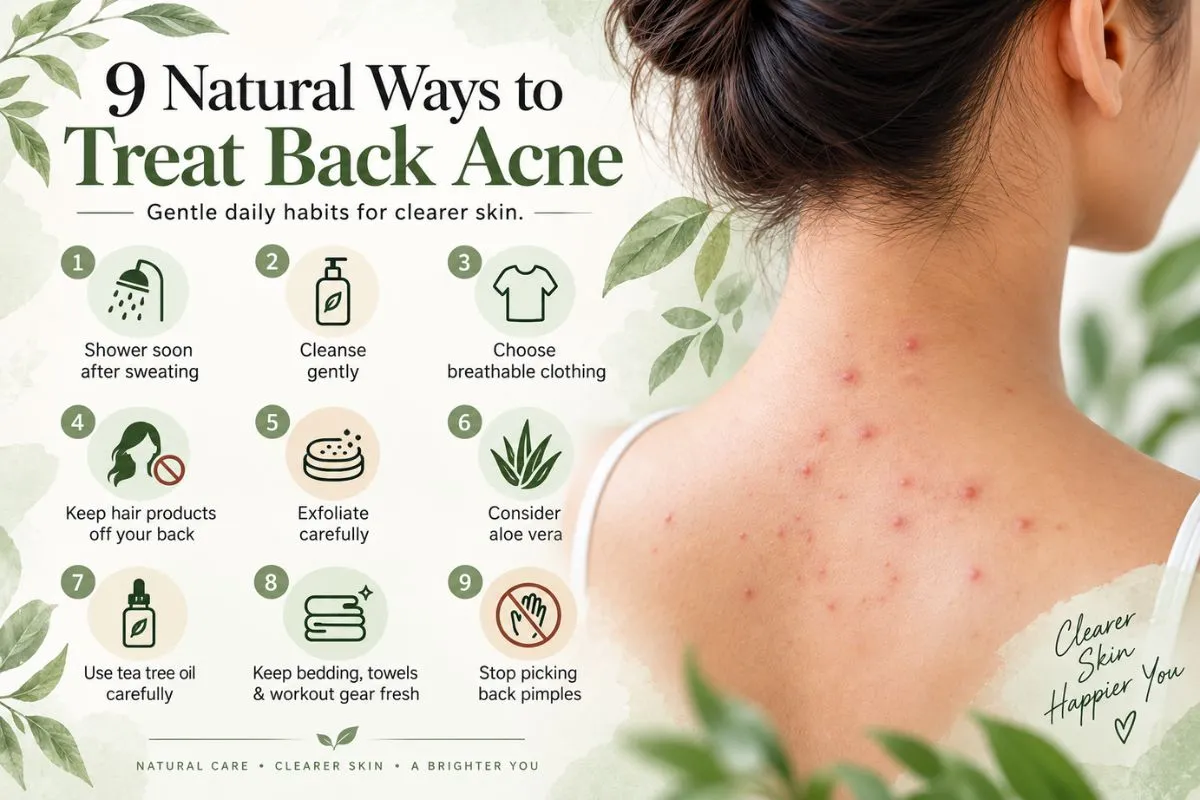
Natural care does not have to mean covering your back in kitchen ingredients. In fact, the safest approach is usually less dramatic: reduce sweat and friction, cleanse gently, protect the skin barrier, and use well-formulated products rather than harsh DIY mixtures.
Here is how to treat back acne with a natural-first routine.
1. Shower Soon After Heavy Sweating
One of the simplest changes is also one of the most useful. After exercise, sports, gardening, or a very sweaty day, shower when practical and change into clean, dry clothing.
Allowing a damp shirt to sit against acne-prone skin can add friction and irritation. If you cannot shower immediately, changing your top and gently drying the skin is still better than staying in sweaty clothes.
For people who notice pimples on back after workouts, this small habit can be a powerful starting point. Consistency matters more than using an aggressive cleanser.
2. Cleanse Gently, Not Aggressively
Back acne can make you want to scrub until your skin feels squeaky clean. Resist that urge.
Harsh scrubbing, stiff brushes, rough loofahs, and frequent washing can irritate inflamed skin. Dermatology guidance generally favors gentle cleansing and warns that abrasive treatment can aggravate acne. A mild cleanser and lukewarm water are usually kinder choices.
When learning how to treat back acne, think “clean without stripping.” Wash after heavy sweating and keep your normal routine simple. Your skin does not need punishment to become clearer.
3. Choose Breathable, Looser Clothing
If back pimples frequently appear beneath tight tops, sportswear, or straps, your wardrobe may be part of the problem.
Whenever practical, choose lightweight and breathable clothing, especially during exercise or hot weather. Change workout shirts after use instead of wearing them again.
This is an especially useful natural strategy for backnee because it removes a trigger instead of adding another product.
4. Keep Hair Products Away From Your Back
Conditioners can make hair feel amazing, but rich formulas and hair oils may leave residue across the shoulders and upper back.
Try rinsing conditioner thoroughly, clipping long hair up after applying leave-in products, and washing your back after you rinse your hair. If you use heavy oils, avoid letting freshly oiled hair rest against bare acne-prone skin for long periods.
For some people, these simple adjustments reduce the product buildup that may contribute to pimples on back.
5. Exfoliate Carefully
Exfoliation can help remove dead surface cells, but acne-prone skin does not need daily scrubbing.
Skip coarse sugar scrubs, salt scrubs, harsh brushes, and anything that leaves your skin burning or bright red. Over-exfoliation can weaken the skin barrier and increase irritation around existing back pimples.
If you want exfoliating support, consider a properly formulated acne product rather than a rough homemade scrub.
Salicylic acid is a commonly used acne ingredient because it helps unclog follicles. It is not a “natural remedy,” but it has stronger acne evidence than most viral DIY treatments.
6. Consider Aloe Vera for Soothing Support
Aloe vera is popular because it feels cooling and soothing. It may be useful as supportive care when skin feels irritated, but it should not be presented as an acne cure.
Choose a simple, well-formulated aloe product without heavy fragrance or pore-clogging oils. Patch-test first, especially if your skin is sensitive.
Think of aloe as a comfort ingredient not the best back acne treatment by itself. If your acne is inflamed or persistent, you may need proven acne ingredients or professional care in addition to soothing skincare.
7. Use Tea Tree Oil Carefully
Tea tree oil is one of the natural ingredients most commonly associated with acne care, but “natural” does not mean undiluted essential oil should go directly onto irritated skin.
Evidence for tea tree oil and several other botanical acne products is more limited than evidence for established acne medications.
If you want to try it, choose a professionally formulated skincare product rather than applying concentrated tea tree essential oil directly. Stop if you notice burning, swelling, or worsening irritation.
8. Keep Bedding, Towels, and Workout Gear Fresh
Your back spends hours against fabrics. Clean sheets, towels, sports bras, workout tops, and sleepwear help reduce the buildup of sweat, oils, and product residue.
This habit will not erase backnee overnight, but it supports a cleaner environment for acne-prone skin and works well alongside the rest of your routine.
Small actions can feel almost too simple to matter, but when repeated consistently, they can remove some of the everyday triggers that make acne more frustrating.
9. Stop Picking Back Pimples
Picking back pimples is tempting, especially when a blemish feels large or painful. Unfortunately, squeezing can increase inflammation and raise the risk of marks or scars.
The NHS and dermatology guidance advise against squeezing acne lesions because doing so can worsen spots and contribute to scarring.
If you cannot easily see the area, that is even more reason not to attack it blindly. Protecting the skin and allowing treatment time to work is far more helpful than repeatedly traumatizing pimples on back.
What About Salicylic Acid and Benzoyl Peroxide?
A natural-first article should still tell you when evidence-based ingredients matter.
For mild back acne, topical acne products may be enough. Benzoyl peroxide helps reduce acne-associated bacteria, while salicylic acid helps unclog follicles.
If you are pregnant, breastfeeding, taking medication, or dealing with severe acne, ask a doctor or pharmacist which options are appropriate for you. Choosing natural skincare does not mean you have to ignore evidence-based ingredients when your skin genuinely needs them.
How to Prevent Back Pimples From Coming Back
Learning how to treat back acne is only half the story. Prevention is about making your routine easier for your skin to tolerate.
Start with the basics:
- Wear clean, breathable clothes.
- Change soon after heavy sweating.
- Shower after workouts when possible.
- Avoid oily or pore-clogging body products.
- Keep hair conditioner and styling oils off your back.
- Use gentle, non-abrasive cleansing.
- Avoid picking.
- Wash workout gear and bedding regularly.
- Reduce repeated rubbing from backpacks or tight straps where possible.
A few steady habits are generally more useful than constantly changing products or trying the newest viral remedy.
A Simple Routine for Backnee-Prone Skin
You do not need an exhausting 10-step body-care ritual. A simple routine can make caring for acne-prone skin easier and more sustainable.
Morning
Wear clean, comfortable clothing. If your back will be exposed to the sun, use an appropriate non-comedogenic sunscreen.
Avoid heavy body oils over acne-prone areas.
After Exercise
Change out of sweaty clothing.
Shower with a gentle cleanser as soon as practical. Pat the skin dry instead of rubbing aggressively.
Evening
Cleanse gently if needed. Apply any acne treatment according to its instructions.
If your skin feels dry, choose a lightweight, non-comedogenic moisturizer.
Weekly
Wash frequently used bedding and workout gear.
Review whether any new hair, body, or laundry product seems to coincide with breakouts.
A routine this simple is easier to maintain, and consistency is one of the most underrated parts of effective acne care.
How Long Does Back Acne Take to Improve?
Do not expect a dramatic overnight transformation.
Acne treatments typically need several weeks of consistent use before improvement becomes convincing. That is why constantly switching products can work against you.
Give a sensible routine time to work unless it causes significant irritation. When you understand how to treat back acne patiently, you can focus less on chasing an instant cure and more on building habits your skin can actually tolerate.
When Should You See a Dermatologist?
Natural care is best suited to mild concerns and supportive skincare.
Professional treatment becomes important when backnee is widespread, painful, deep, scarring, or refusing to improve.
See a healthcare professional if you develop large nodules or cysts, significant scarring, rapidly worsening breakouts, unusual itching, or acne that affects your confidence and wellbeing.
Back and chest acne can sometimes require stronger prescription treatment. The NHS specifically notes that severe acne on the chest and back may need antibiotics or stronger prescription creams.
Seeking help early can also reduce the risk of long-lasting scars or pigmentation from severe inflammatory acne.
Final Thoughts: Gentle Care Can Make a Real Difference
Knowing how to treat back acne naturally starts with moving away from harsh, panic-driven skincare.
Your back does not need to be scrubbed raw. It needs consistency: gentle cleansing, clean clothing, less friction, thoughtful products, and patience.
Whether you call it acne, bacne, or backnee, the goal is the same—support healthier-looking skin without making irritation worse. Small habits such as showering after sweating, keeping hair products away from the back, choosing breathable fabrics, and resisting the urge to squeeze back pimples can add up over time.
And when natural support is not enough, evidence-based acne treatments or professional dermatology care can be the next sensible step.
Ready to build a kinder skincare routine? Explore Hudira organic products for thoughtfully selected, plant-powered skincare designed to bring gentle, nature-inspired care into your everyday routine. Give your skin thoughtful care instead of harsh shortcuts and discover a routine that feels as good as it looks.
FAQs
Q. How to get rid of acne on back naturally?
Start with gentle cleansing, showering after sweating, wearing breathable clothes, reducing friction, keeping oily hair products off the skin, and avoiding picking.
Natural ingredients such as aloe may soothe skin, but persistent or painful acne may need proven topical treatment or a dermatologist.
Q. Why do I keep getting pimples on my back?
Pimples on back can develop because of clogged follicles, excess oil, dead skin cells, hormones, sweat, friction, genetics, or pore-clogging hair and body products.
Look for patterns around workouts, clothing, backpacks, and hair-care routines. Identifying recurring triggers may help you create a more effective long-term routine.
Q. What is the best natural bacne treatment?
A sensible natural-first bacne treatment focuses on reducing sweat and friction, cleansing gently, avoiding harsh scrubs, keeping fabrics clean, and using well-formulated products.
Q. How do I know if my backnee needs a dermatologist?
Seek professional advice if backnee becomes painful, deep, widespread, itchy, scarring, or fails to improve after a consistent routine.
A dermatologist can confirm whether the bumps are acne, folliculitis, or another condition and recommend the most appropriate treatment.


Add comment