
No products in the cart.
Putting glycolic acid on the face can sound surprisingly intense, especially when the word “acid” is involved. Yet glycolic acid is one of the best-known alpha hydroxy acids (AHAs) used in skincare, and it also occurs naturally in certain plants. When used in a well-formulated product at an appropriate strength, it can help lift dull surface cells, smooth rough texture, support a brighter-looking complexion, and improve the appearance of uneven tone. That is why understanding the natural sources of glycolic acid matters: it helps separate genuine ingredient science from vague “fruit acid” marketing.
But here is where things get interesting. Not every fruit promoted as a natural exfoliant is a meaningful source of glycolic acid, and a homemade fruit treatment is not the same thing as a carefully formulated skincare product. The relationship between glycolic acid and skin depends on concentration, pH, frequency, and your individual skin barrier. So which plants actually contain it, what are the most useful glycolic benefits, and when does “natural” matter? The answers may challenge a few popular skincare assumptions.
What Is Glycolic Acid?
Glycolic acid is an alpha hydroxy acid, or AHA, used mainly as a water-soluble exfoliating ingredient. Cleveland Clinic describes glycolic acid as an AHA associated with sugarcane and notes that it is commonly used to exfoliate dead surface cells and improve the look of tone and texture.
The most familiar uses of glycolic acid involve removing accumulated dead cells from the outermost surface of skin. Instead of physically scrubbing those cells away, glycolic acid helps loosen the connections between them so they shed more readily.
However, glycolic acid and skin do not have a one-size-fits-all relationship. A formula that works beautifully for resilient, oily skin may be too aggressive for dry, sensitive, or already irritated skin. The results depend not only on the ingredient itself but also on how the entire product is formulated.
Where Does Glycolic Acid Come From Naturally?
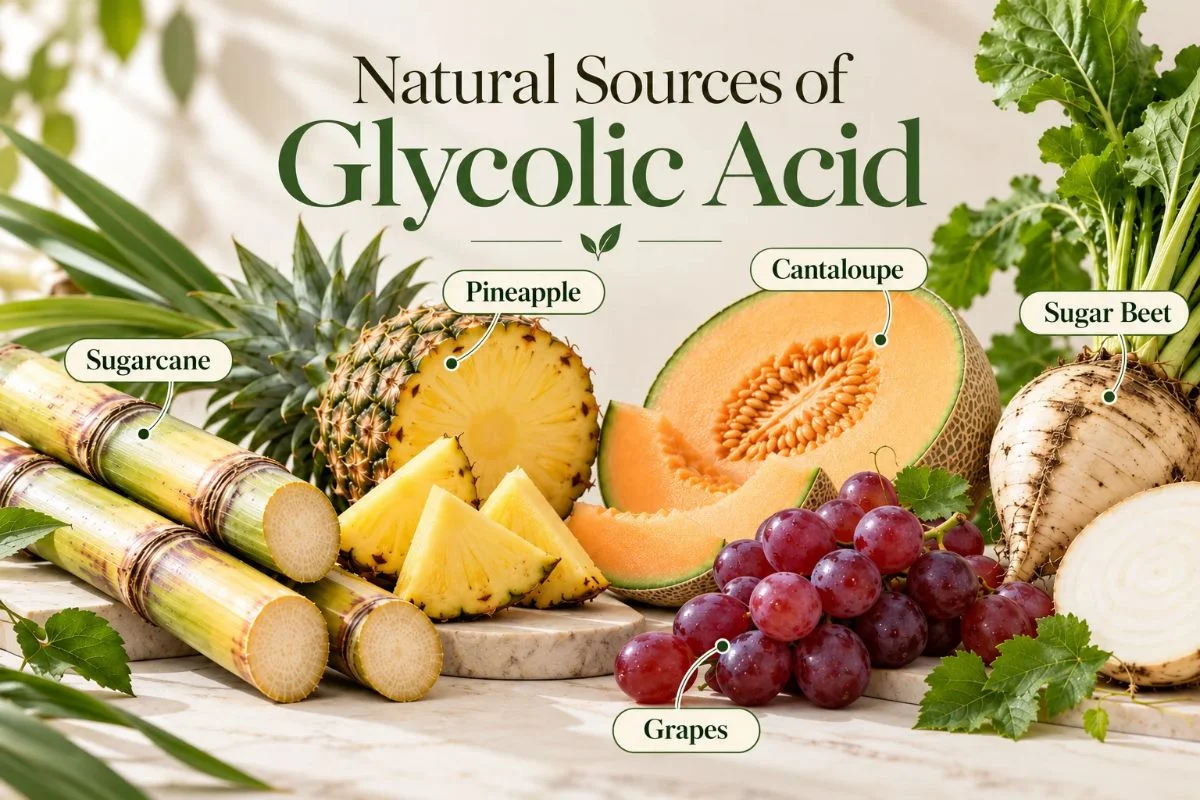
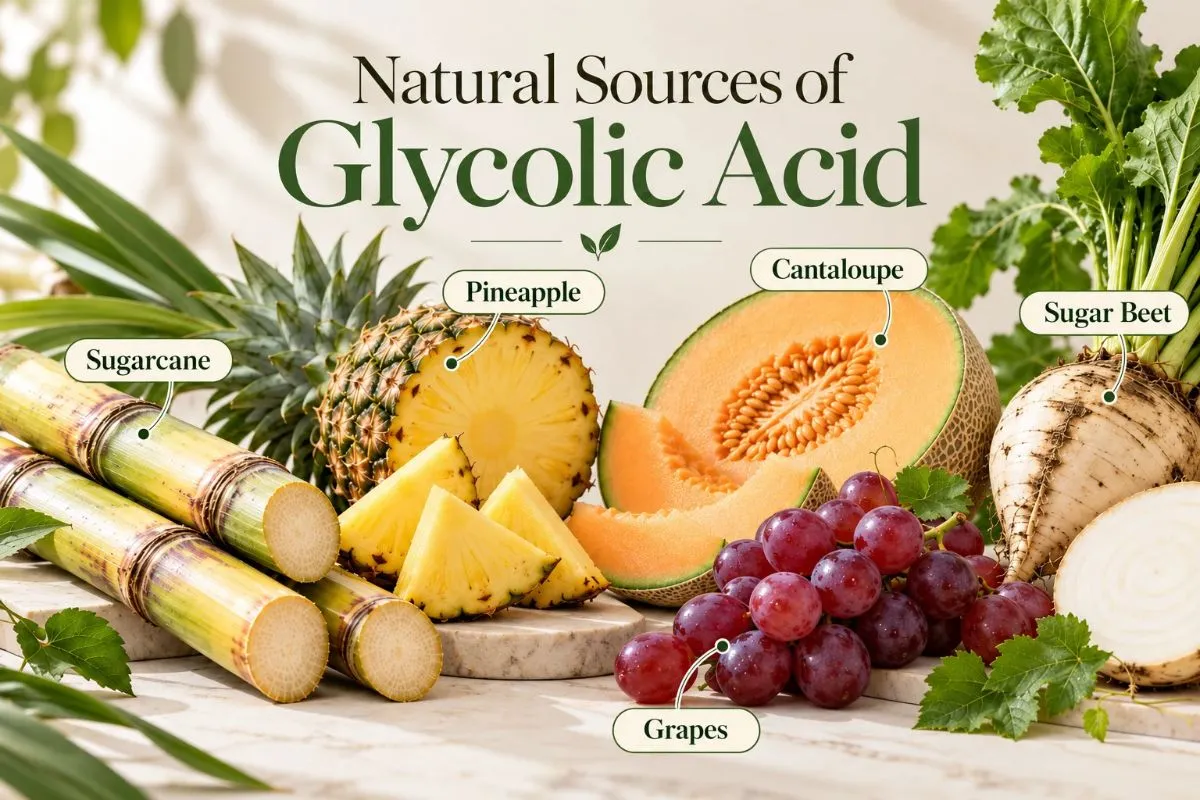
Several plants are cited as natural sources of glycolic acid, with sugarcane being the most recognizable. Sugar beet, pineapple, cantaloupe, and grapes are also discussed in scientific and ingredient literature as botanical sources or sources from which glycolic acid may be isolated.
The key point is that “natural AHA” and “glycolic acid” are not interchangeable terms.
Understanding these natural sources of glycolic acid is useful because many fruits contain organic acids, but they do not all contain the same dominant acid. Apples, for example, are better known for malic acid. Citrus fruits are strongly associated with citric acid, while fermented milk products are associated with lactic acid.
Those ingredients may still have interesting cosmetic properties, but calling every fruit-derived acid “glycolic acid” oversimplifies the chemistry.
1. Sugarcane: The Best-Known Natural Source
Sugarcane is the botanical source most strongly associated with glycolic acid.
For consumers interested in natural sources of glycolic acid, sugarcane is the most logical place to start. It also gives us an opportunity to explain an important difference: the presence of glycolic acid in a plant does not mean rubbing raw sugarcane juice directly onto the skin will give you the same effect as a standardized cosmetic formula.
When using glycolic acid on the face, predictability matters. A properly manufactured skincare product can control factors such as concentration and pH in a way that homemade preparations cannot.
That difference is important because skin does not respond to the name of an ingredient alone. It responds to the actual strength, formulation, contact time, and overall condition of the skin barrier.
2. Sugar Beet
Sugar beet is another documented botanical source associated with glycolic acid. It appears less often in beauty marketing than sugarcane, but it belongs in a scientifically responsible discussion of natural sources of glycolic acid.
That does not mean sugar beet should automatically be treated as a DIY exfoliating treatment. This distinction is important when discussing glycolic acid and skin because irritation risk rises when people improvise with acidic ingredients without knowing their strength.
A plant can be a source of an ingredient without being an appropriate substitute for a finished skincare formula.
3. Pineapple
Pineapple is an interesting addition because it contains a complex mixture of naturally occurring compounds, including fruit acids and enzymes such as bromelain.
It is often used in “brightening” or exfoliating beauty conversations, but its effects should not automatically be attributed only to glycolic acid.
The safest takeaway is simple: enjoying pineapple as food is very different from putting it directly on the face. If the goal is predictable exfoliation, a product designed for facial use is the more controlled option.
Pineapple can therefore be discussed among natural sources of glycolic acid, but it should be presented as a chemically complex fruit rather than a bottle of ready-made glycolic acid growing in nature.
4. Cantaloupe
Cantaloupe is one of the lesser-known natural sources of glycolic acid, which makes it especially interesting for skincare enthusiasts who usually hear only about sugarcane.
Still, the fact that a fruit contains an acid does not automatically make it an ideal home peel. When evaluating glycolic acid and skin, controlled dosage matters much more than the novelty of a natural source.
This is an important distinction for anyone interested in plant-powered skincare: natural origin is valuable information, but it is only one part of a product’s safety and performance.
5. Grapes
Grapes contain several organic acids, and they are especially well known for tartaric acid. Some literature also discusses glycolic acid in grapes, particularly less mature fruit.
Grapes can therefore appear in conversations about natural sources of glycolic acid, but they also demonstrate why whole-plant chemistry should not be reduced to a single ingredient.
When a skincare formula contains grape extract, its properties may come from several naturally occurring compounds rather than glycolic acid alone.
Natural Glycolic Acid vs Other Fruit Acids
One of the most common skincare mistakes is assuming that all natural AHAs are basically glycolic acid.
They are not.
| Natural material | Acid most strongly associated with it | Key point |
| Sugarcane | Glycolic acid | Most recognizable botanical source |
| Sugar beet | Glycolic acid | Documented natural source |
| Pineapple | Mixed fruit acids + enzymes | More chemically complex than one active |
| Cantaloupe | Glycolic acid among naturally occurring acids | Lesser-known source |
| Apples | Malic acid | Not primarily a glycolic-acid source |
| Citrus fruits | Citric acid | “Fruit acid” does not automatically mean glycolic acid |
| Fermented milk | Lactic acid | Another AHA, but chemically different |
| Grapes | Tartaric acid plus other acids | Glycolic acid may also occur |
This distinction is valuable for anyone researching glycolic benefits because different AHAs vary in molecular size, tolerability, formulation, and how they interact with the skin.
A product labeled “fruit acid complex” may behave very differently from one formulated with a known percentage of glycolic acid.
The Most Important Uses of Glycolic Acid
The uses of glycolic acid go well beyond simply making skin feel smoother.
Exfoliation is the foundation. Glycolic acid helps reduce the buildup of dead surface cells, which can make skin feel rough or look tired.
Another of the most appreciated glycolic benefits is brightness. When dull surface buildup is reduced, light can reflect more evenly from the skin, helping the complexion appear fresher and more radiant.
The uses of glycolic acid also include supporting a more even-looking skin tone. This makes it popular in routines designed for post-acne marks and other visible discoloration.
These glycolic uses explain why the ingredient appears across cleansers, toners, serums, masks, body products, and professional peels.
However, more is not automatically better. The smartest routine delivers enough exfoliation to create visible benefits without repeatedly damaging the protective skin barrier.
Glycolic Acid for Hyperpigmentation
Hyperpigmentation occurs when certain areas of skin appear darker because of excess or uneven pigment.
Post-inflammatory marks after acne, sun-related discoloration, and melasma are different conditions, so they should not all be treated in exactly the same way.
Research on professional chemical peels supports a role for glycolic acid in selected pigmentary conditions, particularly as part of broader treatment plans rather than as a universal stand-alone solution. A 2026 review found that superficial glycolic acid has some of the strongest peel evidence for melasma when used alongside photoprotection and depigmenting therapy.
Strong professional peels are a different category and should not be recreated at home.
How to Use Glycolic Acid on the Face Safely
If you are new to glycolic acid on the face, start slowly.
A leave-on product used once or twice a week may be easier to assess than jumping immediately into frequent use. Watch how your skin responds for several applications before increasing frequency.
The FDA warns that AHAs can increase the skin’s sensitivity to ultraviolet radiation and recommends sunscreen, protective clothing, and limiting sun exposure while using them and for a week afterward.
That makes daily sun protection especially important when regularly using glycolic acid on the face.
For consumer cosmetic products, FDA guidance also summarizes a Cosmetic Ingredient Review conclusion that glycolic and lactic acid are considered safe under specified conditions including concentrations of 10% or less, a final formulation pH of at least 3.5, and appropriate sun-protection directions.
That does not mean every beginner should start at the highest permitted concentration. Sensitive skin may benefit from starting much lower and using the product less frequently.
Can You Use Raw Natural Sources Directly on Your Face?
It is tempting to see a list of natural sources of glycolic acid and immediately turn it into a DIY facial recipe.
That is not the best approach.
Raw fruits and plant juices do not provide a standardized glycolic-acid concentration.
If your goal is to enjoy the uses of glycolic acid, a facial product with a defined ingredient list and clear directions is more predictable.
This matters even more if you already have eczema, rosacea, active dermatitis, open skin, a compromised barrier, or a history of strong reactions to exfoliating acids.
Natural does not mean risk-free, and stronger exfoliation does not necessarily mean better results.
How Often Should You Use Glycolic Acid?
For beginners, a conservative approach makes sense: start once or twice weekly, then adjust only if your skin remains comfortable.
If tightness, prolonged stinging, flaking, or redness develops, reduce frequency and focus on moisturizing and barrier support.
Using glycolic acid on the face should make your routine more effective, not turn it into a cycle of irritation and recovery.
Frequency also depends on the product. A rinse-off cleanser and a leave-on serum do not deliver the ingredient in the same way.
Final Thoughts: Natural Origins, Smarter Skincare
The natural sources of glycolic acid are fascinating because they connect modern cosmetic chemistry with familiar plants such as sugarcane, sugar beet, pineapple, cantaloupe, and grapes.
But ingredient origin is only the beginning of the story. The most meaningful uses of glycolic acid come from thoughtful formulation and responsible use. Whether your goal is smoother texture, a brighter appearance, or more even-looking tone, glycolic acid on the face should be introduced with patience, sunscreen, and respect for your skin barrier.
At Hudira, we believe plant-powered skincare becomes even more valuable when it is paired with clear ingredient knowledge. Explore Hudira organic products for thoughtfully inspired skincare choices that can help you build a simple, mindful routine around the needs of your skin.
FAQs
Q. What is glycolic acid used for?
Its main cosmetic role is exfoliation. Common uses of glycolic acid include helping remove dead surface cells, improving the look of dullness and rough texture, supporting more even-looking tone, and helping some post-acne marks appear less noticeable over time.
Q. What does glycolic acid do for skin?
It helps loosen dead cells at the skin’s surface, which can make the complexion appear smoother and brighter. It is widely used for uneven texture and visible pigmentation.
Q. What are the main natural sources of glycolic acid?
The best-known natural sources of glycolic acid include sugarcane and sugar beet, while pineapple, cantaloupe, and grapes are also discussed as botanical sources.
Q. Is it safe to use glycolic acid on the face every day?
Using glycolic acid on the face every day is not necessary for everyone.
Beginners and sensitive skin types often do better with less frequent use. Always follow the individual product directions and reduce use if persistent redness, burning, tightness, or peeling develops.
Q. Can glycolic acid help hyperpigmentation?
Glycolic acid can support a routine for some types of uneven pigmentation because exfoliation helps remove pigmented surface cells over time.


Add comment