
No products in the cart.
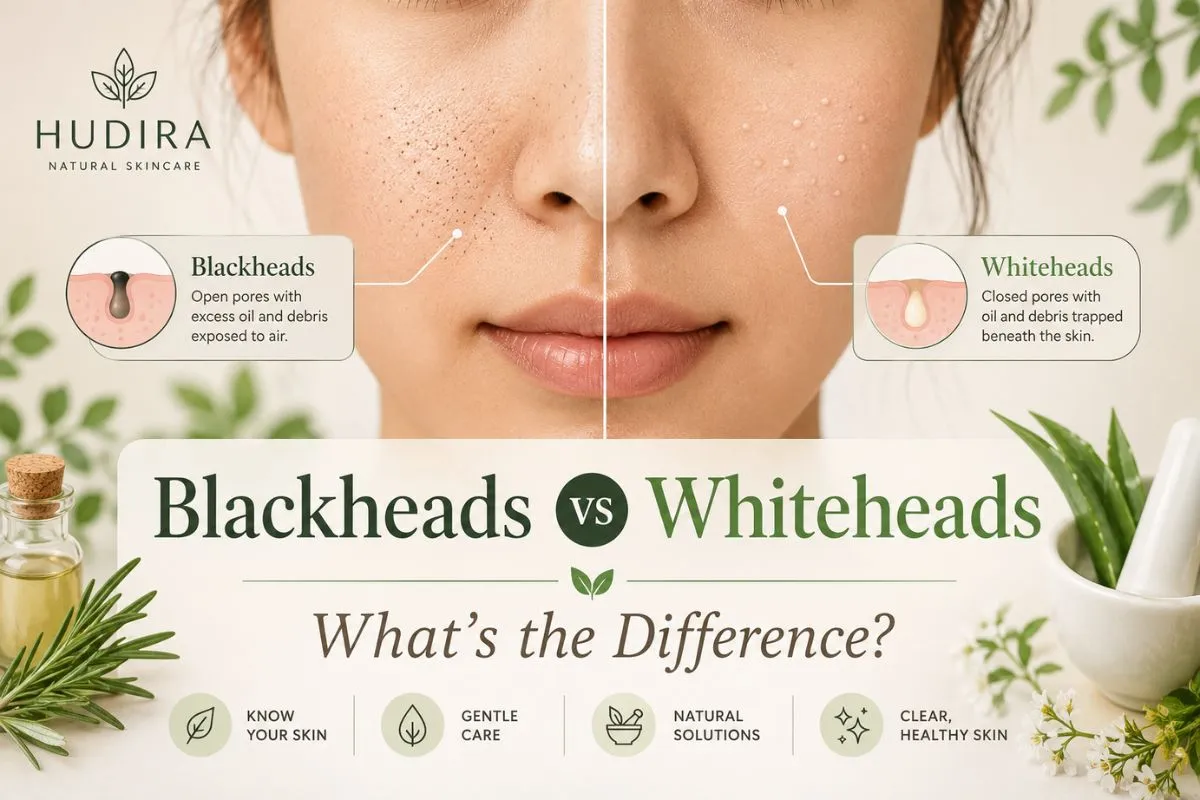
If you have ever looked closely at your skin and noticed tiny dark dots sitting beside small pale bumps, you have probably wondered about blackheads vs whiteheads. They may look completely different, but both actually begin with the same problem: a pore becomes clogged with oil and dead skin cells. The major difference is whether that clogged pore remains open or closes at the surface, and that small distinction changes how the blemish looks and how it should be treated.
But here is where things get interesting: not every dark dot is a blackhead, and not every tiny white bump is whitehead acne. Sebaceous filaments, milia, pustules, and other skin bumps can look surprisingly similar. Understanding what you are really seeing can help you avoid harsh scrubbing, unnecessary squeezing, and frustrating skincare mistakes. So, what is actually happening inside your pores?
Blackheads vs Whiteheads at a Glance
Blackheads and whiteheads are both forms of comedonal acne. Dermatologists refer to blackheads as open comedones and whiteheads as closed comedones.
A comedone develops when a hair follicle becomes blocked with a combination of sebum, keratin, and dead skin cells.
| Feature | Blackheads | Whiteheads |
| Medical name | Open comedones | Closed comedones |
| Pore opening | Open | Closed |
| Appearance | Gray, brown, or black | White, pale, or skin-colored |
| Main difference | Plug is exposed at the surface | Plug remains beneath the skin |
| Usually inflamed? | Usually not | Usually not |
| Common areas | Nose, forehead, chin, chest, back | Forehead, cheeks, chin, nose |
The easiest way to understand whiteheads vs blackheads is that both begin with a clogged follicle. A blackhead remains open at the skin’s surface, while a whitehead stays covered.
What Are Blackheads?
Blackheads are clogged follicles that remain open at the surface of the skin. Inside the follicle, sebum and dead skin cells accumulate. Because the opening stays exposed, material near the surface darkens and produces the characteristic gray, brown, or black appearance.
Despite the name, blackheads are not simply dirt trapped inside your pores. This distinction matters because many people respond to blackheads by washing or scrubbing their skin excessively. Unfortunately, aggressive scrubbing cannot simply scrub away a blockage located inside the follicle.
Blackheads commonly appear in oilier areas such as:
- Nose
- Forehead
- Chin
- Chest
- Back
- Shoulders
They are especially visible around the T-zone, where sebaceous activity tends to be higher in many people.
What Are Whiteheads?
Whiteheads are closed comedones. Just like blackheads, they develop when oil and dead skin cells accumulate inside a follicle. However, the surface of the follicle remains covered. This creates a small white, pale, or flesh-colored bump.
Whitehead acne can be particularly frustrating because the bumps may not look dramatically inflamed, yet they can make skin feel rough, uneven, or congested.
Whiteheads commonly appear on the:
- Forehead
- Chin
- Cheeks
- Nose
- Jawline
Unlike an inflamed pustule, a typical whitehead does not necessarily look red or painful. Because the follicle is closed, squeezing a whitehead can also damage the surrounding skin instead of solving the blockage.
What Causes Blackheads and Whiteheads?
There usually is not one single cause. Several factors may increase the likelihood of developing clogged follicles.
1. Excess Sebum Production
Sebum is completely normal and necessary for healthy skin. However, when the skin produces more oil than the follicle can comfortably release, that oil can combine with dead skin cells and contribute to clogged pores.
This is one reason people with naturally oily skin may experience more comedonal acne.
2. Dead Skin Cell Buildup
Your skin continuously sheds old cells. When these cells accumulate around or inside a follicle instead of shedding efficiently, they may mix with sebum and create a plug.
3. Hormonal Changes
Hormonal activity can affect the sebaceous glands and oil production.
This helps explain why acne may fluctuate during puberty, menstrual cycles, pregnancy, and other periods involving hormonal changes.
4. Heavy or Pore-Clogging Products
Certain cosmetics, hair products, sunscreens, or skincare products may contribute to congestion in acne-prone individuals.
Products labeled non-comedogenic are designed to be less likely to clog pores.
5. Friction and Occlusion
Repeated friction from helmets, headwear, tight clothing, or masks may aggravate acne-prone areas in some people.
The important takeaway is that blackheads and whiteheads are not necessarily a sign that someone is failing to clean their skin properly.
Blackheads and Whiteheads on Nose: Why Are They So Common?
Blackheads and whiteheads on nose are especially noticeable because the nose contains numerous oil-producing follicles. The T-zone—including the nose, forehead, and chin also tends to be oilier for many people.
But there is another important detail. Not every tiny dot on the nose is actually a blackhead. Many are sebaceous filaments. Sebaceous filaments are normal structures inside the pore that help guide sebum toward the surface of the skin. They can appear as small gray, beige, yellowish, or slightly darker dots. They often look more uniform than true blackheads.
If you constantly squeeze tiny nose dots only to see them return quickly, you may be dealing with normal sebaceous filaments rather than a massive collection of blackheads. Correct identification can spare your skin a lot of unnecessary irritation.
Whiteheads vs Blackheads: The Key Differences That Actually Matter
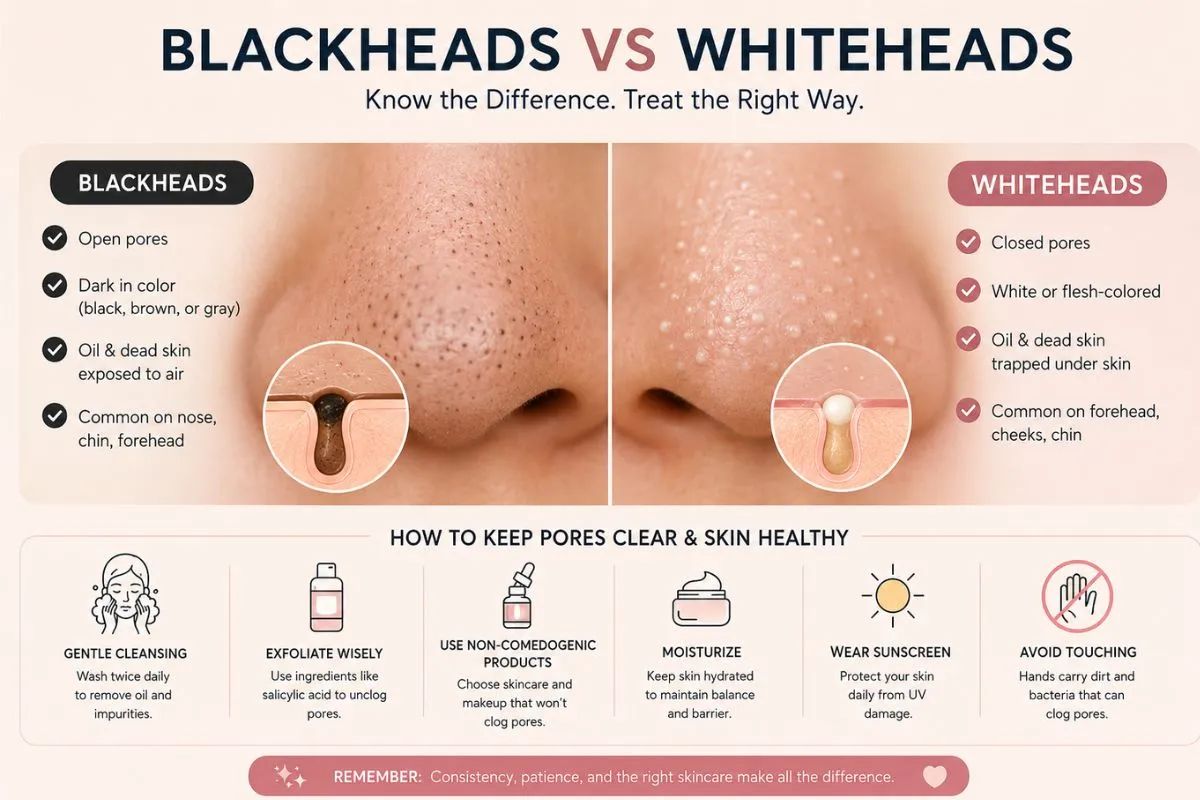
The open-versus-closed distinction affects more than just appearance.
Open Pore vs Closed Pore
- A blackhead remains open at the surface.
- A whitehead is covered by skin.
Dark vs Pale Appearance
- The dark surface of a blackhead is not proof that your skin is dirty.
- Whiteheads remain pale because the material inside the follicle is covered.
Similar Underlying Problem
- Despite their different appearance, both conditions involve clogged follicles.
- That is why many ingredients used for blackheads and whiteheads overlap.
Picking Can Make Both Worse
- Aggressive squeezing can traumatize surrounding skin.
- In some cases, that irritation may lead to more noticeable redness, inflammation, or lingering marks.
Is Whitehead Acne Different From Inflammatory Acne?
Yes.
Whitehead acne is generally classified as comedonal or non-inflammatory acne. A closed comedone may create a raised bump, but it typically does not have the obvious redness, swelling, tenderness, or visible pus associated with an inflammatory pustule.
It distinguishes uninflamed open and closed comedones from inflammatory acne lesions such as papules and pustules. This distinction is useful because every white-looking bump should not automatically be attacked with the strongest spot treatment available. Sometimes the primary issue is simply congestion.
Blackhead, Whitehead, or Something Else?
This is where skincare can get confusing. Several common conditions can resemble blackheads and whiteheads.
Blackhead vs Sebaceous Filament
A blackhead is an open comedone caused by a clogged follicle. While sebaceous filaments are normal parts of the pore. They often appear smaller, flatter, and more evenly distributed—especially across the nose.
Whitehead vs Milia
Milia are small, firm, keratin-filled cysts that often appear around the cheeks or eye area. They may look white, but they are not the same thing as whitehead acne. That means typical acne treatments may not work the same way.
Whitehead vs Pustule
A whitehead is generally a closed, non-inflammatory comedone. A pustule is an inflammatory acne lesion containing visible pus and often surrounded by redness. Correctly identifying the bump is one of the smartest first steps you can take.
Best Herbal Ingredients for Blackheads and Whiteheads
If you prefer a more natural skincare approach, several plant-based and herbal ingredients can help support clearer-looking skin and reduce the appearance of blackheads and whiteheads by gently cleansing, soothing, and balancing oil production.
Tea Tree Oil
Tea tree oil is one of the most well-known natural ingredients for acne-prone skin. It has natural antibacterial and anti-inflammatory properties that may help reduce clogged pores and calm minor breakouts. It should always be diluted before use to avoid irritation.
How to use:
Mix 1–2 drops of tea tree oil with a carrier oil (like jojoba or coconut oil) or add it to a water-based gel or moisturizer. Apply only to affected areas using a cotton swab. Use once daily or every other day, and always do a patch test first.
Aloe Vera
Aloe vera is soothing, hydrating, and gentle on the skin. It helps calm redness and irritation while supporting skin healing, making it useful for both blackheads and whiteheads without clogging pores.
How to use:
Apply a thin layer of pure aloe vera gel directly to clean skin as a lightweight moisturizer or calming mask. It can be used morning and night, or after sun exposure or irritation.
Neem
Neem has been traditionally used in herbal skincare for its purifying and antibacterial properties. It may help reduce excess oil and support clearer pores over time.
How to use:
Use neem in the form of a face mask (neem powder mixed with water or rose water) or apply neem-infused skincare products. Leave masks on for 10–15 minutes, then rinse thoroughly. Use 1–2 times per week.
Green Tea Extract
Green tea is rich in antioxidants and has natural anti-inflammatory benefits. It can help reduce oiliness and calm irritated skin, making it helpful for managing whitehead acne and congestion.
How to use:
Apply cooled brewed green tea as a toner using a cotton pad, or use skincare products containing green tea extract. It can be used daily, morning or evening.
Witch Hazel
Witch hazel is a natural astringent that can help tighten the appearance of pores and remove excess oil from the skin’s surface. Alcohol-free versions are best to avoid dryness.
How to use:
Apply witch hazel toner to clean skin using a cotton pad, focusing on oily areas like the nose and forehead. Use once daily or a few times per week depending on skin sensitivity.
Bentonite or Kaolin Clay
Clay masks help draw out excess oil, dirt, and impurities from clogged pores. Regular use (1–2 times per week) can help reduce the buildup that leads to blackheads and whiteheads, especially on oily areas like the nose and forehead.
How to use:
Mix clay powder with water, rose water, or aloe vera gel to form a paste. Apply to clean skin, leave on for 10–15 minutes (do not let it fully crack and dry), then rinse with lukewarm water. Use 1–2 times weekly.
Honey
Raw honey has natural antibacterial and soothing properties. It helps hydrate the skin while gently supporting clearer pores and reducing irritation.
How to use:
Apply a thin layer of raw honey to clean skin as a mask. Leave on for 10–20 minutes, then rinse with warm water. It can be used 2–3 times per week.
Turmeric
Turmeric contains curcumin, which has anti-inflammatory and antioxidant effects. It may help calm redness and support more even-looking skin tone when used in masks.
How to use:
Mix a small amount of turmeric powder with honey, yogurt, or aloe vera to form a mask. Apply for 10–15 minutes, then rinse thoroughly. Use 1–2 times per week (avoid overuse to prevent staining).
Rose Water
Rose water helps balance and refresh the skin while providing mild hydration. It can be used as a gentle toner for acne-prone skin.
How to use:
Spray or apply rose water with a cotton pad after cleansing. It can be used daily as a toner or refreshing mist throughout the day.
Oatmeal
Colloidal oatmeal is very soothing and helps calm irritated or sensitive skin. It can support the skin barrier and reduce discomfort associated with breakouts.
How to use:
Mix finely ground oatmeal with water or milk to create a paste. Apply as a mask for 10–15 minutes, then rinse gently. Use 1–2 times per week.
Chamomile
Chamomile has calming and anti-inflammatory properties that may help soothe irritated skin and reduce redness around clogged pores.
How to use:
Use cooled chamomile tea as a facial rinse or toner, or apply chamomile-infused skincare products. It can be used daily for calming effects.
Jojoba Oil
Jojoba oil closely resembles the skin’s natural sebum, which may help balance oil production. When used correctly, it can support hydration without clogging pores.
How to use:
Apply 2–3 drops to slightly damp skin after cleansing and toning. Gently massage until absorbed. It can be used daily, especially at night, or mixed with moisturizer for added hydration.
These natural ingredients can be helpful for mild congestion and general skin balance, but consistency and proper skincare habits are still key when managing blackheads and whiteheads.
A Simple Routine for Blackheads and Whiteheads
You do not need an overwhelming routine to care for congested skin.
Morning Routine
Step 1: Gentle cleansing
Remove oil and overnight buildup without aggressively stripping your skin.
Step 2: Treatment if needed
Use an acne-supporting ingredient suitable for your skin.
Step 3: Moisturizer
Choose a comfortable, preferably non-comedogenic moisturizer.
Step 4: Sunscreen
Apply broad-spectrum sunscreen every morning.
Evening Routine
Step 1: Remove makeup and sunscreen
Clean the skin thoroughly but gently.
Step 2: Cleanse
Avoid rough scrubbing brushes or excessive cleansing.
Step 3: Apply your treatment
This may be herbal ingredients, or another dermatologist-recommended acne treatment.
Step 4: Moisturize
Supporting your skin barrier can make active treatments easier to tolerate.
For anyone struggling with blackheads and whiteheads, consistency is much more powerful than aggressively jumping from trend to trend.
What Should You Avoid?
Some habits can make congested skin feel much more difficult to manage.
- Blackheads are not simply surface dirt. Scrubbing harder does not mean you are cleaning deeper.
- Picking can increase irritation and may contribute to lingering marks.
- Do not skip moisturizer, Oily skin still needs hydration.
- Do not start all ingredients together
- Do Not Expect Pores to Permanently Open or Close
Common Myths About Blackheads and Whiteheads
Myth 1: Blackheads Are Just Dirt
This is one of the biggest misconceptions. The darker appearance of an open comedone is not simply trapped dirt. So aggressively washing your face is not the answer.
Myth 2: More Cleansing Means Fewer Breakouts
Gentle cleansing is important. Over-cleansing, however, may irritate the skin without correcting what is happening inside the follicle.
Myth 3: Whiteheads Should Always Be Popped
No. Persistent whitehead acne often responds better to consistent pore-clearing care than repeated squeezing.
Myth 4: You Can Remove Every Blackhead Permanently
Sebaceous glands continue making oil and skin continues shedding cells. That means congestion can return.
The realistic goal is ongoing control and healthier-looking skin rather than permanently eliminating every visible pore.
Discover Gentle, Plant-Powered Care With Hudira
Healthy-looking skin does not need to be punished into submission. A thoughtful routine can combine proven acne-care strategies with gentle products that help your skin feel comfortable, balanced, and cared for.
Explore Hudira organic products and discover plant-inspired skincare created to make your everyday routine feel more nurturing and intentional. Choose products that suit your skin type and complement—not replace—appropriate acne treatment. Because beautiful skin is not about chasing perfection. It is about understanding your skin, giving it consistent care, and choosing products with purpose.
FAQs
Q. What causes blackheads?
They develop when a hair follicle becomes clogged with sebum and dead skin cells while remaining open at the surface.
Factors such as excess oil production, keratin buildup, hormonal activity, and other acne-related processes may contribute.
Q. Are blackheads and whiteheads the same thing?
They are closely related but not exactly the same.
Both are comedones caused by clogged follicles, but a blackhead remains open while a whitehead stays closed beneath the skin. That open-versus-closed distinction is the key to understanding blackheads vs whiteheads.
Q. Can whiteheads turn into blackheads?
A clogged follicle can change over time. If a closed comedone opens at the surface, it may take on the appearance of an open comedone. However, you should not try to force this process by squeezing or picking the skin.
Q. Why do I get blackheads and whiteheads on nose?
Blackheads and whiteheads on nose can be particularly noticeable because the nose contains many oil-producing follicles. However, many tiny dots across the nose are normal sebaceous filaments rather than true blackheads. Correct identification can help you avoid excessive squeezing and unnecessary treatment.


Add comment