
No products in the cart.

You shave, moisturize, step into the light and there they are again: tiny dark or red dots scattered across otherwise smooth-looking legs. If this familiar pattern makes you feel self-conscious, the good news is that the right strawberry legs treatment can make a visible difference. The answer is usually not aggressive scrubbing. It is understanding what is happening around your hair follicles, improving shaving habits, protecting the skin barrier, and using gentle care consistently.
The frustrating part is that those dots do not always have the same origin. Sometimes they come from clogged follicles, sometimes keratin buildup, and sometimes irritation around an inflamed follicle or ingrown hair. That is why the best routine depends on your skin. Ahead, you will discover the main strawberry legs causes, how to strawberry legs exfoliate safely, which natural approaches are worth trying, which viral remedies may backfire, and how to build a smoother-looking routine without punishing your skin.
What Are Strawberry Legs?
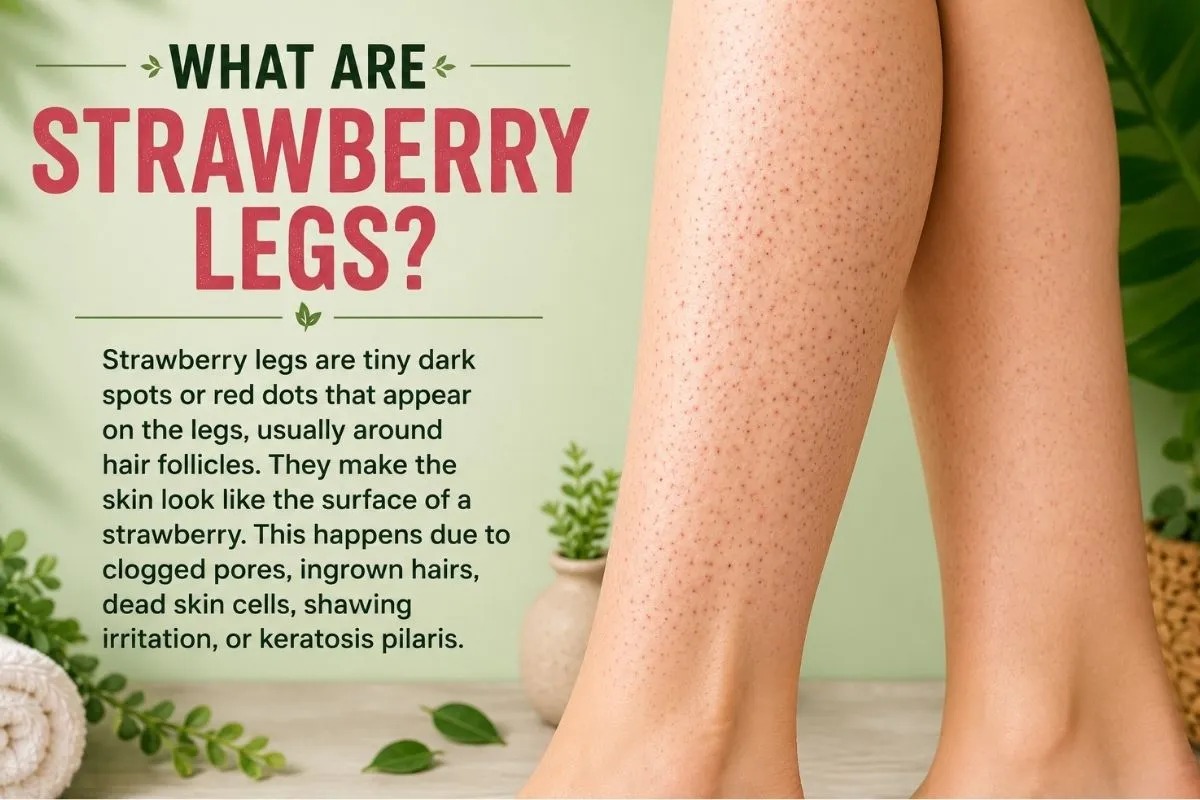
“Strawberry legs” is a casual name for small dark, brown, red, or black dots that make the legs resemble the seeds on a strawberry. The dots usually appear around visible hair follicles. They may be flat, slightly raised, rough, or irritated depending on what is causing them.
The appearance can become more noticeable after shaving because freshly cut hair, trapped oil, dead skin, or inflammation can make follicle openings stand out. In some people, the texture is linked with keratosis pilaris, a common condition in which keratin builds up around follicles. In others, an ingrown hair or folliculitis may create a leg pimple that looks similar to ordinary strawberry skin.
Most cases are cosmetic. However, painful, pus-filled, spreading, or severely itchy bumps should be assessed by a healthcare professional because they may represent infection or another skin condition rather than simple strawberry pores.
Strawberry Legs Causes: Why Do Those Dots Appear?
Understanding strawberry legs causes is the smartest first step because one routine does not fit everyone. A strategy that helps dry keratosis pilaris may not be appropriate for inflamed folliculitis, while a shaving-related problem may improve once razor habits change.
1. Shaving and Razor Irritation
A dull razor can tug at hairs instead of cutting them cleanly. Shaving dry skin, pressing too hard, or repeatedly passing over the same area can also irritate follicle openings. The result may be dark dots, redness, razor bumps, or a small leg pimple.
Shaving very closely can also make the contrast between the cut hair and surrounding skin more obvious. That does not mean you must stop shaving; it means technique matters.
2. Clogged Hair Follicles
Hair follicles can collect dead skin cells, natural oil, sweat, and product residue. When buildup sits near the follicle opening, it may look darker or more pronounced. Exposure to air can also darken material inside an open pore through oxidation.
This is one reason gentle exfoliation can support a strawberry legs treatment, especially when clogged follicles are involved.
3. Keratosis Pilaris
Keratosis pilaris, often called “chicken skin,” develops when keratin builds up around hair follicles. It commonly creates rough bumps on the thighs, upper arms, buttocks, and sometimes lower legs. People who describe rough strawberry thighs may actually be seeing keratosis pilaris rather than only post-shaving dots.
4. Ingrown Hairs
An ingrown hair curves back or grows sideways into the skin instead of emerging normally. It can create tenderness, redness, a dark mark, or a leg pimple. Frequent shaving, waxing, tight clothing, and curly or coarse hair may increase the likelihood of ingrown hairs.
5. Folliculitis
Folliculitis means inflammation of a hair follicle. It may be associated with friction, shaving, bacteria, yeast, or other irritation. Mild cases can resemble ordinary strawberry legs, but the bumps may be redder, itchy, tender, or pus-filled. A recurring or painful bump deserves more caution than a simple cosmetic dot.
6. Dry Skin
Dryness does not explain every case, but it can make roughness and follicular texture more visible. When the skin barrier is compromised, shaving may feel harsher and irritation may linger.
How to Get Rid of Strawberry Legs Naturally
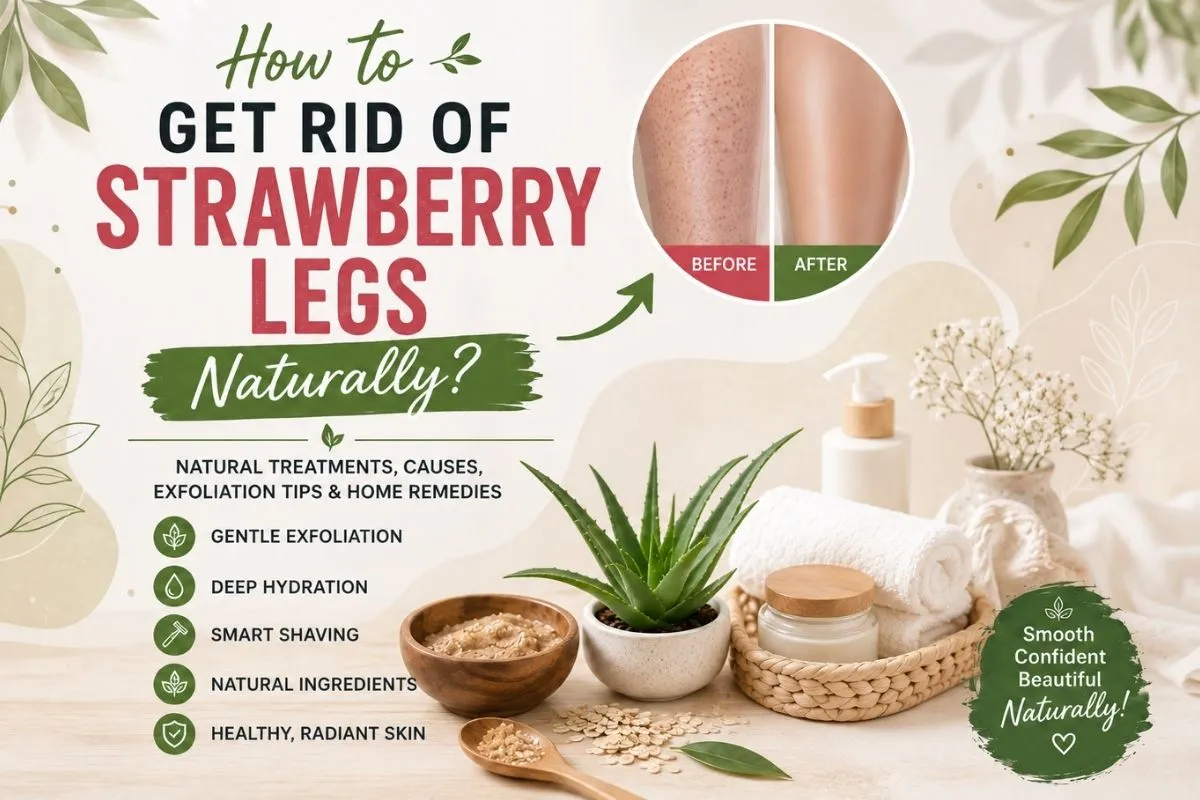
A natural approach works best when “natural” means gentle, realistic, and barrier-conscious rather than harsh DIY experiments. There is no overnight strawberry legs cure that works for every cause. However, a consistent strawberry legs treatment can improve the appearance of mild clogged follicles, shaving irritation, roughness, and dryness.
1. Cleanse Without Stripping the Skin
Start with lukewarm water and a mild body cleanser. Very hot showers and strongly fragranced soaps can leave skin tight or irritated, which may make texture more noticeable.
Focus on removing sweat, sunscreen, and residue without rubbing the legs raw. A clean surface also allows moisturizers and appropriate exfoliating products to spread more evenly.
2. Exfoliate Gently, Not Aggressively
A safe strawberry legs exfoliate routine removes excess dead surface cells while protecting the skin barrier. Over-exfoliation can create redness, burning, dryness, and even more visible bumps.
For physical exfoliation, use a soft washcloth or a very gentle scrub with light pressure. Once or twice weekly may be enough for many people. Avoid hard brushes or rough gloves over inflamed skin.
Body products containing salicylic acid, lactic acid, or glycolic acid can also help loosen buildup. These are not kitchen-style natural remedies, but they are well-established skincare ingredients and may be useful when simple moisturization is not enough. The best strawberry legs exfoliate approach is gradual; more friction does not mean faster results.
3. Moisturize Every Day
Daily moisturization is one of the most underrated steps in strawberry legs treatment. Apply a body moisturizer after bathing while skin is slightly damp to help reduce roughness and support the protective barrier.
Look for gentle formulas with ingredients such as glycerin, ceramides, aloe vera, shea butter, or simple plant oils. If your texture resembles keratosis pilaris, a moisturizer with urea or lactic acid may provide hydration plus gentle smoothing.
4. Use Aloe Vera for Soothing
Pure or simply formulated aloe vera gel can feel cooling after shaving and may help soothe temporary irritation. It does not dissolve keratin plugs or replace treatment for folliculitis, but it can be a useful supportive step when skin feels hot or sensitive.
Always patch-test a new product, particularly if it contains fragrance or multiple botanical extracts.
5. Try Oat-Based Care
Colloidal oatmeal is widely used in gentle skincare for dry, irritated skin. An oat-based wash or moisturizer is generally safer than rubbing coarse homemade grains over freshly shaved legs.
If you enjoy a natural ritual, finely ground oats can also be added to lukewarm bath water. Keep the process soothing rather than abrasive.
6. Improve Your Shaving Technique
Hair removal can be a major turning point. Before shaving, soften hair with warm water for a few minutes and apply shaving cream or gel. Use a clean, sharp razor and light pressure.
Shaving in the direction of hair growth may reduce irritation and ingrown hairs for some people. Rinse the blade often. After shaving, pat dry and moisturize rather than immediately applying harsh scrubs, perfume, or strong acids.
This matters because shaving and ingrown hairs are among the most common triggers.
7. Reduce Friction After Hair Removal
Tight leggings, synthetic fabrics, sweat, and rubbing can aggravate newly shaved follicles. Loose, breathable clothing for several hours after hair removal may help keep irritated skin calmer and reduce the chance that a follicle becomes a leg pimple.
8. Protect Exposed Legs From the Sun
Sunlight does not directly create strawberry legs, but inflamed follicles and ingrown hairs can leave dark marks that become more noticeable with UV exposure. Use broad-spectrum sunscreen when your legs are exposed outdoors.
A Better Exfoliation Routine
Because “exfoliate more” is common internet advice, it is worth being specific. A balanced strawberry legs exfoliate routine could look like this:
- Cleanse gently each day.
- Use mild physical exfoliation once or twice weekly if your skin tolerates it.
- Use an appropriate chemical exfoliant on separate days rather than stacking everything together.
- Moisturize after every shower.
- Avoid strong acids immediately after shaving if your skin stings easily.
- Stop exfoliating temporarily if the skin becomes raw, cracked, burning, or unusually red.
The goal is to reduce buildup without damaging the barrier. When your strawberry legs exfoliate too aggressively, irritation itself can make redness and follicular dots more obvious.
Natural Ingredients for Smoother-Looking Legs
Natural skincare can be useful when each ingredient is given a realistic role.
Aloe Vera
Aloe vera is mainly helpful for hydration and soothing. It may feel especially pleasant after shaving, but it should be viewed as supportive care rather than a pore-clearing treatment.
Shea Butter and Lightweight Plant Oils
Shea butter, jojoba, and other simple plant oils can reduce moisture loss and improve softness. They do not exfoliate blocked follicles by themselves, so think of them as barrier-supporting care.
Colloidal Oatmeal
Colloidal oatmeal is a gentle option for dry or sensitive skin because it focuses on comfort rather than stripping.
Turmeric and Neem
Turmeric and neem have a long history in botanical skincare, but they are not substitutes for medical care. Prefer well-formulated products over concentrated homemade pastes that may stain or irritate skin.
The smartest natural routine supports the barrier while addressing the actual cause.
Physical vs. Chemical Exfoliation
Physical exfoliation removes surface buildup with a cloth or gentle scrub, but too much pressure can inflame follicles. Chemical exfoliation uses ingredients such as salicylic, glycolic, or lactic acid to loosen dead-cell buildup without heavy rubbing.
Salicylic acid can help around clogged follicles, while lactic and glycolic acids can smooth rough texture in people who tolerate them.
If your skin is sensitive, start slowly and follow its tolerance rather than a rigid daily rule.
How to Shave When You Have Strawberry Legs
A more skin-friendly shaving routine can make a major difference:
- Shower first to soften the hair.
- Use a lubricating shaving cream or gel.
- Choose a clean, sharp blade.
- Use light pressure.
- Try shaving with hair growth if you frequently get ingrown hairs.
- Avoid repeatedly shaving the same area.
- Rinse with comfortable, not scalding, water.
- Apply a simple moisturizer afterward.
- Delay strong exfoliating products if freshly shaved skin feels sensitive.
This is especially important when razor irritation and ingrown hairs are the main problem.
When Natural Care Is Not Enough
Home care has limits. Speak with a dermatologist or healthcare professional if you notice painful or rapidly worsening bumps, pus, crusting, spreading redness, significant swelling, intense itching, fever, repeated folliculitis, or no meaningful improvement.
Professional treatment may be needed when infection, severe keratosis pilaris, or chronic ingrown hairs are involved.
The Bottom Line: Gentle Care Wins
Smoother-looking legs rarely come from scrubbing harder. Better results usually come from understanding strawberry legs causes, reducing irritation, moisturizing daily, improving shaving technique, and keeping your strawberry legs exfoliate routine controlled.
Be especially cautious when a dark dot turns into a painful leg pimple, because inflamed follicles may need a different approach from ordinary buildup. There is no magical overnight solution, but patient, low-irritation care can make skin look and feel noticeably healthier.
For botanical, skin-conscious self-care, explore Hudira organic products and discover gentle formulas designed to support naturally fresh, comfortable, radiant-looking skin.
FAQs
Q. What are strawberry legs?
The term describes visible dark, red, or brown dots around hair follicles that resemble strawberry seeds. Common strawberry legs causes include shaving irritation, clogged follicles, ingrown hairs, keratosis pilaris, folliculitis, and dryness. The best strawberry legs treatment depends on what is creating the dots.
Q. How to fix strawberry legs naturally?
Begin with gentle cleansing, moisturization, careful shaving, sun protection, and controlled exfoliation. Aloe vera, colloidal oatmeal, and barrier-friendly moisturizers can support comfort, while stronger exfoliating ingredients may be useful when follicular buildup is the main problem.
Q. Can exfoliating remove strawberry legs completely?
Exfoliation can improve clogged follicles and rough texture, but it cannot solve every underlying condition. If keratosis pilaris, ingrown hairs, or folliculitis is involved, exfoliation alone may not be enough. Avoid trying to strawberry legs exfoliate every day if your skin becomes irritated.
Q. Why do I get a leg pimple after shaving?
A leg pimple after shaving may develop from irritation, an ingrown hair, friction, or folliculitis. Use a clean, sharp razor, shaving gel, light pressure, and moisturizer afterward. Seek medical advice if bumps become very painful, repeatedly fill with pus, or spread.
Q. Can strawberry legs come back after treatment?
Yes. Strawberry legs may return when triggers such as dryness, clogged follicles, aggressive shaving, or keratosis pilaris return. Maintaining a gentle routine and managing your personal strawberry legs causes can help keep the appearance under better control.


Add comment