
No products in the cart.
Clogged pores can make skin look dull, rough, oily, and uneven even when you cleanse every day. The right deep pores cleansing clay mask can help lift excess oil, loosen surface buildup, and leave your complexion feeling cleaner without relying on harsh scrubs. When made with gentle clays and skin-friendly botanical ingredients, an organic face mask can become a powerful part of a balanced routine for oily, combination, and congestion-prone skin.
But here is the interesting part: not every clay works the same way, and not every homemade recipe is as harmless as it looks online. Some popular DIY combinations can leave the skin barrier tight, irritated, or overly dry. So what makes a diy pore clearing mask truly effective and how do you choose a mask for reducing pores without falling for myths about “opening” and “closing” pores? The answer comes down to ingredients, skin type, timing, and technique.
What Does Deep Pore Cleansing Really Mean?
“Deep cleansing” is one of the most overused phrases in skincare. Your pores are not tiny doors that swing open and shut, and a face mask cannot permanently change their natural size. What it can do is help remove excess sebum, dead skin cells, sunscreen residue, makeup, and surface debris that can make pores look more obvious.
That is why a well-formulated clay mask can be useful. Clay is naturally absorbent, so it can help reduce the oily film that sits on the skin and contributes to a congested appearance. When buildup is reduced, pores may look cleaner, smoother, and less noticeable.
A good mask for reducing pores should therefore focus on reducing congestion and excess oil rather than promising to “erase” pores. That realistic approach is also much better for long-term skin health.
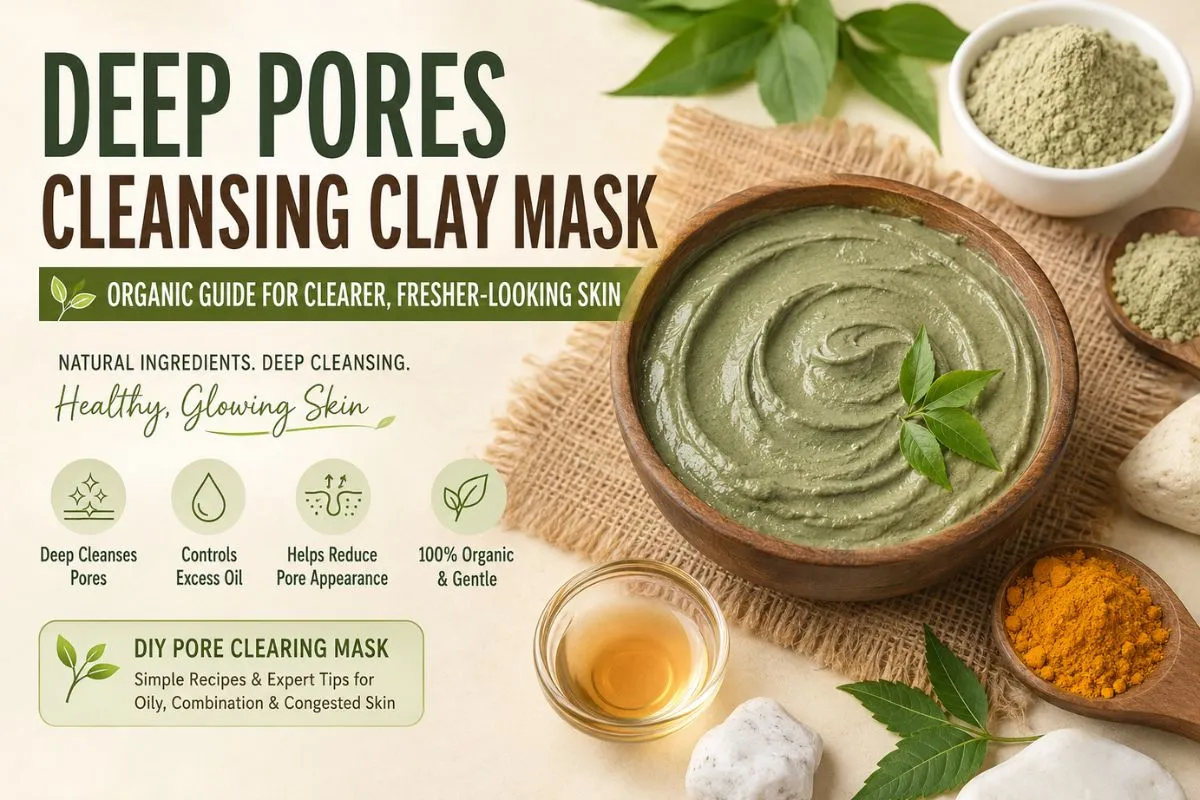
Why Clay Masks Work So Well for Congested Skin
Certain clays absorb surface oil, making them especially useful around the nose, forehead, and chin where blackheads and visible pores often appear.
A balanced clay mask may help:
- Absorb excess oil
- Reduce surface buildup
- Improve the look of congested areas
- Leave skin feeling smoother
- Support a cleaner-looking T-zone
- Prepare the skin for the rest of your skincare routine
However, stronger is not always better. Leaving a clay mask on until it becomes extremely dry and cracked can make some skin types feel tight and uncomfortable. The smartest routine is one that cleans without stripping.
For many people, a gentle diy pore clearing mask once a week is more beneficial than aggressive daily treatments.
Multani Mitti vs Kaolin vs Bentonite: Which Clay Is Better?
Choosing the right clay depends largely on how oily, dry, or sensitive your skin feels.
| Clay | Best For | Oil Absorption | Gentleness | Ideal Use |
| Multani Mitti | Oily and combination skin | High | Moderate | Traditional botanical pore cleansing |
| Kaolin | Normal, sensitive and combination skin | Mild to moderate | High | Gentle weekly masking |
| Bentonite | Very oily or congested skin | Very high | Lower | Stronger oil-control routines |
If your skin becomes tight easily, kaolin may be the better choice. If your skin is extremely oily, Multani Mitti or bentonite may feel more effective.
The best mask to reduce pores is not automatically the strongest mask. It is the one that helps clear excess oil and buildup while keeping your skin comfortable and balanced.
Simple DIY Pore Clearing Mask Recipe
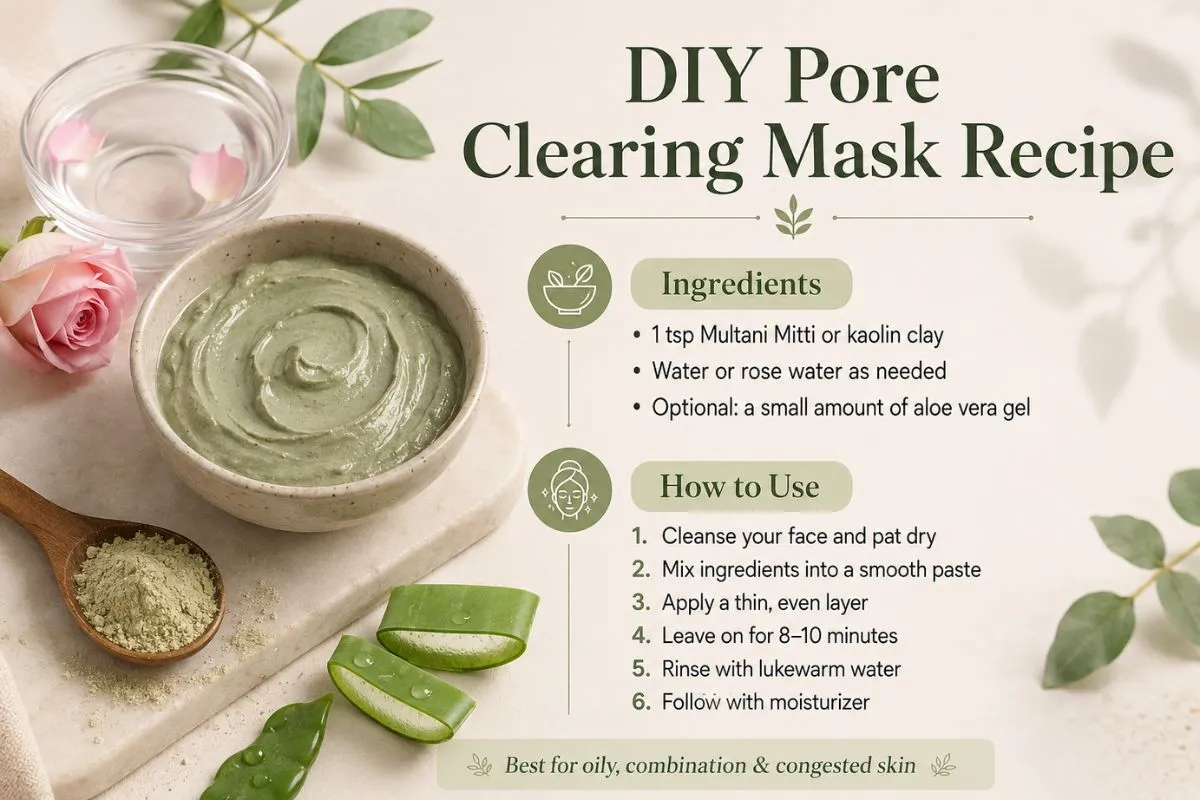
A basic mask does not need lemon juice, baking soda, or undiluted apple cider vinegar. Highly acidic or alkaline ingredients can irritate sensitive skin and may disrupt the skin barrier.
Ingredients
- 1 teaspoon Multani Mitti or kaolin clay
- Enough plain water or rose water to create a smooth paste
- Optional: a small amount of aloe vera gel for a more soothing consistency
How to Use It
- Gently cleanse your face and pat it dry.
- Mix your ingredients in a clean bowl.
- Apply a thin, even layer, avoiding the eyes and lips.
- Leave it on for around 8–10 minutes, or less if your skin starts feeling uncomfortable.
- Rinse with lukewarm water before the mask becomes extremely dry or heavily cracked.
- Follow with a gentle moisturizer.
This diy pore clearing mask is intentionally simple. Using fewer ingredients reduces unnecessary irritation and makes it easier to identify what your skin actually responds well to.
How Often Should You Use a Deep Pores Cleansing Clay Mask?
For many people, once a week is a sensible starting point. Very oily skin may tolerate a clay treatment slightly more often, while dry or sensitive skin may need it less frequently. A deep pores cleansing clay mask should leave your complexion feeling refreshed not painfully tight, itchy, burning, or stripped.
If your skin feels dry after every use, reduce the frequency, shorten your application time, or switch to a gentler clay. A mask for reducing pores also works best as part of a balanced routine that includes gentle cleansing, moisturizer, and daily sunscreen.
Best Deep-Cleansing Mask by Skin Type
Your skin type matters just as much as the ingredients inside your mask.
Oily Skin
Oily skin often responds well to Multani Mitti, bentonite, or a balanced clay blend.
If only your T-zone becomes oily, focus the mask on your forehead, nose, and chin instead of automatically covering your entire face. A weekly clay mask can help control surface oil and make congested areas feel fresher.
Combination Skin
Combination skin can benefit from “multi-masking.” Use a more absorbent clay around the oily T-zone and a gentler formula—or no clay at all—on areas that tend to become dry.
For combination skin, the best mask to shrink pores is really one that improves the appearance of congestion without drying the whole face.
Dry Skin
Dry skin can still develop clogged pores. However, strong clay masks may worsen tightness or flaking. Choose a gentler clay such as kaolin, shorten the application time, and moisturize immediately afterward.
Sensitive Skin
Sensitive skin deserves the most cautious approach. Patch test new products first, avoid harsh essential oils and acidic homemade ingredients, and start with shorter application times.
Acne-Prone Skin
Clay can support oil control, but it should not be treated as a complete acne treatment. If you experience persistent, painful, cystic, or inflamed acne, professional medical advice is usually more valuable than repeatedly experimenting with aggressive home remedies.
Can Face Masks Actually Shrink Pores?
No face mask can permanently shrink the natural size of your pores. Genetics, age, oil production, sun exposure, and skin structure all influence how noticeable your pores appear.
What a mask for reducing pores can do is help remove excess oil and surface buildup that makes pores look darker, fuller, or more obvious. Once congestion is reduced and skin looks smoother, pores may appear less noticeable. That is why the phrase best mask to shrink pores should be understood as a cosmetic goal—not a permanent structural change to your skin.
Common Mistakes That Can Make Pores Look Worse
Sometimes the problem is not the mask itself. It is how it is being used.
1. Over-Cleansing
Washing your face too frequently or using harsh cleansers can disrupt the skin barrier and leave your complexion irritated.
Cleansing twice a day is usually enough for most people unless your skincare professional recommends otherwise.
2. Letting Clay Become Completely Cracked
A clay mask does not need to become rock-hard to work.
Rinse it when it is mostly set rather than waiting until your face feels extremely tight.
3. Putting Lemon Juice on Your Face
“Natural” does not automatically mean gentle.
Lemon juice is highly acidic and may irritate skin, particularly if it is already sensitive, dry, or compromised.
4. Aggressively Scrubbing Blackheads
Blackheads can be frustrating, but intense scrubbing may create redness and inflammation.
That can make texture and pores look even more noticeable.
5. Skipping Moisturizer
Oily skin still needs hydration.
After using a clay mask, follow with an appropriate moisturizer to help maintain a comfortable skin barrier.
6. Using Too Many Strong Treatments Together
Combining clay masks, scrubs, strong exfoliating acids, retinoids, and other active treatments in the same routine can sometimes lead to irritation.
More skincare does not always equal better skincare.
7. Ignoring Sunscreen
Long-term sun exposure can affect collagen and skin elasticity, which may make pores appear more noticeable with time.
Daily sunscreen is therefore an essential part of a pore-conscious skincare routine.
Why Hudira’s Botanical Approach Fits Deep-Pore Care
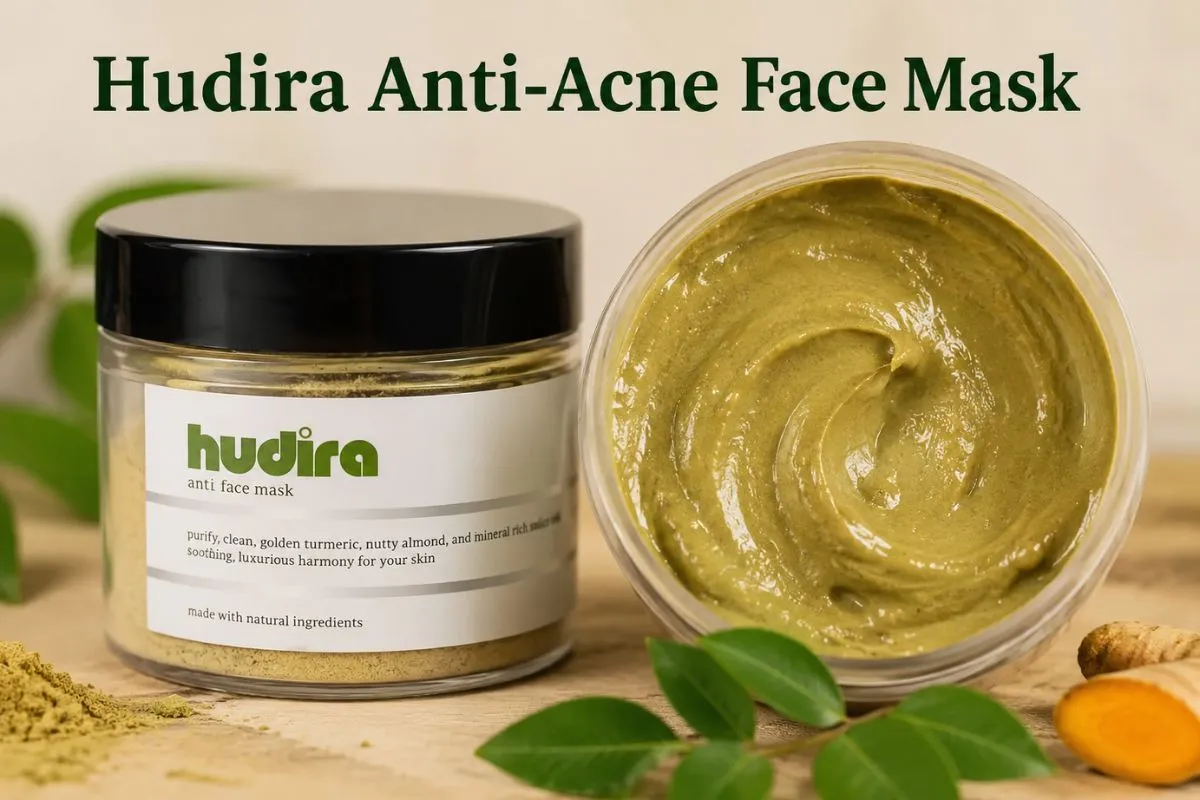
For anyone searching for a deep pores cleansing clay mask, Hudira’s Anti-Acne Face Mask offers a botanical option for helping manage excess oil and supporting clearer-looking skin. Apply it as directed, avoid overusing it, and follow with a suitable moisturizer to help maintain the skin barrier.
Hudira’s Anti-Acne Face Mask is designed for skin that needs a deeper cleanse without an overly harsh skincare routine. Its botanical-focused formula combines traditional ingredients such as Multani Mitti, neem, and turmeric to help absorb excess oil, lift away impurities, and support a fresher-looking complexion.
Multani Mitti helps draw out excess oil and buildup from the skin’s surface, making it a useful ingredient for oily and acne-prone skin. Neem and turmeric are traditionally valued in skincare for their purifying and soothing properties, while the mask’s plant-based approach is intended to leave skin feeling clean, refreshed, and balanced.
Final Thoughts
Clearer-looking skin does not require painful scrubbing, harsh homemade acids, or an overwhelming 12-step skincare routine. The most effective approach combines the right clay, realistic expectations, gentle application, and awareness of your skin type.
Whether you choose a simple diy pore clearing mask or a carefully prepared botanical formula, remember that healthy-looking skin is about balance not perfection. Ready to give your skincare routine a more naturally inspired upgrade? Explore Hudira organic products and discover botanical skincare designed for gentle, mindful, and effective self-care.
FAQs
Q. What is the best organic face mask for deep pore cleansing?
A clay-based mask containing ingredients such as Multani Mitti, kaolin, or bentonite can be useful for oily and congested-looking skin because clay helps absorb excess surface oil. The ideal choice depends on your skin type and sensitivity.
Q. Can a clay mask really unclog pores?
Clay can help absorb excess oil and remove surface buildup that contributes to clogged-looking pores. However, stubborn blackheads may respond better to a broader skincare routine that includes appropriate exfoliation.
Q. Is Multani Mitti good for clogged pores?
Multani Mitti has strong oil-absorbing properties and can help oily skin feel cleaner and fresher. Use it in moderation because frequent or prolonged use may feel drying for some skin types.
Q. How often should I use a deep-cleansing face mask?
Once a week is a sensible starting point for many people. Very oily skin may tolerate slightly more frequent use, while dry or sensitive skin may need masking less often.
Q. Can an organic face mask make pores look smaller?
A face mask can help pores appear less noticeable by reducing surface oil and congestion, but it cannot permanently change their natural size.


Add comment