
No products in the cart.
A defined jawline can make the face look balanced, fresh, and confident but most viral jawline hacks promise far more than skincare, food, or facial exercises can realistically deliver. The best ways to improve jawline appearance begin with understanding what actually affects it: genetics and bone structure create the foundation, while skin quality, body composition, hydration, sun exposure, and lifestyle can influence how sharp or soft the lower face looks. Natural skincare may support firmer, smoother skin, but it cannot reshape your jawbone or melt away chin fat.
So, what actually deserves your attention? Not egg-white masks, endless chewing exercises, or miracle oils. The answer is a smarter combination of collagen-supportive skincare, sun protection, a sensible diet for jawline and skin health, healthy body composition, hydration, quality sleep, and realistic expectations. And surprisingly, some of the simplest habits may matter more than expensive “jaw-sculpting” products.
What Actually Makes a Jawline Look Defined?
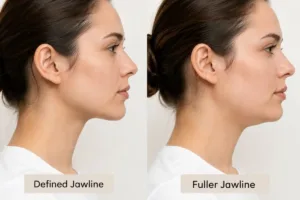
Before searching for products, it helps to understand what creates jawline definition in the first place.
The visible shape of your lower face is influenced by several factors:
- Bone structure: Your natural jaw and chin shape are largely determined by genetics.
- Facial fat: Fat beneath the chin and around the lower face can soften visible definition.
- Muscle structure: Facial and neck muscles contribute to appearance, but exercising them cannot completely redesign your facial anatomy.
- Skin quality: Collagen, elastin, hydration, sun damage, and aging influence how smoothly skin sits over the jaw.
- Temporary puffiness: Fluid retention can make your face appear fuller on some days.
- Age-related changes: Collagen loss, changes in fat distribution, and skin laxity can gradually soften the lower face.
If you are searching how to get a sharper jawline, identifying which of these factors is affecting your appearance is far more useful than jumping straight to a trending hack.
For example, a moisturizer may make dehydrated skin look smoother and plumper, but it cannot remove fat underneath your chin. Similarly, losing overall body fat may reveal more facial definition in some people, but it cannot tighten significant loose skin.
The American Academy of Dermatology explains that skin-firming creams usually provide subtle results at best. Moisturizers can temporarily plump the skin, while retinoids may produce modest improvements by supporting collagen. A cream cannot physically lift significantly sagging skin because it does not penetrate deeply enough to recreate the effects of a procedure.
That does not make skincare useless. It simply means we need to use it for what it can genuinely achieve.
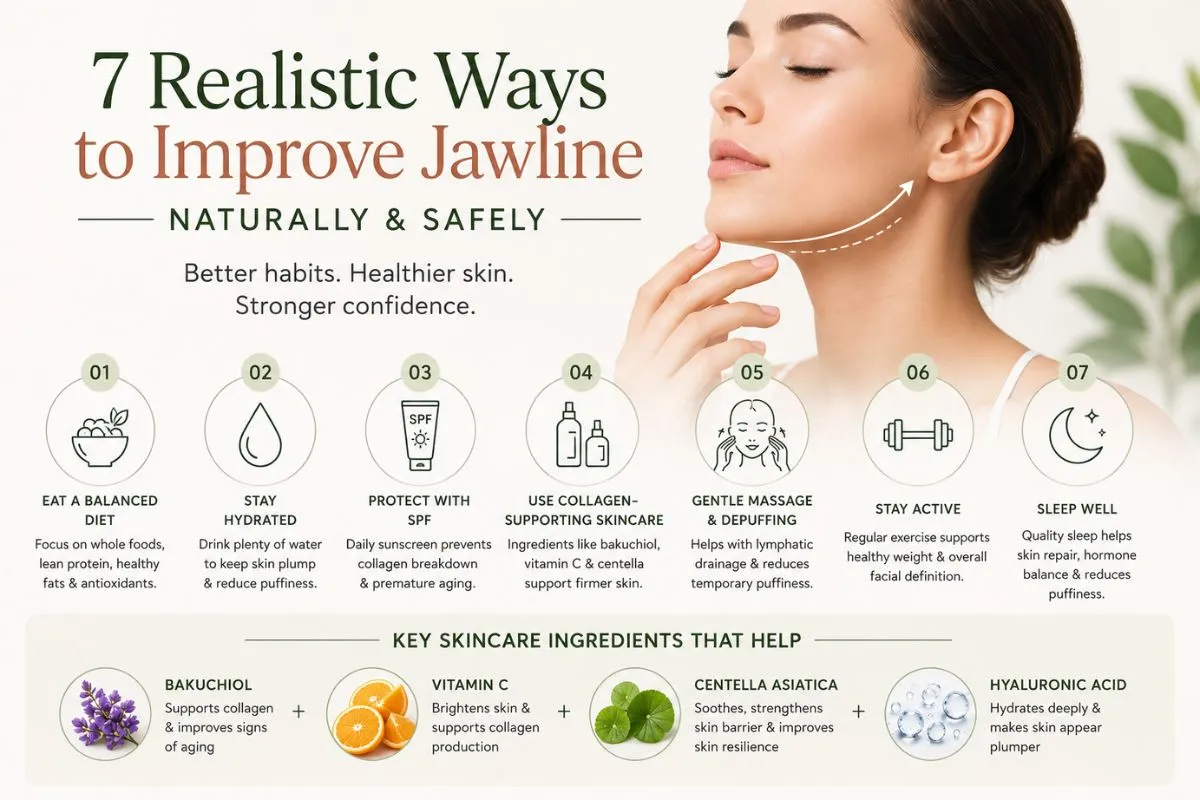
1. One of the Best Ways to Improve Jawline Skin: Protect Your Collagen
One of the most overlooked ways to improve jawline appearance is also one of the least glamorous: daily sun protection. Ultraviolet radiation contributes heavily to photoaging. Over time, UV exposure can affect collagen, elastin, pigmentation, texture, and overall skin resilience. As skin becomes thinner or less elastic, the lower face may gradually look softer.
That is why protecting your face and neck from excessive UV exposure is much more valuable than repeatedly trying DIY “tightening masks.” Use a broad-spectrum sunscreen with at least SPF 30 every morning.
Remember to apply it to:
- your entire face
- along the jawline
- underneath the jaw
- ears
- neck
Reapply when you are spending extended periods outdoors, swimming, or sweating.
Sunscreen will not give you a chiseled jawline next week. Its power is preventative: it helps slow unnecessary photoaging and protects the skin structure you already have.
If you are spending money on antioxidants, bakuchiol, moisturizers, or botanical skincare while regularly skipping sunscreen, you are missing one of the most effective long-term steps.
2. Best Natural Skincare Ingredients for a Stronger-Looking Jawline
Here is where we need to separate skincare science from skincare marketing.
Aloe vera, jojoba oil, rosehip oil, green tea, and dozens of other natural ingredients can certainly have skincare benefits but that does not automatically make them “jawline-tightening ingredients.”
For more ways to improve jawline, it makes more sense to concentrate on ingredients with credible evidence relating to photoaging, collagen-associated processes, firmness, hydration, or skin resilience.
These ingredients may help the skin covering your jawline look healthier and better supported, but they cannot change the underlying structure of your face.
Bakuchiol: A Promising Botanical for Photoaged Skin
Bakuchiol is a plant-derived compound increasingly used in anti-aging skincare. It is often described as a botanical alternative to retinol, although the two ingredients are not identical.
In a randomized, double-blind 12-week study involving 44 participants, 0.5% bakuchiol and 0.5% retinol both reduced wrinkle surface area and hyperpigmentation. Retinol users reported more scaling and stinging.
This gives bakuchiol a legitimate place in skincare for signs of photoaging. However, keep expectations realistic. Bakuchiol may help improve:
- visible fine lines
- uneven tone
- photoaged skin
- overall skin texture
It has not been proven to reshape the jaw or significantly lift jowls.
Vitamin C: Powerful Antioxidant and Collagen Support
Vitamin C is another valuable ingredient for people concerned about visible skin aging.
Topical vitamin C acts as an antioxidant and plays an important biological role in collagen synthesis. Research reviews have linked it with benefits for photoaging, pigmentation, oxidative stress, and collagen-related skin processes.
A well-formulated vitamin C serum can therefore contribute to healthier-looking lower-face skin. But formulation matters. Vitamin C can be unstable, and different derivatives vary in their ability to penetrate the skin. This means an effective formulation matters more than simply seeing “vitamin C” written on a bottle.
Use it primarily for:
- antioxidant protection
- brightness
- uneven tone
- photoaging support
- collagen-related skin health
It is a great skincare ingredient but not a topical jaw sculptor.
Centella Asiatica: Skin Resilience and Firmness Support
Centella asiatica, also known as cica or gotu kola, is one of the more interesting botanicals for mature and stressed skin. It contains compounds including madecassoside and asiaticoside.
In one randomized double-blind study, a topical formula containing 5% vitamin C and 0.1% madecassoside was associated with improvements in wrinkles, suppleness, firmness, hydration, and elasticity after six months. Because the formula contained both ingredients, the results cannot be attributed to Centella alone.
A systematic review has also examined Centella preparations for facial wrinkles, although the overall evidence remains more limited than it does for established dermatological ingredients such as retinoids.
Centella make more ways to improve jawline-supportive routine because it may contribute to:
- skin resilience
- barrier support
- hydration
- soothing
- the appearance of aging skin
Again, healthier skin can improve the overall appearance of your jaw area without actually reshaping it.
Hyaluronic Acid: Plumping Rather Than Lifting
Hyaluronic acid naturally occurs in the body and is widely used in skincare for hydration. Cosmetic forms are commonly produced through fermentation.
Its main beauty benefit is simple: hyaluronic acid attracts and holds water. Better-hydrated skin can appear:
- smoother
- fuller
- less crepey
- more supple
That can improve the appearance of thin or dehydrated skin around the jaw and neck.
3. Build a Realistic Diet for Jawline and Skin Health
Nutrition matters but there is no special food that burns chin fat or magically creates a sharp jaw. A sensible diet for jawline appearance is really a diet that supports healthy skin, muscle maintenance, appropriate body composition, and general wellness.
Recent research supports a relationship between nutrition and skin aging. A 2025 systematic review and meta-analysis found that certain dietary interventions involving polyphenols, fatty acids, lipids, and collagen were associated with improvements in some measures of wrinkles, hydration, elasticity, or barrier function.
That does not mean you need expensive powders or supplements. Start with normal, nutrient-dense food.
Eat Enough Protein
Protein provides amino acids required throughout the body for normal tissue maintenance. Useful sources include:
- eggs
- fish
- chicken
- Greek yogurt
- cottage cheese
- lentils
- chickpeas
- beans
- tofu
- tempeh
You do not need a super-high-protein “diet for jawline.” You simply want adequate nutrition that matches your body and lifestyle.
Choose Vitamin C-Rich Foods
Vitamin C is required for normal collagen formation. Good food sources include:
- guava
- kiwi
- oranges
- strawberries
- berries
- bell peppers
- broccoli
- tomatoes
Instead of hunting for a magical ways to improve jawline, eat a variety of colorful produce fruits regularly.
Include Healthy Fats
Healthy fats also belong in a balanced diet.
Try foods such as:
- walnuts
- almonds
- chia seeds
- flaxseeds
- avocado
- olive oil
- fatty fish
A healthy diet for jawline appearance should nourish your body rather than deprive it.
Eat More Colorful Plants
Vegetables, fruits, herbs, teas, legumes, berries, and other plant-based foods provide a wide variety of polyphenols and micronutrients.
Your skin benefits more from dietary variety than from obsessing over one “beauty superfood.”
Be Cautious With Beauty Supplements
Some supplements have promising evidence for certain skin measurements, including hydration or elasticity.
That is not the same as proof that they sharpen the jawline.
Your diet for jawline strategy should therefore begin with balanced food rather than pills, powders, teas, and products marketed as facial-sculpting solutions.
4. Improve Overall Body Composition—Not “Jawline Fat” Alone
For some people, the biggest factor affecting jawline definition is not skin quality at all. It is facial or submental fullness.
If someone carries excess body fat, gradual overall fat loss may also reduce facial fullness. However, no specific diet for jawline can tell your body exactly where to burn fat first. Fat distribution differs significantly between people.
Genetics, age, sex, hormones, and natural anatomy all influence where your body tends to store and lose fat. That is why two people at exactly the same body weight may have completely different facial structures.
If weight loss is appropriate for you, a sustainable approach is usually more sensible than an aggressive one:
- maintain a moderate calorie deficit
- eat adequate protein
- strength train regularly
- include cardiovascular activity
- eat mostly nutrient-dense foods
- sleep sufficiently
- give your body time
Avoid crash dieting solely to create a thinner face. Rapid or substantial weight loss can sometimes make skin laxity more noticeable, especially when skin elasticity is already reduced. And importantly, having a naturally round or soft lower face does not automatically mean someone needs to lose weight.
This is one of the most valuable ways to improve jawline advice can become healthier: improve what is realistically changeable without treating every natural facial feature as a problem.
5. Reduce Temporary Facial Puffiness
Sometimes the jawline looks different from one morning to the next. That is unlikely to be a sudden gain or loss of facial fat. Temporary fluid retention can affect facial appearance. Possible contributors include:
- unusually salty meals
- alcohol
- inadequate sleep
- dehydration
- hormonal changes
- individual fluid balance
If you tend to become visibly puffy, returning to your normal balanced eating pattern, drinking adequate fluids, and getting enough sleep may help.
Some people notice that very salty processed meals temporarily increase facial puffiness. That does not mean sodium is “bad” or needs to be eliminated, it means balance matters. Potassium-rich whole foods such as vegetables, fruits, legumes, and potatoes can also be part of balanced nutrition.
Never intentionally dehydrate yourself to create temporary facial definition. Your face might look slightly leaner when dehydrated, but dehydration is unhealthy and can simultaneously make your skin look dull, dry, and less plump.
6. Understand What Facial Massage and Gua Sha Can Really Do
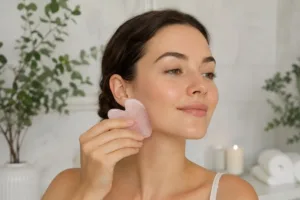
Facial massage and gua sha have exploded on social media. And they can feel amazing. Gentle massage may help temporarily shift fluid, reduce the appearance of puffiness, and relax facial tension.
That can make the lower face look slightly more refreshed immediately afterward. But temporary depuffing should not be confused with permanent jawline sculpting.
A recent systematic review evaluating facial exercises, massage, and other conservative mechanical facial-rejuvenation techniques found some localized positive findings, but researchers concluded that the evidence remains limited and inconsistent.
An earlier systematic review similarly concluded that evidence was insufficient to determine whether facial exercises effectively produce facial rejuvenation. So enjoy massage if you like it—but keep the promise realistic.
Try this approach:
- Apply a gentle serum or suitable facial oil.
- Use light pressure.
- Glide slowly along your lower face and jaw.
- Avoid aggressive scraping.
- Stop if you develop pain, irritation, or persistent redness.
Massage should feel calming, not punishing.
7. Prioritize Sleep, Movement, and Consistency
Not every beauty intervention comes inside a serum bottle. Lifestyle habits influence how refreshed your face looks, how well you maintain your nutrition, and how consistently you follow skincare.
Research continues to explore associations between skin aging and lifestyle factors including nutrition, sleep, stress, and physical activity.
Aim for:
- adequate sleep
- regular physical activity
- strength training
- balanced meals
- sufficient hydration
- stress management
- consistent skincare
Do not expect one perfect day to transform your face.
When Natural Methods Are Not Enough
Sometimes jawline softness is primarily caused by something skincare cannot change.
This may include:
- substantial skin laxity
- genetic facial structure
- significant submental fat
- age-related volume changes
- major weight-loss-related loose skin
In those circumstances, even excellent skincare will have limits. Professional approaches may include dermatologist-led skin treatments, energy-based treatments, injectable procedures, fat-reduction procedures, or surgery depending on the underlying concern.
That does not mean you need any of them. It simply means it is better to know what skincare can accomplish than spend years buying products for a problem they cannot physically fix.
Final Thoughts
The most realistic ways to improve jawline appearance include protecting your skin from UV damage, using evidence-aware skincare, maintaining an appropriate body composition, following a balanced diet for jawline and overall health, staying hydrated, managing temporary puffiness, sleeping well, and remaining consistent.
When choosing natural skincare, prioritize ingredients with a defensible role such as bakuchiol, vitamin C, Centella asiatica, and effective hydrating ingredients rather than assuming every botanical automatically “tightens” skin.
Your jawline does not need a miracle ingredient. Healthy skin needs protection, nourishment, consistency, and realistic care.
Explore Hudira organic products and discover plant-inspired skincare created to support healthy-looking, nourished skin. Build your ritual around purposeful ingredients, gentle care, and the confidence that comes from working with your natural beauty rather than chasing impossible promises.
FAQs
Q. Can natural skincare really give me a sharper jawline?
Natural skincare can improve hydration, texture, brightness, and certain signs of photoaging. This may make the skin around the jawline look smoother and healthier, but skincare cannot change your jawbone, selectively remove chin fat, or significantly lift loose skin.
Q. What foods should I eat for better jawline definition?
Focus on balanced nutrition containing adequate protein, fruits, vegetables, whole grains or other fiber-rich carbohydrates, and healthy fats. Food cannot selectively reduce chin fat, but good nutrition can support healthy skin and overall body composition.
Q. Can gua sha or facial exercises make my jawline sharper?
Gua sha and massage may temporarily reduce the appearance of puffiness, but evidence for permanent jawline reshaping is limited. Research on facial exercises is also not strong enough to promise substantial or permanent cosmetic changes.
Q. What is the fastest natural way to improve jawline appearance?
There is no guaranteed instant solution. If temporary puffiness is contributing, adequate sleep, hydration, and returning to normal balanced eating may help relatively quickly. For longer-term skin quality, daily sunscreen, consistent skincare, healthy nutrition, and sustainable lifestyle habits are more important.


Add comment