
No products in the cart.
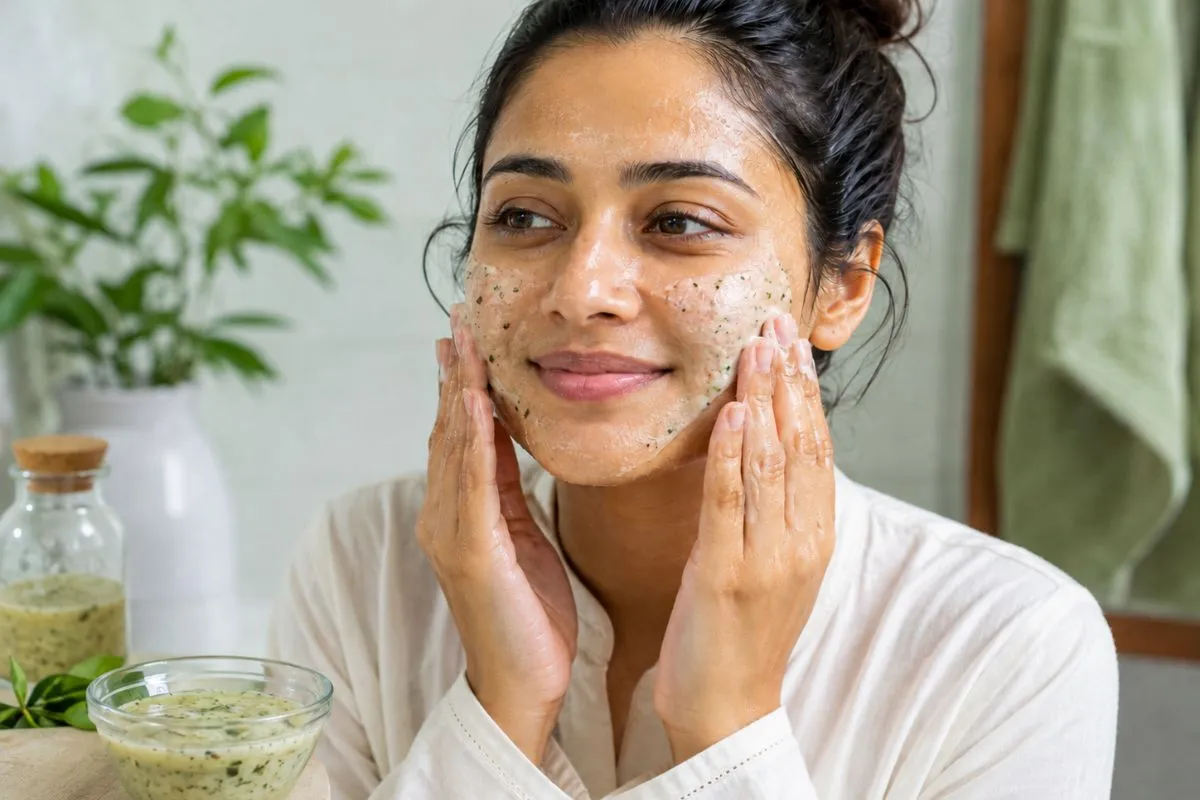
Hot weather, workouts, long commutes, and humidity can leave your skin feeling sticky again only minutes after a shower. The solution is not necessarily harsher soap or aggressive scrubbing. A thoughtfully made homemade body wash can remove sweat, excess oil, and everyday grime while helping your skin feel comfortable rather than tight, rough, or stripped.
But here is where things get interesting: some of the most popular DIY cleansing ingredients can actually make sweaty skin feel worse when they are used incorrectly. So what should go into the best herbal cleanser and what should stay out? This guide reveals an easy homemade body wash recipe, explains which botanicals deserve a place in your shower, and shows you how to customize your cleanser for fresh, healthy-looking skin.
Why Sweaty Skin Needs a Smarter Body Wash Recipe
Sweating is completely normal. It is one of the ways your body regulates temperature, particularly during hot weather or physical activity.
Sweat itself is not automatically the enemy. The familiar body odor that develops after sweating is largely associated with microorganisms on the skin interacting with sweat, particularly in areas such as the underarms and groin.
At the same time, sweat can mix with:
- Excess sebum
- Dead skin cells
- Dust and environmental pollutants
- Residue from deodorants
- Sunscreen
- Tight clothing and workout gear
Add heat and friction, and your skin may begin to feel sticky, uncomfortable, or irritated.
This is precisely why a good body wash recipe should do more than create mountains of foam.
An effective cleanser for sweat-prone skin should help lift away grime and excess oil without destroying the comfortable, moisturized feeling of the skin.
The goal is clean—not squeaky, stripped, or painfully dry.
What Makes the Best Homemade Body Wash for Sweaty Skin?

Before grabbing every herb in your kitchen, remember that more ingredients do not automatically create a better cleanser.
A well-designed homemade body wash should focus on four things.
1. Effective but Gentle Cleansing
Sweaty skin needs proper cleansing, but very harsh cleansing can leave it dry and uncomfortable. That may be especially noticeable if you shower more than once during hot summer days.
Choose a gentle cleansing base rather than relying on abrasive scrubs.
2. Lightweight Hydration
Sweaty skin can still become dehydrated.
Ingredients such as glycerin and soothing aloe-based products can help a cleanser feel more comfortable without turning your shower routine into a heavy moisturizing treatment.
3. Ingredients Suitable for Sweat-Prone Areas
Some botanical ingredients may work particularly well in routines designed for oily, sweaty, or odor-prone skin.
The trick is using sensible quantities instead of assuming that stronger is always better.
4. A Skin-Friendly Formula
Your diy body wash should not burn, sting, or leave your skin feeling painfully tight.
Fragrance, essential oils, botanical extracts, and even completely natural ingredients may irritate some people. Patch testing is therefore worth the extra minute.
Best Herbal Ingredients for a Homemade Body Wash Recipe
Natural skincare gets confusing because almost every herb online is described as “miraculous.”
Instead, focus on what each ingredient can realistically contribute to your homemade body wash recipe.
1. Aloe Vera for a Comfortable Skin Feel
Aloe vera is popular in skincare because of its lightweight, soothing feel. For someone whose skin becomes uncomfortable from repeated showering, aloe-based skincare can be a welcome addition.
However, fresh aloe from a leaf should not simply be blended into a large bottle and stored for weeks. Fresh, water-containing botanical materials can spoil.
If you are making a stored cleanser, a commercially prepared and properly preserved aloe ingredient is a more practical choice.
2. Tea Tree for Oily, Sweat-Prone Skin
Tea tree is one of the most recognizable botanical ingredients in cleansers marketed toward oily and blemish-prone skin. It can be an interesting optional addition to a diy body wash, particularly for people who enjoy a very fresh cleansing experience.
However, essential oils are concentrated. More tea tree oil does not mean cleaner skin. High concentrations may cause irritation, so it should be used sparingly and avoided altogether if you know your skin reacts badly to essential oils.
3. Colloidal Oatmeal for Sensitive Skin
Oats do not sound as exciting as exotic herbs, but sometimes boring ingredients are skincare superheroes. Finely prepared colloidal oatmeal can help a cleanser feel soothing and soft, making it particularly useful when your skin is both sweaty and sensitive.
It is also a great counterbalance to the internet’s obsession with aggressively “detoxifying” sweaty skin.
4. Neem for an Herbal Cleansing Routine
Neem has a long history of traditional cosmetic use across South Asia and is commonly found in products designed for oily skin. Neem powder can work nicely in a freshly mixed herbal cleansing powder.
However, dumping spoonfuls of neem into a bottle of homemade liquid body soap may create an unpleasant texture, unstable mixture, and difficult-to-rinse residue. For DIY skincare, simplicity usually wins.
5. Multani Mitti for Very Oily Areas
Multani Mitti, also known as Fuller’s Earth, is valued for its oil-absorbing properties. It can be useful occasionally on very oily areas, but it is not something everyone needs in a daily full-body cleanser.
Too much clay may leave dry or sensitive skin feeling tight. Think of Multani Mitti as an optional supporting ingredient not the foundation of every body wash recipe.
6. Vegetable Glycerin for Lightweight Hydration
Glycerin attracts water and is widely used as a humectant in skincare. A small amount can improve the feel of a homemade liquid body soap or cleanser, particularly if your cleansing base otherwise feels slightly drying.
Use moderation, though. Too much glycerin can make a DIY product unpleasantly sticky.
7. Peppermint: Refreshing but Optional
Peppermint can create the cooling sensation people love during hot weather. That sensation feels amazing after a workout but remember that “cooling” does not automatically mean better cleansing.
Peppermint essential oil may irritate sensitive skin. Your homemade body wash recipe can work perfectly without it.
Homemade Body Wash Recipe for Sweaty Skin
Now for the fun part.
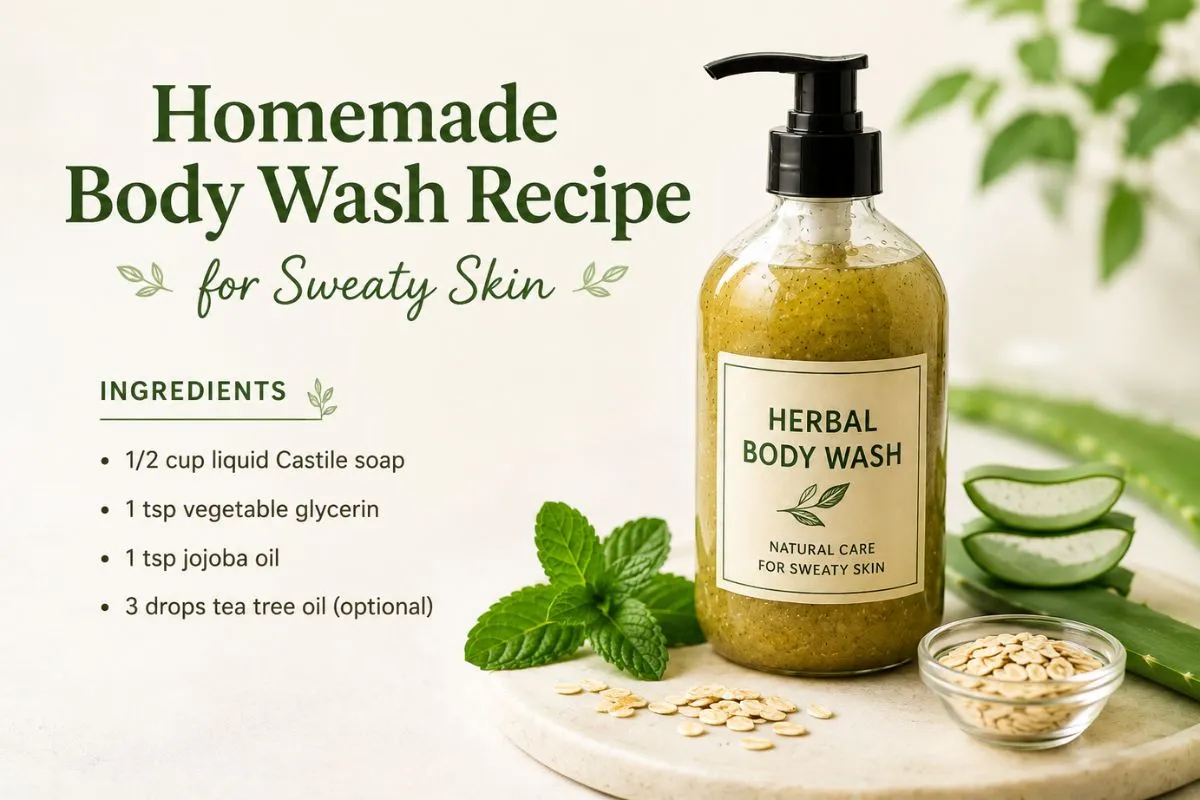
This simple homemade body wash recipe is intentionally uncomplicated. Instead of combining fresh herbal teas, fruit juice, milk, water, and half your kitchen cabinet into one bottle, it begins with a ready-made unscented cleansing base.
You Will Need
- ½ cup unscented liquid Castile soap or a gentle unscented liquid cleansing base
- 1 teaspoon vegetable glycerin
- 1 teaspoon jojoba oil
- 3 drops tea tree essential oil, optional
- 1–2 drops lavender essential oil, optional
- A clean pump bottle
Step 1: Clean Your Equipment
Wash your bottle, mixing spoon, measuring utensils, and hands thoroughly.
Allow the container to dry completely before beginning.
Good hygiene matters whenever you make skincare products at home.
Step 2: Add the Cleansing Base
Pour approximately half a cup of your unscented liquid cleanser into the bottle.
This is the foundation of your diy body wash.
Using an existing cleansing base also makes the formulation considerably simpler than trying to build a surfactant system from scratch.
Step 3: Add Vegetable Glycerin
Mix in one teaspoon of vegetable glycerin.
The goal is to create a softer after-feel, not to turn the cleanser into syrup.
Step 4: Add Jojoba Oil
Add approximately one teaspoon of jojoba oil.
If your skin is extremely oily or you dislike oil in rinse-off products, reduce the amount or skip it entirely.
Step 5: Add Optional Essential Oils
For skin that tolerates essential oils, add a few drops of tea tree.
Do not treat essential oils like fragrance syrup. Concentrated oils can irritate skin, particularly freshly shaved, sensitive, or already irritated areas.
If your skin is reactive, make the diy body wash without essential oils.
Step 6: Mix Gently
Close the bottle and turn it slowly several times instead of violently shaking it.
Some separation can occur in simple DIY mixtures, so gently remix before use when necessary.
Congratulations—you have created a straightforward homemade liquid body soap style cleanser without turning your bathroom into a chemistry lab.
An Even Simpler Herbal Body Wash Recipe: Make It Fresh
Want something more herbal?
A fresh-mix powder cleanser is one of the smartest options because you add water only when you are ready to use it.
Dry Herbal Cleanser Mix
Combine:
- 4 tablespoons finely ground or colloidal oatmeal
- 2 tablespoons chickpea flour
- 1 tablespoon kaolin clay
- 1 teaspoon neem powder
Store the dry mixture only in a clean, moisture-free jar.
For each shower, place approximately one tablespoon in your palm or a small bowl. Add enough water to create a creamy paste, massage gently over damp skin, and rinse thoroughly.
Do not aggressively scrub.
This version of a body wash recipe is especially appealing if you want a genuinely herbal approach without trying to preserve a bottle containing homemade herbal tea and water.
How to Customize Your DIY Body Wash by Skin Type
The best cleanser is not the same for everybody.
For Oily and Sweaty Skin
Keep the formula lightweight.
You may enjoy tea tree in a properly diluted product, while occasional clay-based cleansing can help if your skin becomes extremely oily. Avoid trying to remove every trace of natural oil.
Your skin should feel clean after using your homemade body wash, not like it has been polished with industrial degreaser.
For Sensitive and Sweaty Skin
Go minimal. Choose an unscented cleanser and skip essential oils. Colloidal oatmeal is often a more sensible choice than packing your diy body wash with peppermint, tea tree, citrus oils, and fragrance.
When skin is already irritated from heat and friction, less can genuinely be more.
For Dry but Sweaty Skin
Yes—you can be sweaty and dry simultaneously.
Frequent washing, hot water, air conditioning, and harsh cleansers can all contribute to dry-feeling skin.
A homemade liquid body soap style formula with modest glycerin and an appropriate gentle cleansing base may feel more comfortable.
Follow your shower with a lightweight body moisturizer.
For Body-Acne-Prone Skin
A homemade herbal cleanser can help with everyday hygiene, but persistent body acne may require evidence-based acne ingredients or professional advice.
Do not scrub pimples aggressively with neem powder, rough loofahs, salt, or gritty ingredients.
Your cleanser should support your routine—not wage war against your skin.
Homemade Liquid Body Soap vs Regular Body Wash: What’s the Difference?
People frequently search for homemade liquid body soap, although technically soap and modern body wash are not always the same thing.
Traditional soapis produced through a chemical reaction known as saponification. Many commercial body washes instead use surfactants specifically formulated to cleanse at skin-friendly conditions. That means a homemade liquid body soap made from Castile soap may behave differently from a professionally formulated shower gel.
Neither is automatically “good” or “bad.” Your skin type matters more than whether a label says natural, herbal, soap, or body wash. If Castile soap makes your skin tight or irritated, do not force yourself to use it simply because it is popular in every diy body wash tutorial online.
A gentle, professionally formulated unscented cleanser can still serve as the base of an herbal-inspired DIY routine.
7 Mistakes to Avoid With a Homemade Body Wash Recipe
A fantastic formula can quickly become problematic when DIY enthusiasm gets ahead of basic skincare sense.
Mistake 1: Adding Fresh Lemon Juice
Lemon frequently appears in natural skincare recipes because people associate its acidity with freshness. But fresh citrus juice can irritate skin.
Sweaty or freshly shaved skin may be particularly uncomfortable after acidic DIY treatments. Your homemade body wash recipe does not need lemon juice to be effective.
Mistake 2: Using Too Much Essential Oil
Three drops are not the same as three tablespoons. Essential oils are concentrated substances, and some people develop irritation even at modest levels.
Natural does not mean unlimited.
Mistake 3: Assuming Vitamin E Is a Preservative
Vitamin E is often used as an antioxidant in oil-containing formulations, but it should not be treated as a substitute for a proper broad-spectrum preservative in a water-based cosmetic.
This matters enormously when making homemade liquid body soap or shower products.
Mistake 4: Making Huge Batches
A giant bottle feels convenient until you remember that homemade cosmetic formulations may not have undergone microbial stability testing.
Make manageable amounts rather than mixing six months’ worth of diy body wash at once.
Mistake 5: Adding Fresh Herbal Tea and Storing It
A beautiful neem, rosemary, or green-tea infusion may sound perfect. But once you introduce water and botanical material, microbial safety becomes much more complicated.
For home use, make fresh herbal mixtures immediately before use or rely on properly formulated ingredients.
Mistake 6: Scrubbing Harder Because You Sweat More
Sweat does not require punishment.Rough scrubbing can irritate skin, particularly around the neck, chest, shoulders, inner thighs, and other friction-prone areas.
Apply your body wash recipe gently using your hands or a soft washcloth.
Mistake 7: Believing More Foam Means More Cleansing
Foam feels satisfying, but bubbles are not a direct measurement of how clean your skin is.
A low-foam formula can still cleanse effectively.
How Long Can You Store DIY Body Wash?
This is one of the most important questions—and one of the most casually answered online.
A properly manufactured cosmetic product may contain a carefully designed preservation system and undergo stability or microbial testing.
A kitchen-made diy body wash usually does not.
That distinction matters.
If your formulation contains water, fresh aloe, herbal tea, milk, fruit juice, or similar water-rich ingredients, do not automatically assume refrigeration or vitamin E makes it safe for months.
Microbial contamination is not always visible or obvious.
The safest strategy for truly fresh botanical mixtures is simple:
make small quantities and use them fresh.
For dry herbal powders, keep the dry mixture away from water and scoop it using clean, dry utensils.
For a homemade liquid body soap based entirely on an existing stable cleansing product, follow the storage guidance for the original ingredients and avoid unnecessarily contaminating or heavily modifying the formula.
If the smell, color, consistency, or appearance changes unexpectedly, discard it.
When in doubt, make less not more.
A Smart Summer Routine for Sweaty Skin
A great body wash recipe works even better when supported by smart habits.
During hot or humid weather:
- Shower after heavy sweating or intense exercise.
- Change sweaty clothing promptly.
- Choose breathable fabrics when practical.
- Keep towels clean and allow them to dry completely.
- Avoid sharing towels or personal grooming products.
- Clean high-sweat areas thoroughly but gently.
- Moisturize if frequent showering leaves your skin dry.
- Use deodorant or antiperspirant according to your needs.
And remember: sweating heavily is not a sign that you are dirty.
Your body is doing its job. Your skincare routine simply needs to keep up without becoming unnecessarily aggressive.
Ready to Give Your Body Care a More Natural Touch?
Healthy-looking skin does not need an overwhelming routine. Start with thoughtful cleansing, choose ingredients your skin actually enjoys, and remember that gentle care can still be powerful.
If you love botanical skincare but would rather skip the measuring, mixing, and DIY mess, explore Hudira organic products and discover naturally inspired skincare designed to make everyday self-care feel simple, refreshing, and beautiful.
Your skin deserves care that feels good—not complicated.
FAQs
Q. How to make body wash naturally at home?
To make body wash at home, use a simple unscented cleansing base and add a few gentle ingredients like vegetable glycerin. Avoid complex or water-heavy mixes with fresh herbs unless you know proper preservation. Simple recipes are safer and easier to maintain.
Q. Is homemade body wash good for sweaty skin?
A homemade body wash can help sweaty skin if it is gentle and not overloaded with strong oils or irritants. It helps remove sweat and dirt, but persistent skin issues or strong odor should be checked by a doctor.
Q. What is the best homemade body wash recipe for body odor?
There is no perfect recipe for everyone. A mild unscented base with a small amount of tea tree oil may help some people. Good hygiene habits like regular washing, clean clothes, and proper deodorant are also important.
Q. Can I use homemade liquid body soap every day?
Yes, you can use homemade liquid body soap daily if it suits your skin. If you feel dryness or irritation, switch to a gentler formula and use moisturizer after bathing.
Q. How long does DIY body wash last?
The shelf life of diy body wash depends on its ingredients and storage. Water-based versions spoil faster and should be used carefully, while dry mixes last longer. Always discard if there are changes in smell, color, or texture.

Add comment