
No products in the cart.

A well-planned facial for pimples at home can feel like a fresh start when breakouts, excess oil, and clogged pores make your skin look tired or uneven. The key is not to attack acne with harsh scrubs or endless products. Instead, a gentle routine that cleanses, soothes, balances, and protects the skin can support a clearer-looking complexion while helping you avoid unnecessary irritation.
But many DIY routines go wrong at the exact moment they feel most satisfying. Should you steam, exfoliate, squeeze blackheads, or let a clay mask dry until it cracks? Before you follow another viral remedy, there is a smarter way to build a facial at home for acne and a few small changes can make the difference between refreshed skin and an angry breakout.
Can You Really Do a Facial for Pimples at Home?
Yes, but it should be gentler than a typical spa facial. Acne-prone skin may already be inflamed, oily, sensitive, or dealing with a weakened skin barrier. Aggressive exfoliation, picking, squeezing, and layering strong actives can easily backfire.
A safe home facial should remove dirt and excess oil, avoid clogging pores, calm the appearance of redness, and maintain hydration. Think supportive skincare, not an instant cure.
If you are a facial amateur, that is a good reason to keep things simple. You do not need professional extraction tools, complicated acids, or ten different products. A thoughtful beginner routine is easier to follow and less likely to overwhelm your skin.
For painful cysts, widespread inflamed acne, infected-looking lesions, or acne that is scarring, home care should not replace professional advice.
Why Gentle Skin Care Matters for Acne-Prone Skin
Pimples do not appear simply because the face is “dirty.” Acne involves several factors, including excess sebum, clogged pores, inflammation, hormones, and individual skin biology. Washing harder cannot scrub those factors away.
Over-cleansing can make skin feel tight and irritated. Rough scrubs may disturb active pimples, while picking can increase inflammation and the risk of post-acne marks. A smart facial at home for acne works with the skin rather than fighting it.
Oily skin still needs hydration. When your skin barrier is comfortable and supported, it is easier to maintain a balanced routine. Choose lightweight, non-comedogenic products where possible, and avoid introducing several strong actives at once.
7-Step Facial for Pimples at Home
Step 1: Start With Clean Hands and a Clean Face
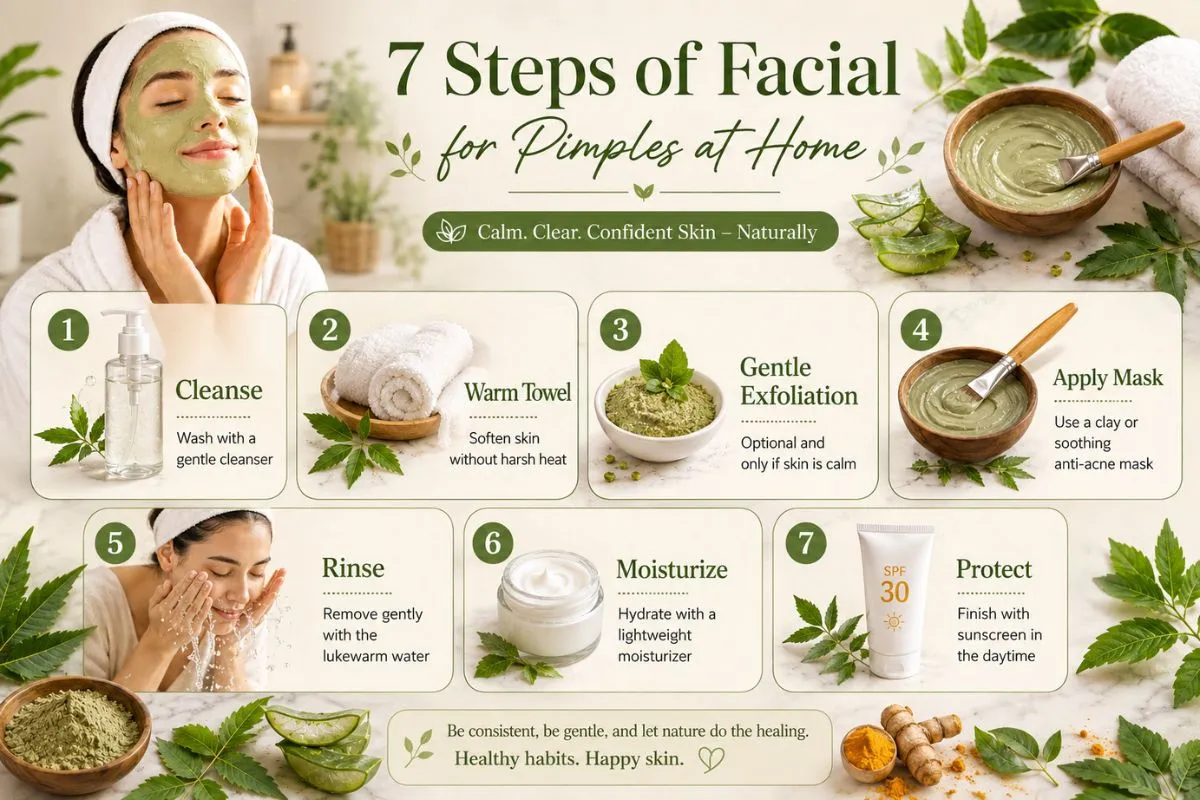
Before touching your face, wash your hands thoroughly. Remove makeup and sunscreen with a gentle cleanser or suitable first-cleanse product, then follow with a mild facial cleanser if needed.
For a facial for pimples at home, lukewarm water is a better choice than very hot water. Massage cleanser gently with your fingertips instead of using rough brushes or abrasive cloths.
If you are a facial amateur, keep this first step simple. Clean, calm skin is a much better foundation than skin that has already been scrubbed red.
Step 2: Decide Whether You Need Exfoliation
Exfoliation can remove dead surface cells, but more is not better. If you have red, swollen, painful, or irritated pimples, skip physical scrubbing.
If you already use salicylic acid, retinoids, benzoyl peroxide, or another acne treatment, adding another exfoliating product during a DIY facial may increase dryness and irritation.
A gentle facial at home for acne does not have to include exfoliation every time. On sensitive days, cleansing and masking may be enough.
Avoid sugar, coarse salt, crushed seeds, or other rough DIY particles on active pimples. Friction is not your friend when skin is inflamed.
Step 3: Be Careful With Steam
Warm steam may feel relaxing and can soften surface debris, but it does not “open pores” like tiny doors. Pores do not literally open and close.
If you enjoy steam, keep it mild and brief. Never place your face directly over boiling water. People with very sensitive or easily flushed skin may prefer to skip steam altogether.
For a facial amateur, a comfortably warm towel can create a spa-like moment without turning the routine into a heat challenge. Comfort matters more than intensity.
Step 4: Apply a Skin-Friendly Face Mask
This is where a home facial gets fun. Clay-based and botanical masks can be helpful for people who enjoy a fresh, clean feel, especially when skin becomes oily.
Common natural skincare ingredients include Multani Mitti, neem, turmeric, aloe vera, oatmeal, green tea, and honey. Remember that “natural” does not automatically mean irritation-proof.
When doing a facial for pimples at home, apply the mask in a thin, even layer and follow the product directions. You do not need to let a clay mask become painfully tight or crack completely.
A ready-to-use botanical formula can also make a facial at home for acne easier than mixing several ingredients from the kitchen.
Step 5: Do Not Squeeze or Pick Pimples
A visible whitehead can make extraction feel tempting, but squeezing can damage surrounding skin and increase the chance of discoloration or scarring. Home extraction tools can also cause problems when used without training.
If you are a facial amateur, this is one technique worth leaving alone. Your goal is calmer-looking skin, not winning a battle against every pore in one evening.
After rinsing your mask, pat the skin dry with a clean, soft towel. No rubbing.
Step 6: Soothe and Moisturize
After cleansing and masking, the skin needs comfort not another aggressive treatment.
Use a lightweight moisturizer suitable for acne-prone skin. Look for non-comedogenic options when possible. Ingredients such as glycerin, hyaluronic acid, panthenol, or aloe-based formulas can help skin feel comfortable without requiring a heavy finish.
This step matters in a facial at home for acne because acne-prone skin can still become dehydrated. Skipping moisturizer just because your skin is oily may leave it tight and irritated.
If you already use a dermatologist-recommended acne medication, follow those instructions rather than piling random treatments on top.
Step 7: Protect Your Results
If you perform your facial during the day, finish with a broad-spectrum sunscreen suitable for your skin type. Sun protection is especially important if you deal with post-acne marks or use ingredients that increase sun sensitivity.
If your facial for pimples at home is part of an evening routine, finish with moisturizer and give your skin a break. Avoid immediately adding a peel, scrub, or strong treatment.
For a facial amateur, restraint is a skincare superpower. A successful facial should leave skin feeling comfortable—not raw, hot, or stripped.
Best Natural Ingredients for a Facial at Home for Acne
Natural skincare works best when it is used thoughtfully. Instead of assuming every botanical ingredient “cures” pimples, focus on realistic benefits.
Multani Mitti
Multani Mitti, also known as Fuller’s earth, is popular in traditional skincare for its oil-absorbing properties. It can leave oily skin feeling fresh, but it may feel drying if used too often or left on too long.
For oily and combination skin, a well-formulated clay mask can be a refreshing addition to a home facial. Just remember that removing every trace of natural oil is not the goal.
Neem
Neem has a long history in traditional skincare and is often used in products for oily or blemish-prone skin. It fits naturally into an anti acne routine, but it should be treated as supportive skincare rather than a guaranteed cure.
Neem also works particularly well with Hudira’s botanical skincare philosophy, where traditional plant-based ingredients are incorporated into simple self-care rituals.
Turmeric
Turmeric is widely valued in traditional beauty rituals. People often use it to support the appearance of calm, even-looking skin.
Properly formulated products are preferable because kitchen turmeric can stain skin, nails, towels, and clothing. If you are experimenting with a homemade mixture, always patch-test it first.
Aloe Vera
Aloe vera can feel soothing and refreshing after cleansing or masking. Choose simple formulas if your skin is easily irritated.
It can be especially appealing after using a clay-based mask when you want the skin to feel hydrated and comfortable again.
Oatmeal and Green Tea
Colloidal oatmeal offers a softer option for sensitive-feeling skin, while green tea is often used in lightweight, calming formulas.
A balanced facial at home for acne does not require every trending ingredient at once. Choose one or two products that suit your skin and keep the routine predictable.
What Should You Avoid During a Home Pimple Facial?
A powerful routine is sometimes defined by what you leave out.
Avoid lemon juice, baking soda, toothpaste, undiluted essential oils, harsh physical scrubs, and random combinations of strong acids. These DIY shortcuts can irritate skin or disturb its natural barrier.
Also avoid dirty brushes or towels, several new products at once, very hot water, and painfully dry clay masks.
If you are a facial amateur, trendy ingredients can make a routine look exciting, but simplicity makes it easier to discover what your skin actually likes.
Remember that burning, intense tingling, and extreme tightness are not signs that a product is “working harder.” If a product causes significant discomfort, wash it away and stop using it.
Blackheads vs. Active Pimples: Should the Facial Change?
Yes. Blackheads, whiteheads, and inflamed pimples are different, so they should not automatically receive identical treatment.
Blackheads are open clogged pores, while whiteheads are closed clogged pores. Inflamed pimples involve more noticeable redness, swelling, or tenderness.
For blackhead-prone skin, a properly formulated salicylic acid product may be useful. Salicylic acid is commonly used in acne-prone skincare because it can help clear dead skin cells and excess oil from pores.
For active, tender pimples, however, keep the routine gentler and skip squeezing or rough exfoliation.
This distinction makes your facial for pimples at home smarter because you respond to the condition of your skin instead of blindly following the same viral routine every week.
If your skin has a mixture of blackheads, whiteheads, and inflamed breakouts, focus on overall gentle skincare rather than trying to manually extract everything during one facial.
How Often Should You Do a Facial at Home for Acne?
More often does not mean better.
For many people, a gentle facial once a week may be enough, while sensitive skin may prefer less frequent masking or exfoliation. Daily cleansing, moisturizing, sunscreen, and appropriate acne treatments matter more than occasional spa-style sessions.
If your skin feels tight, itchy, hot, flaky, or increasingly red after each session, reduce the frequency and simplify your routine.
One facial may make the skin feel cleaner or smoother, but persistent acne generally does not disappear overnight. Consistency is far more powerful than chasing instant results.
Make Your Facial for Pimples at Home Feel Like Self-Care
Acne can be frustrating, especially when every mirror seems to highlight the one spot you wish would disappear. Your skincare routine does not need to become a punishment.
A thoughtful facial for pimples at home can be a calm reset: clean hands, gentle cleansing, sensible masking, hydration, and protection. No frantic squeezing. No painful scrubbing. No pressure to achieve “perfect” skin overnight.
Healthy-looking skin is a journey, and gentle consistency can be far more rewarding than aggressive quick fixes. Listen to your skin, keep your routine simple, and give every new product enough time to show how your skin responds.
For anyone who loves botanical skincare, Hudira makes it easier to bring traditional plant-based ingredients into a modern self-care routine. Explore Hudira organic products and discover thoughtful skincare designed to complement your journey toward fresh, confident, naturally radiant-looking skin.
FAQs
Q. Which facial is best for pimples at home?
A gentle facial focused on cleansing, a skin-friendly clay or soothing mask, moisturizer, and sun protection is usually a better choice than aggressive scrubbing or extraction. Choose products appropriate for your skin type, and introduce new ingredients gradually.
Q. Can I do a facial when I have active pimples?
Yes, but keep the routine gentle. Avoid scrubbing, squeezing, picking, and harsh peels over inflamed pimples. If acne is painful, widespread, cystic, suddenly worsening, or leaving scars, professional dermatology advice is a better option.
Q. Is steaming good for acne-prone skin?
Mild warmth can feel relaxing, but steam is not necessary for acne care, and pores do not literally open and close. Avoid very hot steam because excessive heat may irritate sensitive or already inflamed skin.
Q. How often should I do a home facial for pimples?
A gentle facial once weekly may suit some people, while sensitive skin may need it less often. Consistent daily cleansing, moisturizing, sun protection, and suitable acne treatments matter more than frequent facials.
Q. Can I use a clay mask on pimples?
Clay masks may help absorb excess surface oil and leave oily skin feeling refreshed. However, they can also feel drying. Follow the product directions, avoid leaving the mask on until it becomes painfully tight, and moisturize afterward.


Add comment