
No products in the cart.
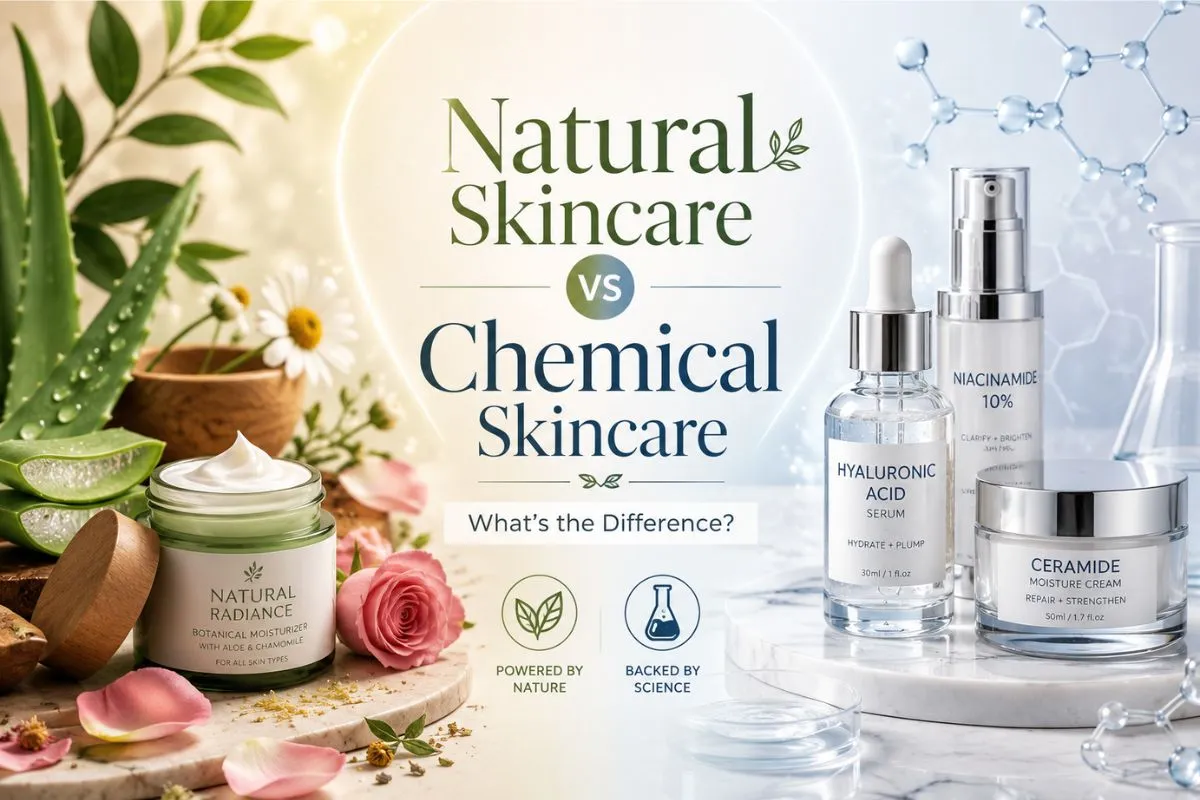
When it comes to beauty, glowing skin, and daily self-care, one question keeps showing up everywhere: natural skincare vs chemical skincare — what is actually better for your skin? Some people believe natural formulas are always safer, while others trust lab-made ingredients for faster and more visible results. The truth is more interesting than a simple “this one is good and that one is bad.”
But here’s the surprising part: your skin does not choose products based on marketing words like “natural,” “organic,” or “chemical-free.” It responds to ingredients, formulation, skin type, sensitivity, and consistency. So, before you choose between herbal skincare products, chemical free skincare, or plant based skincare, you need to understand what these terms really mean — because the wrong choice can quietly damage your skin barrier.
Understanding Natural Skincare vs Chemical Skincare
The debate around natural skincare vs chemical skincare is popular because people are becoming more aware of what they apply to their face and body. Many consumers now check labels, avoid harsh ingredients, and look for safer, cleaner, and more skin-friendly options. This shift has made herbal skincare products more attractive than ever.
Natural skincare usually includes ingredients derived from plants, herbs, flowers, fruits, oils, seeds, clays, and minerals. These products often focus on gentle nourishment, hydration, soothing care, and long-term skin wellness. Examples include aloe vera, turmeric, green tea, rose water, neem, honey, shea butter, coconut oil, jojoba oil, and chamomile.
Chemical skincare, on the other hand, usually refers to products made with synthetic, lab-created, or scientifically refined ingredients. These may include retinol, salicylic acid, benzoyl peroxide, niacinamide, hyaluronic acid, glycolic acid, peptides, preservatives, emulsifiers, and stabilizers. Many of these ingredients are designed to target specific concerns like acne, pigmentation, wrinkles, dullness, clogged pores, and uneven texture.
However, here is the key point: everything is technically made of chemicals. Water is a chemical. Aloe vera contains natural chemical compounds. Even plant oils have chemical structures. So when people say natural skincare vs chemical skincare, they usually mean plant-derived ingredients versus synthetic or lab-developed ingredients.
That is why choosing the right skincare is not about fearing the word “chemical.” It is about understanding what your skin needs, what ingredients are safe, and which products support your skin barrier beautifully.
What Is Natural Skincare?
Natural skincare is made with ingredients that come mostly from nature. These may include botanical extracts, essential oils, fruit enzymes, plant oils, herbs, butters, and naturally sourced minerals. Many herbal skincare products are based on traditional beauty rituals that have been used for generations.
For example, aloe vera is known for its soothing and hydrating properties. Turmeric is often used for brightening and calming the skin. Green tea is rich in antioxidants. Rose water feels refreshing and gentle. Neem is commonly used in traditional skincare for oily and acne-prone skin.
The biggest appeal of natural skincare is that it feels gentle, pure, and connected to wellness. People who prefer chemical free skincare often choose natural formulas because they want fewer synthetic fragrances, artificial colors, harsh detergents, or strong active ingredients.
Still, natural does not always mean risk-free. Some natural ingredients can trigger irritation, especially if they contain strong essential oils, citrus extracts, or heavy fragrances. That is why patch testing is important, even when using herbal products.
What Is Chemical Skincare?
Chemical skincare usually refers to products made with synthetic, lab-tested, or scientifically developed ingredients. These ingredients are often designed to create targeted results. For example, salicylic acid can help unclog pores, retinol can support smoother-looking skin, and niacinamide can help improve the appearance of uneven tone and enlarged pores.
In the debate of natural skincare vs chemical skincare, chemical skincare is often seen as stronger, faster, or more clinical. This can be true in some cases because many active ingredients are tested for specific skin concerns. Someone with acne, dark spots, wrinkles, or texture may benefit from carefully chosen chemical skincare.
But chemical skincare can also feel harsh if used incorrectly. Strong acids, retinoids, peeling solutions, and acne treatments can cause dryness, redness, sensitivity, or barrier damage when overused. That is why chemical skincare needs a smart approach. More product does not mean better results.
Not all chemical ingredients are bad. In fact, many are gentle and beneficial. Hyaluronic acid, for example, is widely used for hydration. Glycerin helps attract moisture. Ceramides help support the skin barrier. These ingredients may sound scientific, but they can be very skin-friendly.
So the goal is not to reject one side completely. The real goal is to choose formulas that are safe, effective, and suitable for your skin type.
Are Herbal Skincare Products Better?
Many herbal skincare products can be excellent for daily skin health, especially when they are made with gentle, high-quality ingredients. Herbs like chamomile, calendula, neem, turmeric, licorice root, green tea, and aloe vera have a long history in skincare.
The beauty of herbal products is that they often support the skin slowly and gently. Instead of forcing quick changes, they focus on nourishment, comfort, and balance. This makes them a great option for people who want a softer routine.
But not every herbal product is automatically better. Some herbal skincare products contain strong essential oils or heavy fragrances that may irritate sensitive skin. Some homemade herbal mixtures can also be unsafe if they are not preserved properly.
So the real answer is: herbal skincare can be better when the formula is gentle, clean, balanced, and suitable for your skin type. It is not about choosing every herbal product blindly. It is about choosing the right herbal product wisely.
Natural Skincare vs Chemical Skincare for Sensitive Skin
Sensitive skin needs extra care. If your skin becomes red, itchy, dry, tight, or irritated easily, you should be careful with both natural and chemical products. Sensitive skin does not automatically prefer natural products.
Some people with sensitive skin do well with herbal skincare, especially fragrance-free aloe-based creams, gentle cleansers, and calming botanical moisturizers. However, others may react to essential oils, citrus extracts, or strong herbal blends.
Chemical skincare can also work for sensitive skin when formulas are mild. Ingredients like glycerin, ceramides, hyaluronic acid, and panthenol can be soothing and barrier-supporting. But strong exfoliating acids, retinol, and acne treatments may cause irritation if introduced too quickly.
If you have sensitive skin, choose products labeled fragrance-free, gentle, non-comedogenic, and suitable for sensitive skin. Also, patch test any new product before applying it to your full face.
For sensitive skin, the best routine is usually simple: gentle cleanser, hydrating moisturizer, sunscreen in the morning, and one targeted treatment only if needed.
Natural Skincare vs Chemical Skincare for Acne-Prone Skin
Acne-prone skin can be tricky because it needs balance. Many people think oily or acne-prone skin should avoid all oils and use strong chemical treatments. Others believe only herbal skincare products are safe. The truth sits in the middle.
Acne-prone skin may benefit from both approaches. Natural ingredients like aloe vera, green tea, neem, and lightweight plant extracts can help calm the skin and reduce the look of redness. A gentle plant based skincare gel or moisturizer may support hydration without feeling greasy.
Chemical skincare can also help acne-prone skin because some ingredients target clogged pores and excess oil. Salicylic acid, benzoyl peroxide, and niacinamide are common examples. However, using too many acne products can dry out the skin and trigger more irritation.
If you have acne-prone skin, avoid heavy oils, thick creams, and fragranced products that may clog pores or irritate your face. Look for lightweight, non-comedogenic formulas.
A smart acne routine can include a gentle cleanser, oil-free moisturizer, sunscreen, and one acne-focused active. You can still include chemical free skincare or herbal skincare products, but choose formulas that are light, clean, and suitable for breakouts.
Natural Skincare vs Chemical Skincare for Dry Skin
Dry skin needs moisture, protection, and barrier support. People with dry skin often enjoy natural oils, butters, and creams because they feel rich and comforting. This is where plant based skincare can shine.
Ingredients like shea butter, coconut oil, almond oil, jojoba oil, avocado oil, aloe vera, and oat extract can help dry skin feel softer and more nourished. Many herbal products for dry skin focus on deep hydration and comfort.
Chemical skincare can also be helpful for dry skin. Ingredients like hyaluronic acid, glycerin, ceramides, lactic acid, and panthenol can attract water and support the skin barrier. These ingredients are often found in gentle moisturizers and hydrating serums.
Avoid harsh foaming cleansers, over-exfoliation, and strong drying treatments. If your skin feels tight after washing, your cleanser may be too harsh. Choose creamy or hydrating cleansers and apply moisturizer while the skin is slightly damp.
Dry skin loves consistency. A simple, nourishing routine can make a huge difference.
Natural Skincare vs Chemical Skincare for Oily Skin
Oily skin produces more sebum, which can make the face look shiny and increase the chance of clogged pores. Many people with oily skin avoid moisturizers, but that is a mistake. Oily skin still needs hydration.
Oily skin can benefit from lightweight natural ingredients and targeted chemical ingredients. Aloe vera, green tea, cucumber extract, and rose water are common choices in plant based skincare for oily skin because they feel fresh and light.
Chemical ingredients like niacinamide and salicylic acid may help improve the look of oiliness and clogged pores. However, strong products should be introduced slowly to avoid irritation.
If you prefer chemical free skincare, choose gel-based moisturizers, lightweight serums, and non-greasy herbal formulas. Avoid very thick oils and heavy butters if they make your skin feel congested.
The goal for oily skin is not to strip away all oil. The goal is balance. When you over-cleanse or dry out the skin, it may feel irritated and produce even more oil. A gentle routine works better long term.
Common Myths About Natural and Chemical Skincare
There are many myths around skincare, and these myths often confuse buyers.
The first myth is that natural always means safe. Natural ingredients can be amazing, but some can irritate the skin. Essential oils, citrus extracts, and strong fragrances may cause reactions in sensitive people.
The second myth is that chemicals are always harmful. This is not true. Many chemical ingredients are gentle, tested, and useful. Hyaluronic acid, glycerin, and ceramides are excellent examples of skin-friendly ingredients.
The third myth is that chemical free skincare means there are no chemicals at all. In reality, every ingredient has a chemical composition. The phrase usually means the product avoids harsh or unwanted synthetic ingredients.
The fourth myth is that herbal skincare products work overnight. Natural skincare usually supports skin gradually. It may take weeks of consistent use to see visible improvement.
The fifth myth is that plant based skincare does not need preservatives. Any product containing water needs proper preservation to prevent contamination. Safe preservation protects your skin.
Once you understand these myths, you can shop with more confidence and less fear.
How to Choose the Right Skincare for Your Skin
Choosing between natural skincare vs chemical skincare becomes easier when you understand your skin type and goals.
If your skin is sensitive, choose gentle, fragrance-free, minimal formulas. If your skin is dry, look for nourishing creams, hydrating ingredients, and barrier support. If your skin is oily, choose lightweight, non-comedogenic products. If your skin is acne-prone, avoid heavy textures and introduce active ingredients slowly.
If you love natural beauty, choose high-quality herbal skincare products that are transparent about ingredients. If you prefer clean formulas, look for chemical free skincare that avoids harsh additives. If you care about nature-inspired beauty, plant based skincare may be a perfect fit.
Also, do not change your entire routine at once. Introduce one new product at a time. This helps you understand what works and what causes irritation.
A good skincare product should feel comfortable. It should not burn, sting, or make your skin feel tight. Mild tingling can happen with some active ingredients, but strong discomfort is a warning sign.
Most importantly, always wear sunscreen during the day. Whether your routine is natural, chemical, herbal, or plant-based, sun protection is essential for healthy-looking skin.
Can You Combine Natural and Chemical Skincare?
Yes, you can combine both. In fact, many effective routines include the best of both worlds. The smartest approach to natural skincare vs chemical skincare is not competition — it is balance.
For example, you can use a gentle herbal cleanser, a niacinamide serum, a plant-based moisturizer, and sunscreen. Or you can use aloe vera gel with a dermatologist-recommended acne treatment. You can use herbal skincare products for daily nourishment and chemical actives for specific concerns.
This balanced approach gives your skin comfort and results. Natural ingredients can soothe and nourish, while chemical ingredients can target stubborn concerns.
However, avoid mixing too many active ingredients at once. Do not combine strong exfoliating acids, retinol, and acne treatments without proper guidance. Overloading the skin can damage the barrier and cause redness, dryness, or breakouts.
Start simple. Build slowly. Listen to your skin. That is the real secret.
Final Verdict: Which One Is Better?
So, in the debate of natural skincare vs chemical skincare, which one wins?
The honest answer is: the best skincare is the one that suits your skin, supports your skin barrier, and gives consistent results without irritation.
Natural skincare is wonderful for people who love gentle, nourishing, botanical care. Herbal skincare products can be excellent for hydration, softness, and daily glow. Plant based skincare is also a beautiful choice for people who want nature-inspired, conscious beauty.
Chemical skincare is helpful for people who want targeted solutions for acne, pigmentation, aging signs, or texture. It can be very effective when used correctly.
At the end of the day, skincare should not feel scary or complicated. It should feel empowering. Your skin deserves products that are gentle, effective, honest, and thoughtfully made.
If you are ready to build a skincare routine that feels pure, gentle, and glow-boosting, explore Hudira organic products. Hudira is created for people who love nature-inspired beauty and want skincare that feels clean, nourishing, and effective.
FAQs
Q. What is the main difference between natural skincare vs chemical skincare?
The main difference between natural skincare vs chemical skincare is the source and purpose of ingredients. Natural skincare uses plant-based, herbal, or mineral-derived ingredients, while chemical skincare uses synthetic or lab-developed ingredients to target specific skin concerns.
Q. Are herbal skincare products safe for all skin types?
Many herbal products are gentle and nourishing, but they may not suit everyone. Some herbal extracts or essential oils can irritate sensitive skin. Always patch test before using a new product.
Q. Is chemical free skincare better for sensitive skin?
Chemical free skincare may be helpful for sensitive skin if it avoids harsh fragrances, strong actives, and irritating additives. However, the full ingredient list matters more than the label.
Q. Why is plant based skincare popular?
Plant based skincare is popular because it feels natural, gentle, eco-conscious, and nourishing. Many people prefer botanical ingredients for daily hydration, comfort, and a healthy-looking glow.
Q. Can I use natural and chemical skincare together?
Yes, you can combine both. A balanced routine may include herbal skincare products for nourishment and selected chemical ingredients for targeted results. Introduce products slowly to avoid irritation.


One comment
Pingback:
Bakuchiol vs Retinol: Can Bakuchiol Really Replace Retinol?