
No products in the cart.
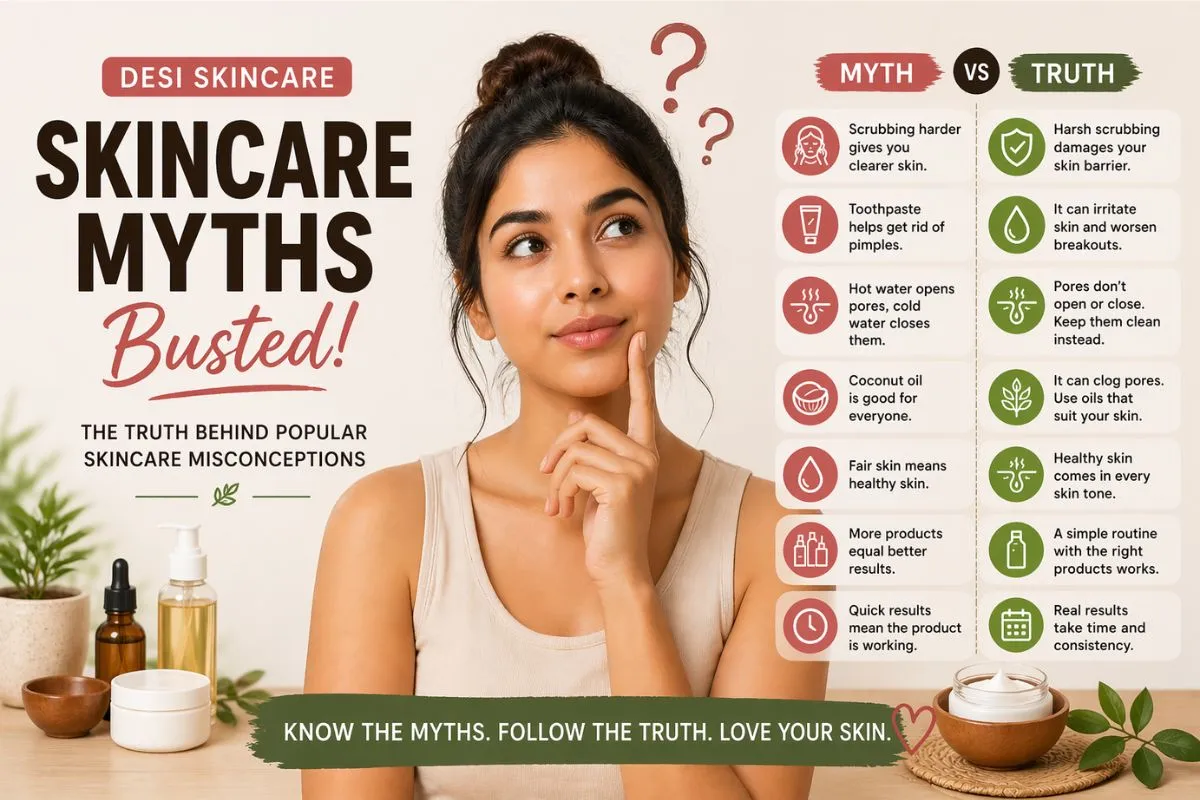
We’ve all grown up hearing advice about skincare from family, friends, and social media, some of it helpful, some of it… not so much. These skin care myths often feel convincing because they’re rooted in tradition or passed down through generations. From applying lemon directly on your face to believing oily skin doesn’t need moisturizer, many of these practices can quietly damage your skin instead of helping it.
But here’s the truth—what if some of the most common skincare myths you trust are actually holding your skin back? What if the secret to glowing, healthy skin isn’t about doing more, but doing the right things? In this guide, we’re breaking down the most common Desi skin care myths, uncovering the science behind them, and showing you what actually works, so you can finally give your skin the care it deserves.
Why Do Skin Care Myths Spread So Easily?
Before we dive into the myths, let’s understand something important. Most skin care myths don’t come from nowhere. They come from:
- Cultural traditions
- Quick DIY hacks
- Social media trends
- Half-understood science
While some traditional remedies have real benefits, blindly following skincare myths without understanding your skin type can lead to irritation, breakouts, or long-term damage.
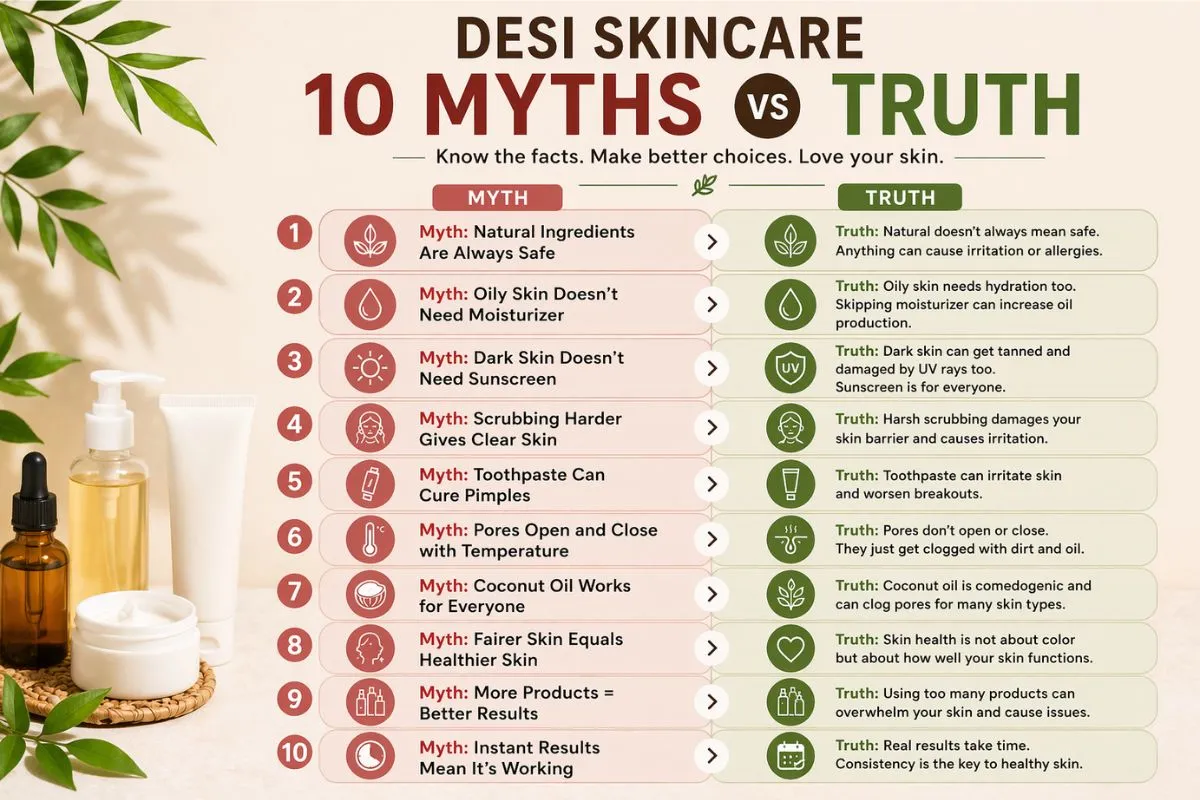
1. Myth: Natural Ingredients Are Always Safe
Why people believe it
“Natural” sounds gentle and harmless, so people automatically assume it’s safe for skin. In Desi households, ingredients like lemon, turmeric, and essential oils have been used for generations, which builds trust. Social media and DIY trends also reinforce this idea, making these remedies seem like quick, effective solutions.
The truth
Not all natural ingredients are suitable for direct application on the skin. For example, lemon is highly acidic and can damage the skin barrier, leading to irritation, sensitivity, or even pigmentation. Similarly, essential oils can cause allergic reactions if used undiluted, proving that “natural” does not always mean safe.
What actually works
One of skin care myths is instead of applying raw ingredients, it’s better to use properly formulated herbal skincare products where ingredients are balanced and tested. These formulations maintain the benefits of natural ingredients while minimizing risks. This approach protects your skin barrier and ensures long-term skin health without unwanted side effects.
2. Myth: Oily Skin Doesn’t Need Moisturizer
Why people believe it
People often associate oil with hydration, assuming oily skin already has enough moisture. The greasy feeling makes them avoid moisturizers altogether. Many also fear that moisturizing will clog pores and cause breakouts.
The truth
Oil and hydration are not the same, your skin can be oily but still dehydrated. When you skip moisturizer, your skin produces even more oil to compensate, which can worsen acne and shine.
What actually works
Use a lightweight, gel-based or non-comedogenic moisturizer that hydrates without clogging pores. This helps regulate oil production and keeps your skin balanced.
3. Myth: Dark Skin Doesn’t Need Sunscreen
Why people believe it
It`s also of skincare myths that melanin does offer some natural protection against UV rays, which makes many people think sunscreen isn’t necessary for darker skin tones. In many Desi communities, sunscreen is often marketed as a “fairness” product rather than a health essential. Because of this, people assume they are naturally protected and skip sun care altogether.
The truth
While melanin provides limited protection, it is not strong enough to fully shield the skin from harmful UV radiation. Sun exposure can still cause hyperpigmentation, uneven skin tone, premature aging, and increase the risk of skin damage over time. Ignoring sunscreen doesn’t show immediate effects, but the long-term damage can be significant and harder to reverse.
What actually works
Using a broad-spectrum sunscreen with SPF 30 or higher every day is essential, regardless of your skin tone. Apply it even when indoors or on cloudy days, as UV rays can penetrate windows and clouds. Consistent sunscreen use not only protects your skin but also helps maintain an even, healthy complexion over time.
4. Myth: Scrubbing Harder Gives Clear Skin
Why people believe it
This is one of skin care myths that many people think that acne, dirt, and excess oil can simply be “scrubbed away” with more force. This belief comes from the idea that clearer skin equals deeper cleaning, so harder scrubbing must work better. In Desi routines especially, physical exfoliation is often overused because it gives an immediate “clean” feeling.
The truth
Harsh scrubbing actually damages your skin barrier, which is your skin’s natural protection layer. When this barrier is weakened, your skin becomes more irritated, red, and prone to breakouts instead of clearer. Over-exfoliation can also trigger inflammation and make acne worse rather than improving it.
What actually works
Gentle exfoliation is far more effective and safer for your skin in the long run. Using mild exfoliants once or twice a week helps remove dead skin cells without causing damage. Pair this with a consistent skincare routine to maintain smooth, healthy skin without irritation.
5. Myth: Toothpaste Can Cure Pimples
Why people believe it
Toothpaste is known for drying things out, so people assume it can dry out pimples too. this is the part of skincare myths since it’s easily available at home, it becomes a quick and convenient “emergency fix” for sudden breakouts. Many also trust it because they’ve seen short-term results or heard about it from others.
The truth
While toothpaste may temporarily dry out a pimple, it contains ingredients like menthol, alcohol, and baking soda that are too harsh for facial skin. These can cause irritation, redness, excessive dryness, and even chemical burns in some cases. It doesn’t treat acne at its source, so the problem often returns or worsens.
What actually works
Instead of harsh DIY fixes, use targeted acne treatments or gentle, skin-friendly ingredients that reduce inflammation and bacteria. A consistent routine with the right products helps heal breakouts effectively without damaging your skin. Patience and proper care always give better, long-lasting results than quick hacks.
6. Myth: Pores Open and Close with Temperature
Why people believe it
The feeling of hot water or steam on the skin creates the illusion that pores are “opening,” while cold water feels like it’s tightening them. This sensory experience makes the idea seem logical and convincing. Over time, beauty routines and social media tips have reinforced this belief, turning it into one of the most widely accepted skin care myths.
The truth
Pores don’t have muscles, so they physically cannot open or close. What actually happens is that heat can soften oil and debris inside the pores, making them easier to clean but it doesn’t change their size. Factors like genetics, oil production, and skin elasticity determine how large your pores appear.
What actually works
Instead of trying to “open or close” pores, focus on keeping them clean and clear. Regular cleansing, gentle exfoliation, and using products that control excess oil can help minimize their appearance. Over time, consistent care makes pores look tighter and skin appear smoother without damaging your barrier.
7. Myth: Coconut Oil Works for Everyone
Why people believe it
Coconut oil has been a trusted household remedy in Desi culture for generations, used for everything from hair care to skin hydration. Its natural origin and visible moisturizing effect make people believe it’s suitable for all skin types. Social media and DIY beauty trends have further popularized it as a one-size-fits-all skincare solution.
The truth
Coconut oil is highly comedogenic, which means it can easily clog pores, especially for those with oily or acne-prone skin. While it may work well for dry body areas, applying it on the face can lead to breakouts and congestion. Skincare is not universal, and what works for one person may not suit another’s skin type.
What actually works
It’s important to choose facial oils based on your specific skin needs rather than trends. Lightweight oils like jojoba or rosehip are better absorbed and less likely to clog pores. Using the right oil helps nourish your skin without causing breakouts or imbalance.
8. Myth: Fairer Skin Equals Healthier Skin
Why people believe it
Cultural beauty standards, media portrayals, and fairness-focused marketing have long reinforced the idea that lighter skin equals beauty and better health. In many Desi communities, this belief is passed down through generations, making it feel like a fact rather than an opinion. Constant exposure to such messaging creates pressure to chase fairness instead of focusing on real skin health.
The truth
Skin health is not determined by color but by how well your skin functions and feels. Factors like hydration, smooth texture, elasticity, and absence of irritation define healthy skin, not how light or dark it is. Chasing fairness can lead to the use of harsh or harmful products that damage the skin over time.
What actually works
Instead of trying to change your natural skin tone, focus on maintaining a healthy, balanced skincare routine. Nourishing your skin with gentle, effective ingredients helps enhance its natural glow and strength. When your skin is healthy, it looks radiant regardless of its color.
9. Myth: More Products = Better Results
Why people believe it
Multi-step skincare routines are heavily promoted by influencers and beauty trends, making them look essential for good skin. Seeing others use multiple products creates the impression that more effort will deliver faster and better results. Many people also believe that layering products will solve multiple skin concerns at the same time.
The truth
Using too many products can overwhelm your skin and disrupt its natural balance. Mixing multiple active ingredients may lead to irritation, sensitivity, or unexpected breakouts instead of improvement. In many cases, over-layering reduces effectiveness because ingredients can interfere with each other.
What actually works
A simple, consistent routine is far more effective than an overloaded one. Focus on the basics, cleansing, targeted treatment, moisturizing, and sun protection to support your skin properly. When used correctly and regularly, fewer products can deliver better, long-lasting results.
10. Myth: Instant Results Mean It’s Working
Why people believe it
Quick results feel exciting and satisfying, especially when a product claims to work overnight. Marketing and social media often highlight instant transformations, creating unrealistic expectations. When people see temporary improvements, they assume the product is highly effective and continue chasing fast results.
The truth
Most instant results are temporary, like reduced redness or a temporary glow, and don’t address the root cause of skin issues. Real skin repair and improvement happen at a deeper level, which takes time. Constantly switching products for quick fixes can actually damage your skin barrier and delay real progress.
What actually works
Consistent use of the right products over time is the key to healthy skin. Give your skincare routine at least 4–6 weeks to show visible results. Patience and steady care will always outperform quick fixes when it comes to long-term skin health.
What You Should Do Instead
To avoid falling into these skin care myths, follow a smarter approach:
- Understand your skin type
- Choose gentle, balanced formulations
- Be consistent, not aggressive
- Avoid DIY experiments without research
- Protect your skin daily
Hudira’s Philosophy: Natural, But Smart
At Hudira, we believe in combining the wisdom of nature with modern skincare understanding. Not all skincare myths are completely wrong but they need to be used correctly.
Our approach focuses on:
- Safe herbal ingredients
- Balanced formulations
- Skin-friendly routines
Because your skin deserves care not confusion.
Final Thoughts
Breaking free from outdated skin care myths is one of the best things you can do for your skin. Once you stop following misinformation, your skincare routine becomes simpler, more effective, and actually enjoyable.
Ready to ditch harmful skin care myths and embrace a smarter, natural skincare routine? Explore Hudira’s herbal skincare solutions designed to nourish, protect, and transform your skin—gently and effectively.
FAQs
Q. Does skincare really work?
Yes, skincare really works when you use the right products consistently and avoid common skin care myths that harm your skin.
Q. Are natural remedies always safe for skin?
No, many natural remedies can irritate your skin if used incorrectly. Always use balanced formulations.
Q. How can I identify skincare myths?
If a skincare tip promises instant results or sounds too simple, it’s likely a myth.
Q. How long does skincare take to show results?
Most skincare routines take 4–6 weeks to show visible improvement.
Q. Can I follow DIY skincare routines daily?
It’s not recommended. Overuse of DIY remedies can damage your skin barrier.


Add comment