
No products in the cart.
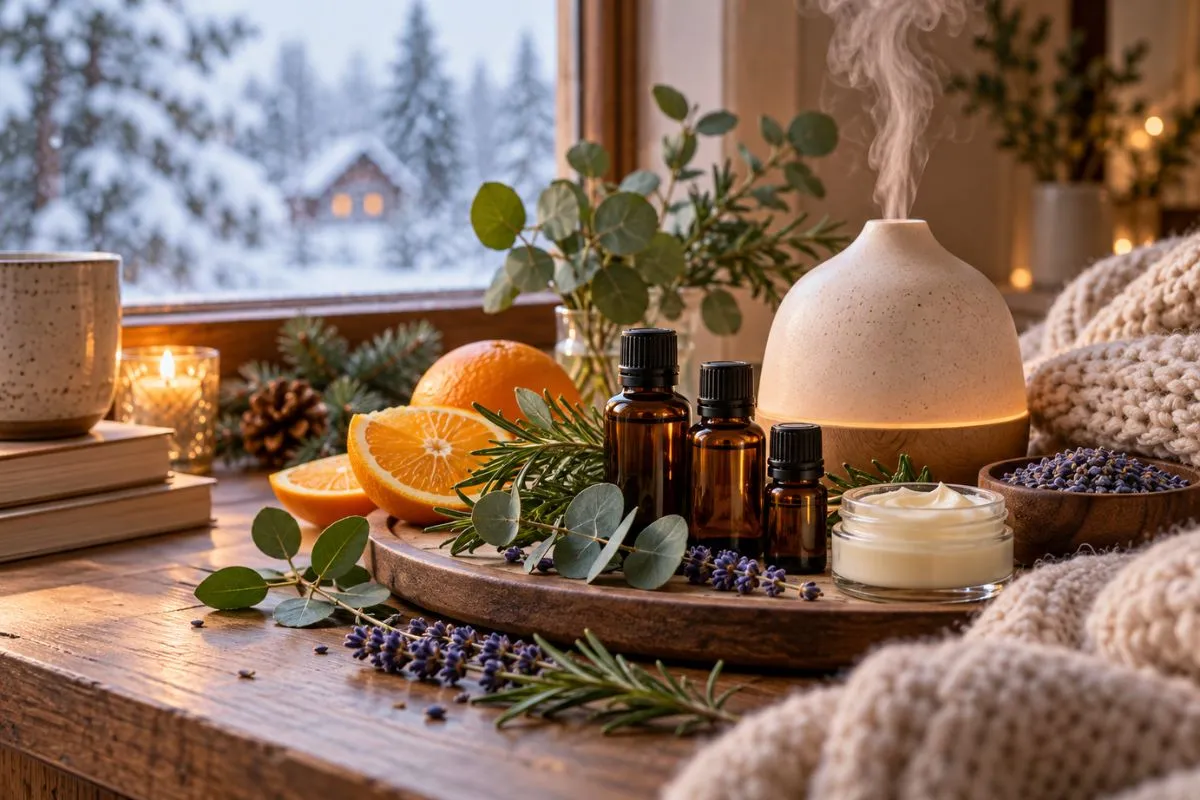
Cold mornings, dry indoor heat, darker evenings, and longer nights can make winter feel draining for both your skin and your senses. This is where winter essential oils can add something comforting to your routine. Used thoughtfully, aromatic oils such as lavender, eucalyptus, frankincense, ginger, and sweet orange can help create a calmer atmosphere, make self-care feel more intentional, and bring warmth and freshness into everyday winter rituals. They are not a replacement for sleep, nutritious food, hydration, vaccination, or medical care, but they can be a beautiful complementary part of seasonal wellness.
The interesting part is that not every oil belongs in every winter routine and the way you use it matters just as much as the oil you choose. Some oils are better suited to a diffuser, some can be used only when properly diluted on the body, and some may irritate already dry or sensitive skin. So which oils actually make sense in cold weather, how can you use them safely, and which popular winter claims should you be cautious about? The answers may surprise you.
Why Essential Oils Fit So Well Into Cold-Weather Self-Care
Aromatherapy uses plant-derived essential oils mainly through inhalation or diluted topical application. The National Center for Complementary and Integrative Health (NCCIH) describes aromatherapy as a complementary health approach and notes that research is still limited for many claimed benefits. Essential oils can support a pleasant sensory experience, but they should not be presented as a cure for colds, influenza, or other illnesses.
For Hudira readers, the smartest approach is to treat aromatherapy as one layer of a wider winter wellness routine that also includes moisturizing skincare, enough sleep, hydration, movement, and other evidence-based healthy habits.
7 Best Essential Oils for a Cozy Winter Routine
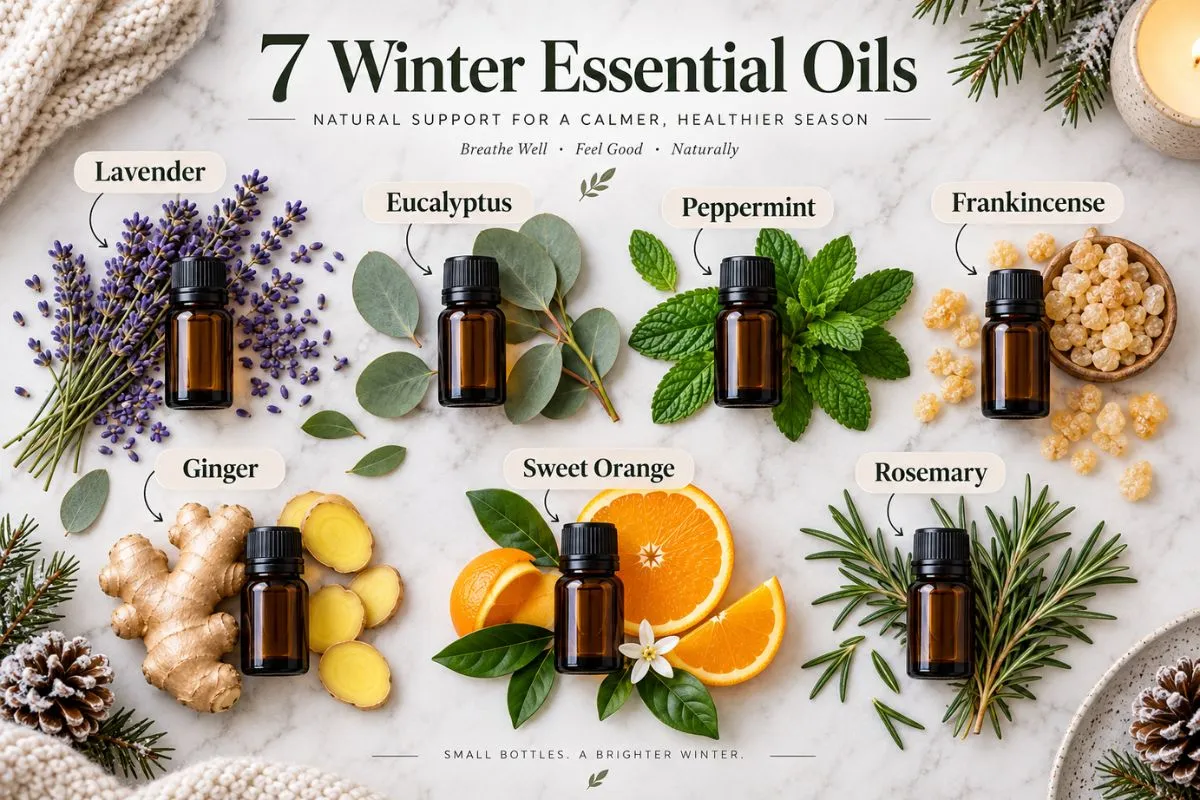
1. Lavender Essential Oil for Calm Evenings
Lavender has a soft, floral, clean aroma that naturally suits evening routines. Diffusing it while reading, stretching, or winding down can make your room feel calmer and more peaceful.
Research on aromatherapy and sleep has shown some encouraging results, although NCCIH notes that larger and more rigorous studies are still needed.
2. Eucalyptus Essential Oil for a Fresh Atmosphere
Eucalyptus has a crisp, powerful scent that many people associate with freshness and clear winter air. Used according to diffuser instructions, it can create a clean, spa-like atmosphere in a room that feels stuffy after hours of closed windows.
What it should not be called is a cold cure. NCCIH reports that there is no strong evidence showing that eucalyptus essential oil prevents or treats colds.
3. Peppermint Essential Oil for an Energizing Scent
Peppermint brings a strong, bright aroma that can feel refreshing during slow winter afternoons. It works well when you want your environment to feel lively and invigorating rather than heavy.
Because peppermint is potent, more is not better. Follow product and diffuser directions carefully, avoid applying undiluted oil directly to the skin, and use extra caution around young children. If you have a health condition or specific sensitivity, professional guidance is a better choice than a generic DIY recipe.
4. Frankincense Essential Oil for a Grounding Ritual
Frankincense has a resinous, earthy aroma that feels almost made for quiet winter evenings. It pairs beautifully with orange, lavender, cedarwood, and other warm botanical notes.
Use it while journaling, meditating, stretching, or preparing for bed. This is where aromatherapy shines: not as a miracle treatment, but as a sensory signal that helps transform an ordinary routine into a more intentional moment.
5. Ginger Essential Oil for a Warm, Spicy Aroma
Ginger essential oil has a vivid spicy character that works well in cold-weather fragrance blends. It pairs nicely with sweet orange, frankincense, or woody aromas.
Rather than claiming that ginger essential oil physically heats the body, focus on its scent profile. It can make a room feel warmer, cozier, and more seasonal simply because we associate spicy aromas with comfort and winter.
6. Sweet Orange Essential Oil for a Bright Winter Mood
Sweet orange has a cheerful citrus scent that can make a room feel fresher and more welcoming. It works especially well during the daytime and balances heavier winter aromas such as frankincense or ginger.
If you plan to use citrus essential oils on the skin, check the exact oil and product instructions. NCCIH notes that some citrus and other essential oils can cause photosensitivity when applied before sun exposure.
7. Rosemary Essential Oil for a Fresh Herbal Note
Rosemary adds a clean, herbaceous aroma that can brighten a winter home. It blends well with citrus, lavender, and woody scents and can be a refreshing choice for daytime aromatherapy.
How to Use Winter Essential Oils Safely
The safest routine is usually the simplest. Essential oils are highly concentrated plant extracts, so they deserve the same thoughtful approach you would give any active skincare or wellness ingredient.
For topical use, dilute essential oils in a suitable carrier oil, lotion, or other compatible base instead of applying them “neat.” The Alliance of International Aromatherapists advises against routine undiluted application because dilution helps reduce the risk of irritation, allergic reactions, and sensitization. It lists around 2% as a general adult dilution and recommends lower concentrations for children, pregnancy, older adults, sensitive skin, and some health conditions.
Do not casually ingest essential oils. The same organization does not endorse internal use unless recommended by an appropriately trained healthcare practitioner. Poison Control also warns that misuse or swallowing some essential oils can lead to serious poisoning.
Winter Aromatherapy: Simple Ways to Enjoy Essential Oils
A diffuser is the easiest place to begin. Choose one or two compatible aromas, keep the fragrance gentle, and run the diffuser according to the device instructions rather than continuously filling a room with concentrated scent.
A shower ritual is another simple option. Use a product specifically made for shower aromatherapy or follow safe product directions instead of putting concentrated oil directly on the skin.
A properly diluted body oil can turn an ordinary evening routine into natural winter self-care. Use it only on intact skin and avoid fragranced oils on cracked, irritated, or inflamed areas.
Easy Winter Aromatherapy Blend Ideas
| Mood | Blend idea | Best use |
| Cozy evening | Sweet orange + frankincense | Diffuser |
| Fresh morning | Rosemary + sweet orange | Diffuser |
| Calm night | Lavender + frankincense | Diffuser |
| Warm seasonal feel | Ginger + sweet orange + frankincense | Diffuser |
These are fragrance ideas, not therapeutic prescriptions. Use only the amount recommended for your diffuser and stop if the scent causes headache, coughing, nausea, irritation, or discomfort.
Essential Oils for Dry Winter Skin: What Actually Helps?
Cold air, indoor heating, frequent hot showers, and low humidity can leave skin feeling tight, rough, flaky, or uncomfortable. This makes essential oils for dry winter skin an appealing idea but there is an important distinction.
Essential oils themselves are not moisturizers. Dry skin usually benefits from products that combine water-binding ingredients, emollients, occlusives, botanical oils, or barrier-supporting ingredients. Essential oils may contribute fragrance or other formulation qualities, but they can also irritate sensitive skin.
Poison Control notes that essential oils may cause skin rashes and recommends using products according to their directions and avoiding essential oils on damaged skin.
So when choosing essential oils for dry winter skin, pay attention to the complete formulation rather than purchasing a product simply because a trendy botanical oil appears on the label.
Choosing Essential Oils for Winter Skincare
If you enjoy scented botanical formulas, choose professionally formulated products in which essential oils are appropriately diluted. Patch testing is sensible, especially if you have sensitive skin or are trying something new.
For extremely dry, eczema-prone, reactive, or damaged skin, simpler fragrance-free products may be more comfortable.
That balance is important when discussing essential oils for winter skincare. Aroma can make a routine feel luxurious, but maintaining a comfortable skin barrier should always come first.
Using winter essential oils responsibly is far more valuable than collecting a large number of bottles and experimenting without guidance.
Can Essential Oils Help You Avoid Colds and Flu?
This is one of the most important questions to answer clearly.
Essential oils should not be relied on to prevent influenza, cure colds, replace prescribed medicines, or substitute for medical evaluation. NCCIH specifically reports that there is no strong evidence that eucalyptus essential oil or oil of oregano prevents or treats colds.
Use winter aromatherapy for scent, comfort, atmosphere, relaxation, and an enjoyable seasonal ritual. For staying healthy, continue relying on proven basics such as recommended vaccinations, hand hygiene, adequate sleep, balanced nutrition, movement, hydration, and appropriate medical care.
Give Your Winter Routine a Hudira Touch
Winter self-care does not need to feel clinical or complicated. The best routine can be simple: soft skin, nourishing botanical care, a peaceful home, and small rituals that make cold days feel warmer.
Explore Hudira organic products to complement your seasonal skincare and self-care routine with thoughtfully chosen botanical ingredients. Whether your goal is supporting dry skin, building a comforting evening ritual, or making everyday self-care feel more nourishing, choose products that respect your skin barrier and fit naturally into your lifestyle.
With responsible use, winter essential oils can add aroma, warmth, and personality to the season but healthy skin and genuine wellbeing still begin with thoughtful everyday care.
FAQs
Q. What are the best essential oils to use during winter?
Lavender, eucalyptus, frankincense, ginger, sweet orange, rosemary, and peppermint are popular winter choices because their scents range from calming and grounding to fresh and uplifting. The best oil depends on how you plan to use it and whether you have individual sensitivities.
Q. Can essential oils prevent colds or flu?
There is not strong evidence that essential oils prevent or cure colds or influenza. NCCIH specifically reports insufficient evidence for eucalyptus essential oil as a cold prevention or treatment method. Aromatherapy is better used as complementary self-care rather than a replacement for proven prevention or medical treatment.
Q. Are essential oils for dry winter skin safe to use every day?
It depends on the product, concentration, essential oil, and your skin. Professionally formulated products may be tolerated by many adults, while concentrated oils can cause irritation or allergic reactions. If your skin is cracked, inflamed, or very sensitive, focus on gentle barrier-supportive skincare instead of experimenting with concentrated oils.
Q. What Is the Easiest Winter Aromatherapy Routine for Beginners?
Start with one familiar aroma in a suitable diffuser and follow the diffuser and oil manufacturer’s instructions. Lavender in the evening or sweet orange during the day can create a simple, enjoyable sensory ritual without making your routine complicated.
Add comment