
No products in the cart.

Rice toner is no longer just a viral skincare trend, it’s a centuries-old beauty ritual rooted in Asian skincare traditions and now dominating modern routines. From ancient Japanese beauty secrets to today’s minimalist skincare lovers, rice toner has become a trusted natural solution for brighter, calmer, and more balanced skin. If you’re searching for a simple, affordable, and effective way to upgrade your skincare routine, rice toner might be exactly what your skin has been waiting for.
But here’s the twist: not all rice toner recipes are created equal. The difference between glowing results and irritated skin often comes down to preparation, pH balance, fermentation timing, and storage. Most guides skip the details that truly matter. So if you want to learn how to make toner the right way, safely, effectively, and scientifically keep reading. Your skin is about to level up.
What Is Rice Toner and Why Is It So Popular?
Rice toner is a natural liquid extracted from soaked or fermented rice that is applied to the skin as a hydrating and brightening treatment. This toner contains vitamins, amino acids, antioxidants, and minerals that help improve skin texture and clarity.
Historically, rice water was used by Japanese and Korean women for smooth, porcelain-like skin. Today, the rise of Korean rice water toner in beauty routines has made toner a global skincare staple.
Why it’s trending:
- Brightening effect
- Oil control support
- Barrier-strengthening nutrients
- Gentle exfoliation properties
- Affordable and DIY-friendly
The surge of interest in Korean toner shows that people are shifting toward simpler, ingredient-conscious skincare.
The Science Behind Rice Water Toner
Rice toner works because rice contains:
- Inositol – supports skin elasticity
- Ferulic acid – antioxidant protection
- Amino acids – hydration and barrier repair
- Vitamin B complex – improves skin tone
When used properly, toner can support skin balance without harsh chemicals. However, improper fermentation or contamination can reduce its effectiveness which is why understanding how to make toner correctly matters.
How to Make Rice Water Toner at Home (Step-by-Step Guide)
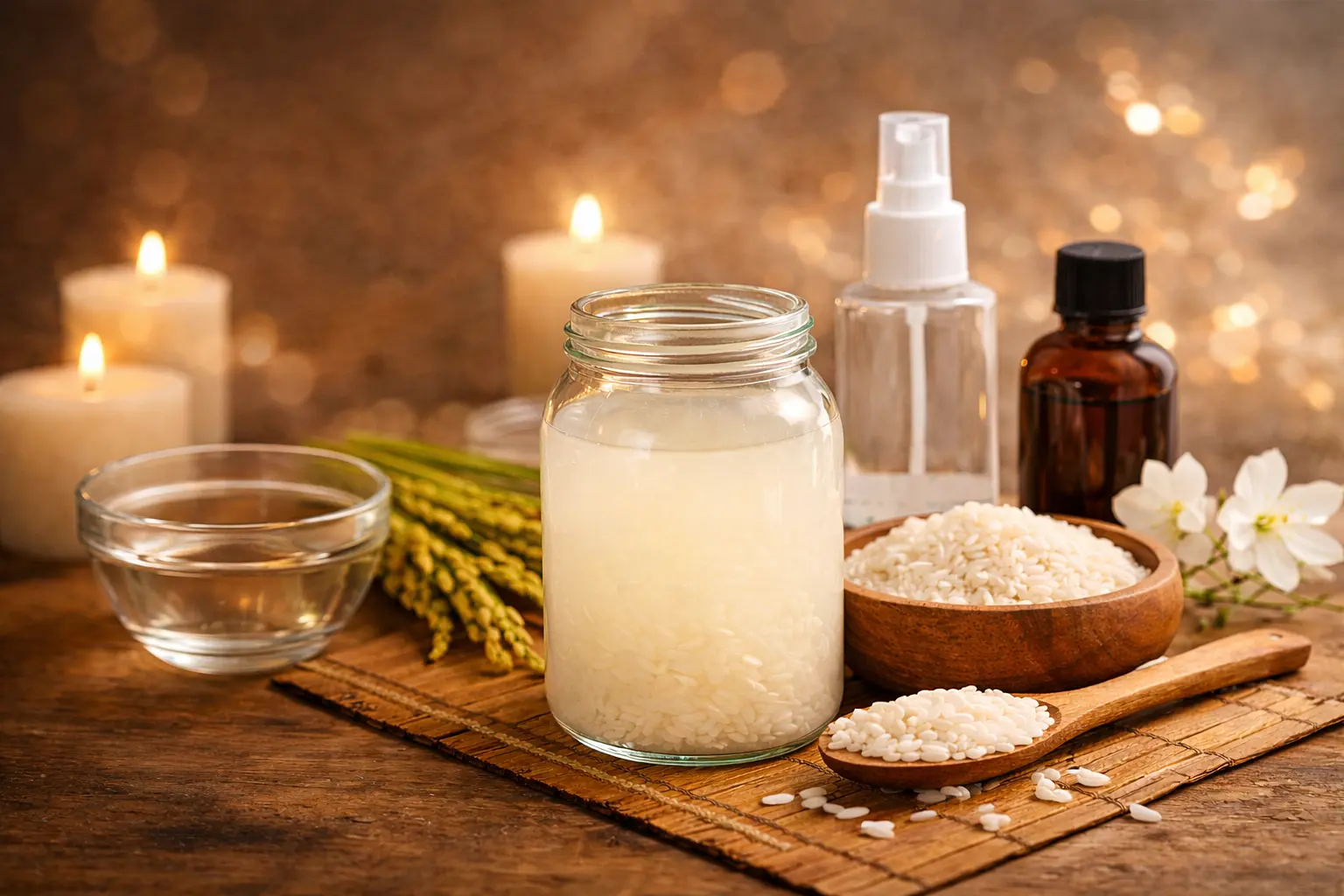
If you’re looking for how to make rice water toner safely, follow this structured method.
Method 1: Soaked Toner (Beginner-Friendly)
This is the simplest homemade toner for face with rice water at home.
You need:
- ½ cup organic white rice
- 1 cup distilled water
- Clean glass jar
- Fine strainer
Steps:
- Rinse rice thoroughly to remove impurities.
- Soak rice in distilled water for 30 minutes.
- Gently stir to release nutrients.
- Strain into a sterilized glass bottle.
- Refrigerate immediately.
Shelf life: 3–5 days.
This version of toner is gentle and ideal for beginners or sensitive skin types.
Method 2: Fermented Rice Water Toner (Advanced)
Fermentation increases antioxidant levels and slightly lowers pH, making the toner more potent.
Steps:
- Prepare soaked rice water as above.
- Leave the strained liquid covered at room temperature for 24–48 hours.
- When it smells slightly sour, fermentation is complete.
- Refrigerate immediately.
This is often compared to Korean rice water toner styles, which sometimes use fermented ingredients.
Important: If the smell becomes strong or unpleasant, discard it. Over-fermented toner can irritate skin.
Rice Toner Benefits for Skin
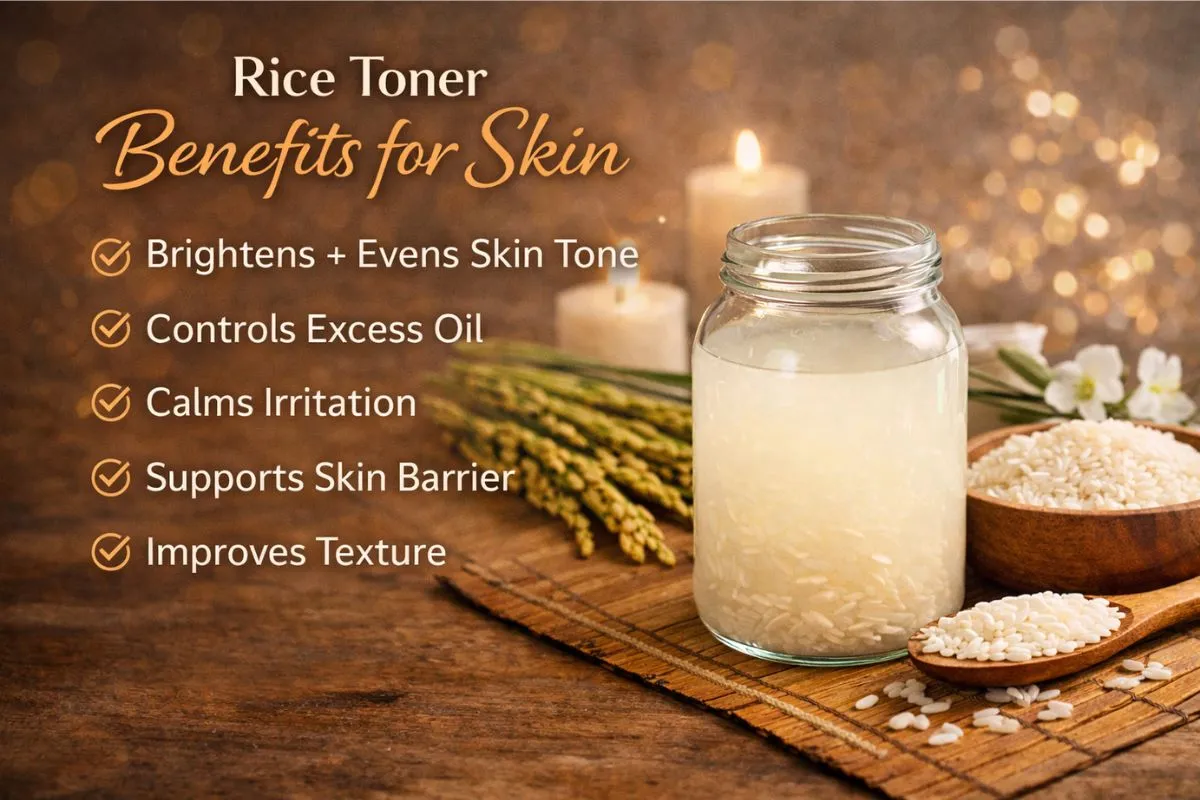
Let’s break down the real, science-backed benefits of toner.
1. Brightens and Evens Skin Tone
Rice toner is widely appreciated for its natural brightening effect. The antioxidants and vitamins found in toner help reduce the appearance of dullness and uneven pigmentation over time. Regular use of toner may promote a clearer-looking complexion by supporting healthy skin cell turnover. While it’s not an instant whitening solution, consistent application can gradually enhance radiance and give the skin a fresh, luminous glow.
2. Controls Excess Oil
If you struggle with oily or combination skin, toner can be a gentle balancing solution. The natural starch content in toner helps absorb excess oil without stripping the skin of essential moisture. This mild astringent effect temporarily tightens the look of pores, making skin appear smoother and less shiny. Unlike harsh alcohol-based toners, toner works more subtly, helping regulate sebum production while maintaining hydration.
3. Calms Irritation
Rice toner is known for its soothing properties, especially when used in its simple, non-fermented form. The amino acids and minerals present in rice toner can help calm mild redness and surface irritation. Many people with sensitive skin find toner comforting after sun exposure or environmental stress. However, as with any natural ingredient, patch testing is essential to ensure compatibility with your skin type.
4. Supports Skin Barrier
A healthy skin barrier is essential for maintaining hydration and preventing external irritants from causing damage. Toner contains amino acids that contribute to strengthening the outer layer of the skin. By supporting barrier function, this toner helps reduce transepidermal water loss and improves the skin’s resilience over time. When used consistently in a balanced routine, toner can help maintain smoother, healthier-looking skin.
5. Improves Texture
One of the subtle yet noticeable benefits of toner is improved skin texture. With regular use, this toner can make the skin feel softer and more refined. Its mild tightening and smoothing effect helps minimize the appearance of rough patches and uneven surface tone. Over time, toner may contribute to a smoother, more polished complexion, especially when combined with a gentle moisturizing routine.
How to Use Rice Water Toner in Your Routine
Once you’ve learned how to make toner, proper application is key.
- Cleanse your face.
- Apply rice toner using a cotton pad or hands.
- Let absorb for 1–2 minutes.
- Follow with serum and moisturizer.
Use once daily at night initially. Gradually increase if tolerated.
Avoid layering immediately with strong acids or retinol.
Who Should Avoid Rice Toner?
While rice toner is gentle, it may not suit everyone.
Avoid if:
- You have fungal acne
- You are highly acne-prone and sensitive to starch
- You notice breakouts after use
- Your skin barrier is compromised
Patch testing is essential before full application.
Homemade Rice Toner vs Formulated Toner
| Feature | Homemade Rice Toner | Professional Rice Water Toner |
| Preservation | No preservatives | Stabilized |
| Shelf Life | 3–5 days | Months |
| pH Control | Uncertain | Balanced |
| Potency | Variable | Consistent |
If you want predictable results without contamination risk, formulated products are often safer.
Common Mistakes When Making Rice Toner
- Using tap water (can introduce bacteria)
- Not sterilizing containers
- Over-fermenting
- Keeping longer than 5 days
- Applying to broken skin
Learning how to make toner correctly prevents irritation.
Final Thoughts
Rice toner is simple, affordable, and rooted in tradition but it works best when prepared safely and used wisely. Understanding how to make toner properly ensures you get the glow without the risk.
If you prefer safer, professionally formulated natural skincare that eliminates contamination risks while preserving botanical potency, explore Hudira’s herbal and natural skincare range — crafted for balanced, radiant skin without harsh chemicals.
Your glow deserves consistency. Choose wisely. Choose Hudira.
FAQs
Q. How often should I use rice toner?
Start once daily. Increase gradually if skin tolerates it.
Q. Is fermented rice water toner better?
Fermentation can enhance antioxidants, but it must be carefully monitored.
Q. Can rice toner cause breakouts?
Yes, if skin is sensitive to starch or fermentation byproducts.
Q. How long does rice water toner last?
3–5 days refrigerated for homemade toner for face with rice water at home.
Q. Is Korean rice toner different?
Korean rice toner products are professionally stabilized and often combined with other hydrating ingredients.


Add comment