
No products in the cart.

Glowing, hydrated skin doesn’t always need complicated routines or expensive serums. Sometimes, the real hero is a simple, time-tested ingredient sitting quietly in your skincare bottle — glycerin for skin. Dermatologists respect it. Cosmetic chemists rely on it. And skincare lovers swear by it for soft, smooth, balanced skin. From restoring moisture to supporting your skin barrier, glycerin has earned its place as one of the most trusted hydration boosters in modern skincare.
But here’s what most people don’t know: using glycerin the wrong way can actually leave your skin sticky, irritated, or even drier in certain climates. So how do you unlock its real magic? Is glycerin good for skin in all seasons? Should you apply pure glycerin directly? And what are the real benefits of glycerin beyond hydration? Let’s break it down properly scientifically, practically, and beautifully.
What Is Glycerin for Skin and Face?
Glycerin refers to glycerol, a clear, odorless, naturally derived compound used in skincare as a powerful humectant. A humectant attracts water from the environment and deeper layers of skin into the outer layer, helping maintain hydration.
You may also see it labeled as glycerine for skin (British spelling), vegetable glycerin, or simply glycerol. It can be derived from plant oils or animal fats, but most modern cosmetic products use plant-based sources.
When people search for glycerin uses for skin, they’re usually looking for hydration and that’s exactly where glycerin shines.
How Glycerin for Skin Actually Works?
Your skin naturally contains a group of moisture-retaining molecules called Natural Moisturizing Factors (NMF). Glycerin is one of them.
When applied topically, glycerin on face:
- Attracts water molecules
- Helps reduce transepidermal water loss
- Improves skin barrier function
- Supports smoother texture
Unlike heavy oils that sit on top of the skin, glycerin penetrates and helps balance hydration from within. This is why dermatologists consistently recommend glycerin-based moisturizers.
However, pure glycerin behaves differently depending on humidity levels. In very dry environments, it may pull moisture from deeper layers instead of the air. That’s why formulation matters.
Top Benefits of Glycerin for Skin

Let’s explore the real, evidence-supported benefits of glycerin not myths.
1️. Deep Hydration That Lasts
The biggest reason skincare experts recommend glycerin is its exceptional ability to attract and retain moisture. As a powerful humectant, glycerin pulls water from the environment and deeper skin layers into the outermost layer, helping maintain optimal hydration levels. Unlike heavy creams that simply sit on top, glycerin works within the skin’s surface to support long-lasting moisture balance. With consistent use, skin appears plumper, smoother, and more supple. Over time, this deep hydration reduces flakiness, dullness, and tightness caused by dehydration.
2️. Strengthens the Skin Barrier
Your skin barrier acts as a protective shield against pollution, irritants, and moisture loss. When this barrier becomes weak, skin may feel dry, sensitive, or reactive. Regular use of glycerin helps reinforce this barrier by improving water retention and reducing transepidermal water loss (TEWL). By maintaining proper hydration, glycerin supports the natural repair process of the outer skin layer. A stronger barrier means healthier-looking skin that is more resilient and less prone to irritation.
3️. Suitable for All Skin Types
Many people ask, is glycerin good for skin if they struggle with oiliness or acne. The answer is yes. Glycerin is lightweight, non-comedogenic, and free from pore-clogging properties. It hydrates without adding greasiness, making it ideal for oily and combination skin. At the same time, it provides intense moisture for dry and sensitive skin types. Because of its gentle profile, glycerin for skin adapts well to different concerns, making it one of the most universally compatible ingredients in skincare.
4. Soothes Irritated Skin
When skin feels tight, itchy, or rough, it is often a sign of dehydration or barrier disruption. The moisture-binding properties of glycerin for skin help calm these uncomfortable symptoms by restoring hydration levels. Proper hydration reduces the appearance of redness and rough patches, leaving skin feeling softer and more balanced. Glycerin also helps improve skin flexibility, which can minimize the sensation of tightness. This makes it especially beneficial for sensitive or environmentally stressed skin.
5. Enhances Product Absorption
One of the lesser-known yet powerful glycerin uses for skin is its ability to improve how other skincare ingredients perform. When skin is well-hydrated, it becomes more receptive to active ingredients such as niacinamide, ceramides, or peptides. Glycerin creates a balanced moisture environment that supports better penetration and effectiveness of these actives. Instead of competing with other ingredients, glycerin enhances overall formulation performance. This makes it a valuable supporting ingredient in both simple and advanced skincare routines.
Glycerin Uses for Skin: Practical Applications
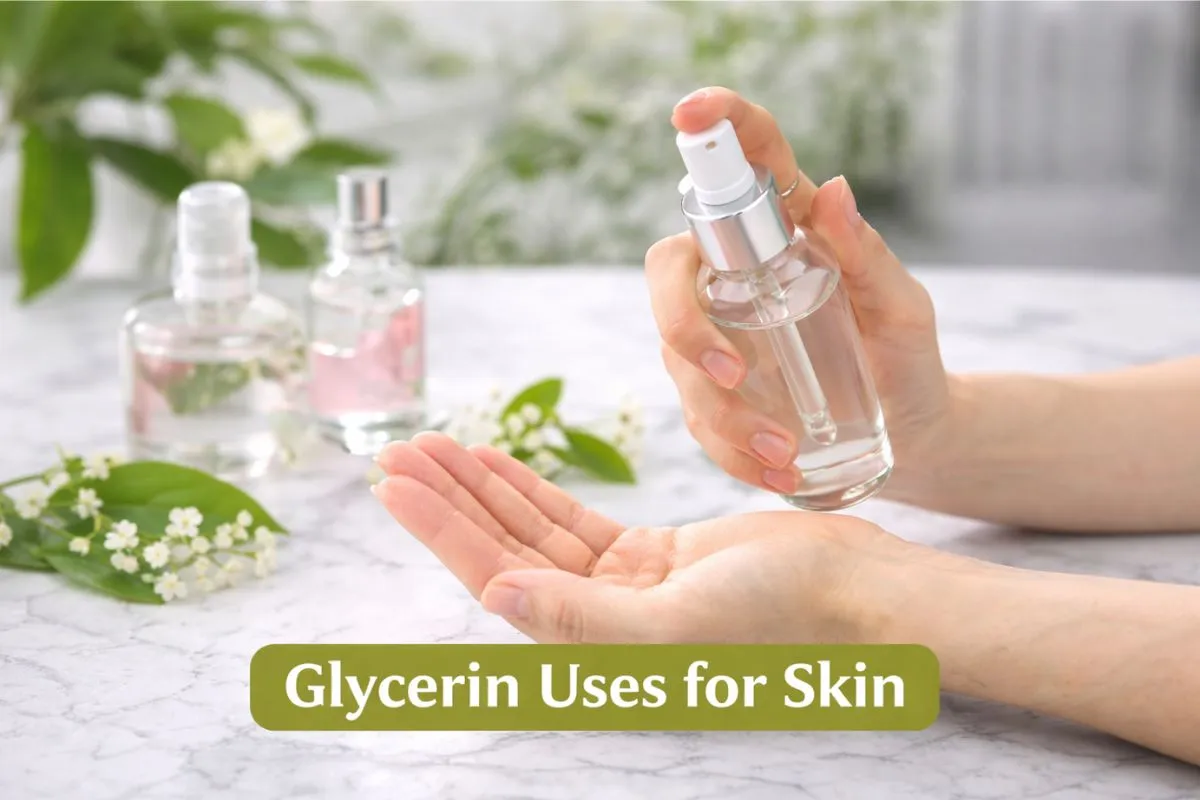
Now let’s talk about real-life usage. These are the most effective glycerin uses for skin:
1️. As a Moisturizer Ingredient
One of the most common glycerin uses for skin is as a key ingredient in moisturizers and creams. Glycerin works by attracting water into the outer layer of the skin, helping maintain hydration throughout the day. Unlike heavy oils, it does not feel greasy or clog pores, which makes glycerin for skin suitable for both dry and oily skin types. When combined with emollients and occlusives in a formula, it locks in moisture more effectively and strengthens the skin barrier over time.
2️. DIY Hydrating Mist
A simple way to use pure glycerin is by creating a gentle hydrating mist at home. Mix a few drops of glycerin with rose water in a 1:5 ratio to avoid stickiness or irritation. This diluted solution helps refresh dull skin and restore moisture instantly. Spray lightly on slightly damp skin and follow with a moisturizer to seal hydration. This method makes glycerin for skin practical, affordable, and easy to incorporate into daily routines.
3️. As a Serum Booster
During colder months, skin often becomes dry and tight. Adding 1–2 drops of glycerin into your regular moisturizer can enhance its hydrating power without making it heavy. This is one of the smartest glycerin uses for skin, especially in winter when moisture loss increases. Make sure the skin is damp before application to maximize effectiveness. This small adjustment can significantly improve smoothness and reduce flakiness.
4️. Lip Softener
Chapped lips are often caused by dehydration and environmental exposure. Diluted glycerin can act as an effective overnight lip treatment by drawing moisture into the delicate lip area. Apply a thin layer of properly diluted glycerin before bed and seal it with a light balm. By morning, lips feel softer, smoother, and less cracked. This gentle use of glycerin is especially helpful during dry seasons.
5️. Body Hydration
Glycerin isn’t just for the face, it works beautifully on the body as well. Adding a small amount of glycerin to your body lotion can improve its ability to retain moisture throughout the day. It helps reduce roughness on areas like elbows, knees, and heels. Regular use enhances skin softness and flexibility. Because glycerin for skin supports long-lasting hydration, it is ideal for maintaining smooth, healthy-looking body skin.
These smart glycerin uses for skin make it a versatile staple in both minimal and advanced skincare routines.
Pure Glycerin vs Formulated Products
Using pure glycerin directly can feel sticky and may irritate if overused. That’s why dermatologists recommend dilution.
Best practice:
- Never apply undiluted pure glycerin directly
- Always mix with water, rose water, or aloe vera gel
- Seal with moisturizer
Formulated skincare products balance glycerin with occlusives and emollients to prevent moisture loss.
Is Glycerin Good for Skin in All Climates?
Short answer: yes — but intelligently.
In humid climates, glycerin for skin works beautifully because it pulls moisture from the air.
In dry climates:
- Always apply on damp skin
- Follow with moisturizer
- Avoid high concentrations
Glycerin for Skin Side Effects
While rare, glycerin for skin side effects can include:
- Stickiness:
Glycerin can feel sticky on the skin if used in high amounts or without proper dilution. - Mild irritation (if undiluted):
Applying pure glycerin directly may cause redness or irritation, especially on sensitive skin. - Increased dryness in very low humidity:
In dry climates, glycerin may pull moisture from deeper skin layers if not sealed with a moisturizer.
To avoid glycerin side effects:
- Patch test first:
Always test glycerin on a small area of skin before full application to check for reactions. - Avoid high concentration formulas:
Using products with very high glycerin levels can increase stickiness or discomfort. - Pair with occlusive ingredients:
Combine glycerin with creams or oils to lock in moisture and prevent water loss.
Most people tolerate glycerin extremely well, making it one of the safest hydrating ingredients.
Glycerin for Skin vs Hyaluronic Acid
Both are humectants, but:
| Feature | Glycerin | Hyaluronic Acid |
| Cost | Affordable | Expensive |
| Molecular Size | Small | Large |
| Hydration | Reliable | Intense but temporary |
| Sensitivity | Very low irritation | Sometimes irritating |
Many dermatologists consider glycerin for skin more stable and reliable long-term.
How to Use Glycerin for Skin Step-by-Step
Here’s a powerful, simple routine:
- Cleanse your face
- Leave skin slightly damp
- Apply diluted glycerin or glycerin-based serum
- Seal with moisturizer
- Apply sunscreen in the morning
This method maximizes hydration while minimizing risk.
Who Should Avoid Pure Glycerin?
If you have:
- Extremely dry desert climate exposure
- Open wounds
- Allergic sensitivity
Always consult a dermatologist before applying pure glycerin directly.
Why Glycerin for Skin Remains a Timeless Ingredient
Trendy ingredients come and go. But glycerin remains a gold-standard hydrator because it:
- Supports the skin barrier
- Works across skin types
- Is affordable and accessible
- Has decades of safety data
The real secret isn’t chasing new ingredients, it’s mastering foundational ones like glycerin.
Final Thoughts
If you’ve been wondering whether glycerin deserves a place in your routine, the answer is yes. Its hydration power, barrier support, and skin-soothing benefits make it one of the most reliable ingredients in skincare history.
Ready to transform your hydration game? Explore Hudira’s carefully formulated skincare range designed to support healthy, balanced, and naturally radiant skin.
FAQs
Q. Is glycerin good for skin daily use?
Yes, glycerin for skin is safe for daily use when diluted or in formulated products.
Q. Can I apply pure glycerin directly on my face?
No. Pure glycerin should always be diluted to avoid irritation.
3. What are the main benefits of glycerin?
The primary benefits of glycerin include deep hydration, barrier support, and smoother texture.
4. Are there glycerin for skin side effects?
Possible glycerin for skin side effects include stickiness or mild irritation if overused.
5. Can oily skin use glycerin?
Yes. Glycerin is lightweight and suitable for oily and acne-prone skin.


Add comment