
No products in the cart.
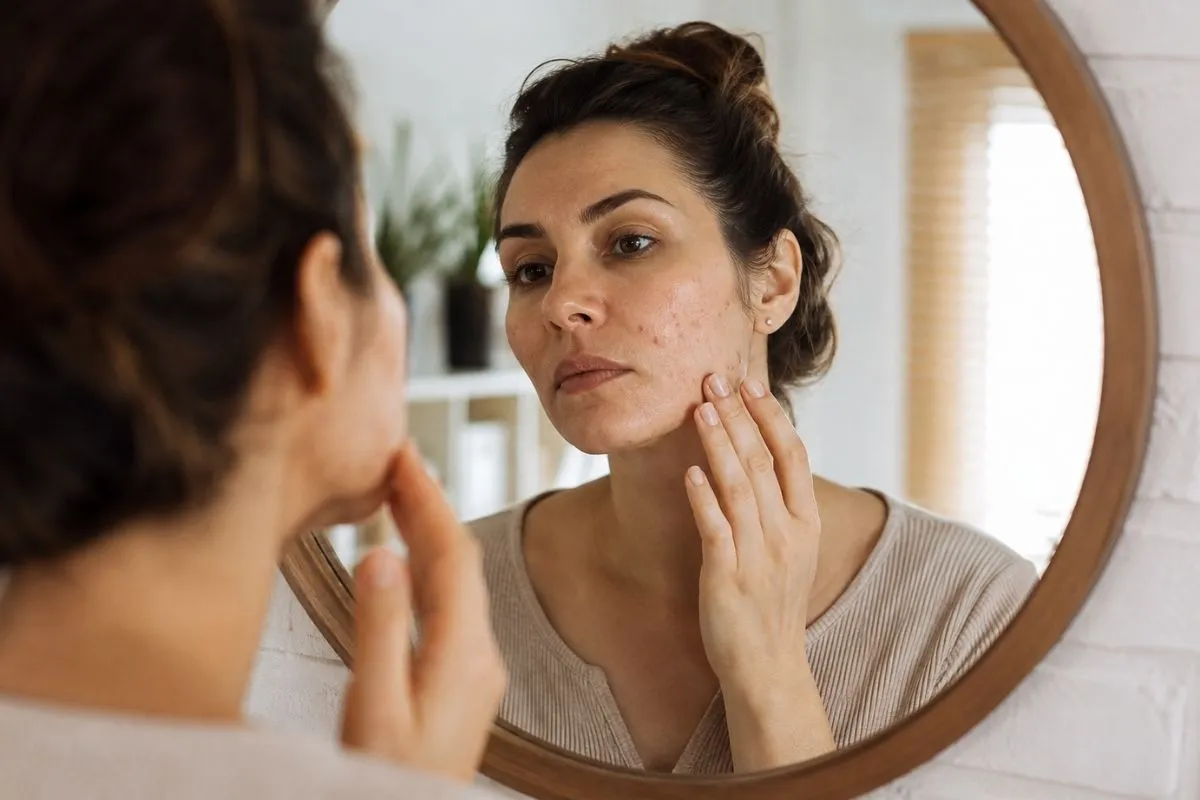
Dealing with acne at 30 can feel confusing, frustrating, and honestly a little unfair. You may have expected blemishes to disappear after your teenage years, only to notice stubborn chin spots, painful jawline bumps, or sudden pimples in your 30s. The reality is that adult skin keeps responding to hormones, stress, sleep, skincare products, medications, genetics, and everyday lifestyle changes. Adult acne can continue well beyond adolescence or even appear for the first time later in life.
But here is the interesting part: breakouts in your 30s are not always driven by the same mix of factors that affected your teenage skin. Your skin barrier may be more sensitive, your routine may be more complicated, and hormonal patterns may be shifting behind the scenes. So what is really driving hormonal acne in your 30s, and could something in your daily routine be quietly making it worse? Once you understand the likely triggers, building a calmer, smarter skincare strategy becomes much easier.
Is It Normal to Get Acne in Your 30s?
Yes. Acne is not limited to teenagers. The American Academy of Dermatology notes that adults can develop acne in their 30s, 40s, and even 50s, and some people experience adult-onset acne for the first time.
That means adult acne does not automatically mean you are doing something wrong. Adult acne is often multifactorial, which means several factors may be acting together.
One person may have hormonal fluctuations plus chronic stress. Another may have acne-prone skin and recently introduced a rich moisturizer. Someone else may have started a medication or be experiencing an underlying hormonal issue.
The smartest first move is not to attack your face with every strong acne product available. It is to look for patterns.
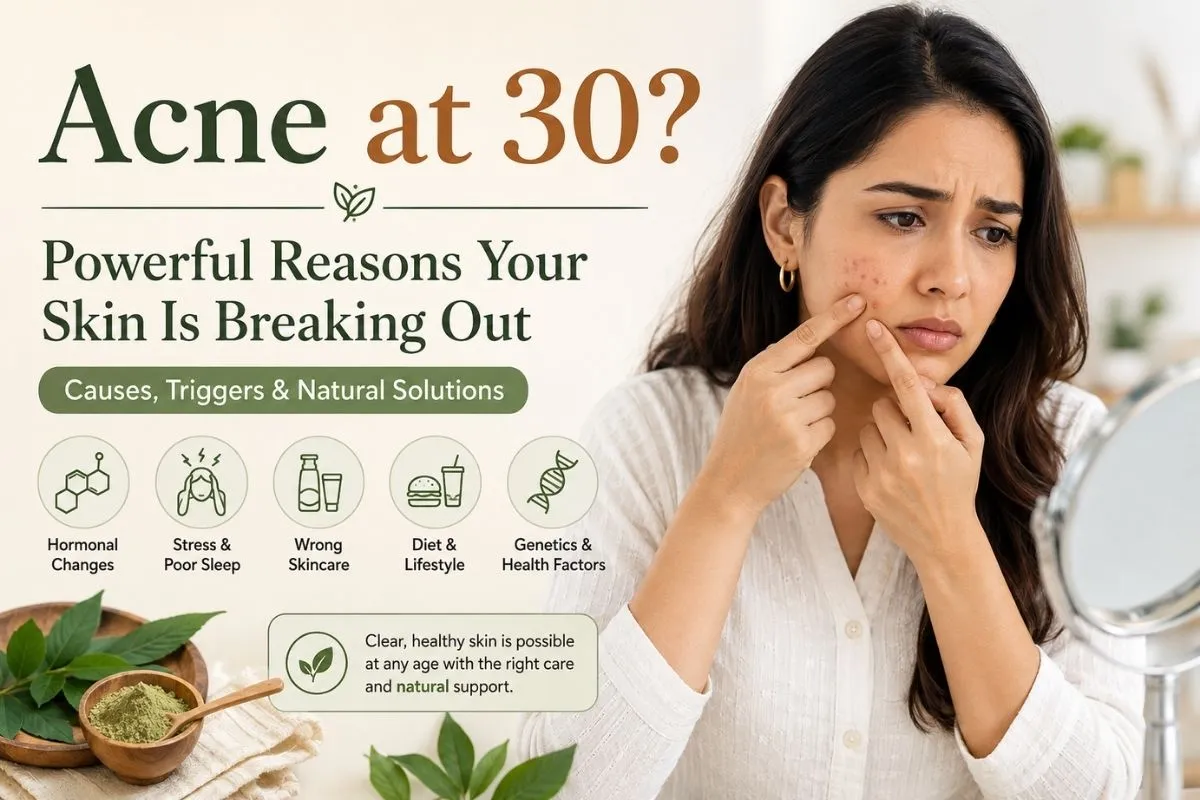
Why Am I Getting Acne at 30?
Acne develops when pores become clogged, while hormones can influence oil-gland activity and inflammation. However, acne at 30 is rarely as simple as “my skin is oily.” Adult life brings hormonal, emotional, environmental, and skincare changes that can all affect your complexion.
Here are the most important causes to investigate.
1. Hormonal Changes Can Trigger Adult Breakouts
Hormonal fluctuations are one of the biggest contributors to hormonal acne in 30s. Changes in androgen activity can stimulate oil glands and contribute to clogged pores and inflammation.
Women may notice changes around their menstrual cycle, pregnancy, the postpartum period, starting or stopping hormonal birth control, perimenopause, or menopause. The AAD specifically lists fluctuating hormones among common causes of adult acne.
Hormonal breakouts may feel deeper and more persistent than an occasional surface-level blemish. Some people notice that their skin worsens at almost the same time every month.
If your pimples in your 30s repeatedly appear before your period, tracking your cycle and breakouts for a few months may help reveal a useful pattern.
What Can Hormonal Acne in 30s Look Like?
There is no single appearance that proves acne is hormonal. Still, hormonal acne in 30s is often discussed in connection with persistent inflammatory blemishes, especially around the lower face.
You may notice tender bumps, recurring spots in similar areas, or chin and jawline breakouts. However, location alone cannot diagnose the cause; products, friction, and clogged pores can create similar patterns.
2. Your Menstrual Cycle May Be Playing a Bigger Role
A monthly breakout is not necessarily random. Hormone levels shift throughout the menstrual cycle, and those changes can influence oil production and inflammation.
For some women, breakouts in your 30s appear several days before menstruation and settle afterward. For others, blemishes linger.
Instead of switching products every week, keep a simple skin diary. Record the date, breakout location, menstrual cycle, stress level, sleep, and any new products. After several weeks, patterns often become clearer. That information can also help if you later see a dermatologist.
3. PCOS Can Be Linked With Persistent Adult Acne
Polycystic ovary syndrome, or PCOS, can involve hormonal changes that contribute to acne.
Acne alone does not mean you have PCOS. However, persistent adult acne alongside irregular periods, increased facial or body hair, or other hormonal changes deserves a conversation with a qualified healthcare professional.
This is especially important when hormonally driven adult acne appears suddenly or becomes significantly worse without an obvious skincare trigger. Treating an underlying condition is different from simply changing your cleanser.
4. Stress May Be Making Your Acne Worse
Deadlines, parenting, financial pressure, poor sleep, and nonstop notifications — your thirties can be a lot.
Stress does not necessarily create acne out of nowhere, but dermatology guidance shows that stress can worsen existing acne. The AAD explains that stress-related hormone changes can stimulate oil glands and hair follicles. That means repeated breakouts in your 30s during intense weeks may not be a coincidence.
Stress management will not replace acne treatment, but consistent sleep, regular movement, short breaks, and resisting the urge to pick at your skin can support a more stable routine. Clearer skin is rarely built overnight. Consistency is more powerful than panic.
5. Your Anti-Aging Routine Could Be Too Much
This is one of the most overlooked causes of pimples in your 30s.
Your twenties may have involved cleanser and moisturizer. Then your thirties arrive and suddenly your shelf includes vitamin C, exfoliating acids, retinoids, facial oils, serums, masks, peels, and rich overnight creams.
More skincare does not automatically mean better skincare. Using too many active products at once can cause irritation, dryness, peeling, or sensitivity. Rich or oily products may also contribute to clogged pores in acne-prone skin.
If your blemishes began after changing your routine, simplify it. A strong routine does not need twelve steps.
6. An Irritated Skin Barrier Can Make Acne Harder to Manage
Your skin barrier helps keep moisture in and irritants out. Aggressive scrubbing, frequent peels, over-cleansing, and stacking too many strong actives can leave skin tight, dry, sensitive, or irritated. Barrier damage is not the same as acne, but irritation can make acne-prone skin more difficult to manage.
A common cycle looks like this:
Acne appears → you scrub harder → skin becomes irritated → you add more products → your skin feels even worse.
If acne at 30 comes with stinging, flaking, or sudden sensitivity, it may be time to simplify rather than intensify. Choose a gentle cleanser, suitable moisturizer, daily sunscreen, and targeted acne treatment that your skin can tolerate.
7. Some Skincare and Hair Products May Clog Pores
For acne-prone skin, the AAD recommends looking for labels such as “non-comedogenic,” “non-acnegenic,” “oil-free,” or “won’t clog pores.”
And do not check only your face cream. Sunscreen, foundation, primer, facial oils, heavy moisturizers, hair oils, pomades, and leave-in conditioners can all come into contact with facial skin. If pimples in your 30s are concentrated near the hairline or sides of the face, review both your haircare and skincare routine.
8. Poor Sleep Can Add Fuel to the Fire
The AAD notes that too little sleep may worsen acne in some people. If breakouts in your 30s show up during stretches of late nights and constant pressure, improve the overall pattern rather than hunting for one miracle product.
A more consistent bedtime and better stress management can support your wider skin routine.
9. Diet May Influence Acne for Some People
Food and acne is nuanced. It is not accurate to blame every breakout on chocolate, dairy, or one “bad” meal. Research has found associations between acne and certain dietary patterns, but individual responses vary.
Avoid extreme elimination diets. If pimples in your 30s repeatedly worsen with a particular eating pattern, discuss it with a qualified clinician or dietitian before making major restrictions. A balanced diet is a more positive goal than fearing individual foods.
10. Certain Medications Can Trigger or Worsen Acne
Some medicines can cause acne-like eruptions or make acne worse in certain people. The AAD lists medication side effects among possible causes of adult acne.
If your skin changed after starting a new prescription, do not stop the medicine on your own. Speak with the healthcare professional who prescribed it. This is especially important when adult acne appears suddenly after a medication change. Your overall health comes before a breakout.
11. Genetics Still Matter in Your 30s
Family history can influence your likelihood of developing acne. If parents or siblings experienced persistent adult acne, you may have a stronger genetic tendency toward it.
Genetics does not mean you are powerless; it simply means your skin may need more consistent management.
Why Are You Suddenly Getting Pimples in Your 30s If Your Skin Was Clear Before?
Adult-onset acne is real. You can have clear teenage skin and still develop pimples in your 30s.
Ask yourself:
- Did I introduce a new skincare or hair product?
- Did I change contraception?
- Has my menstrual cycle changed?
- Has my stress increased?
- Am I sleeping less?
- Did I start a new medicine?
- Are the blemishes appearing in one consistent location?
- Are there other new symptoms?
A sudden change does not always have a dramatic cause, but patterns provide valuable clues.
Adult Acne vs Teenage Acne: What Changes?
Teenage and adult acne share the same basic process, but the triggers and surrounding skin may feel different.
| Teenage Acne | Adult Acne |
| Often linked with puberty | May involve menstrual, pregnancy, birth-control, or perimenopausal changes |
| Commonly occurs on oilier areas | Some adults notice persistent lower-face acne |
| Skin may tolerate stronger routines | Adult skin may also be dry, sensitive, or irritated |
| Usually expected | Can feel surprising and emotionally frustrating |
| Often viewed mainly as a skin issue | May require reviewing products, lifestyle, medications, and hormones |
That is why treating adult acne exactly as you treated teenage acne is not always the smartest move.
How to Build a Smart Routine for Hormonal Acne in 30s
A complicated routine is not necessarily an effective routine. When managing hormonal acne in 30s, think gentle, consistent, and targeted.
Morning Routine
Cleanse gently. Use a cleanser suitable for your skin type and avoid aggressively scrubbing active blemishes.
Use appropriate acne treatment if needed. Common evidence-based ingredients include salicylic acid, benzoyl peroxide, azelaic acid, and adapalene. The best option depends on your acne type, skin sensitivity, and health circumstances.
Moisturize. Acne-prone skin still needs hydration. Look for non-comedogenic options.
Wear sunscreen. Daily sun protection is especially important if you use acne treatments or are prone to post-breakout marks.
Evening Routine
Remove makeup and sunscreen completely, cleanse gently, apply treatment according to directions, and moisturize when appropriate.
Do not introduce several aggressive ingredients at once because you want faster results. Healthy progress usually comes from consistency.
Important: Retinoids such as adapalene are generally avoided during pregnancy. If you are pregnant, planning pregnancy, breastfeeding, or managing another medical condition, ask a healthcare professional which acne treatments are appropriate.
Can Natural Skincare Support Acne-Prone Skin?
Natural skincare can complement a thoughtful routine, particularly when the goal is cleansing and managing excess surface oil. However, natural products should not be presented as substitutes for medical care when acne is severe, cystic, scarring, or driven by an underlying condition.
Clay-based masks can offer an occasional deep-cleansing step for some oily or acne-prone skin types. Hudira’s Anti-Acne Face Mask contains neem leaf, Kasturi Manjal turmeric, fenugreek seeds, Lodhra bark, almond, and Multani Mitti, and Hudira positions it as a cleansing and oil-controlling product for acne-prone skin.
If your breakouts seem hormonally driven, think of a botanical mask as supportive skincare, not a treatment for the hormonal trigger itself.
Common Mistakes That Can Make Adult Acne Worse
Avoid aggressively scrubbing blemishes, picking or squeezing, changing products every few days, layering every trending active, or skipping moisturizer because your skin feels oily.
Most importantly, do not expect a face mask or cleanser to solve a hormonal problem. Persistent hormonally driven acne may require targeted medical treatment or further evaluation.
When Should You See a Dermatologist?
Consider professional care if acne is:
- Deep, painful, or cystic
- Leaving scars
- Suddenly severe
- Not improving with appropriate over-the-counter care
- Appearing with irregular periods or other hormonal symptoms
- Causing persistent irritation or discomfort
- Affecting your confidence or emotional wellbeing
Conditions such as folliculitis, rosacea, and perioral dermatitis can sometimes resemble acne, so persistent unusual bumps deserve a proper assessment. The strongest skincare decision is sometimes getting expert help.
Choose Gentle, Plant-Powered Care With Hudira Organic Products
Your thirties can be a powerful time to understand your skin more deeply. Instead of chasing harsh quick fixes, create a routine that respects your skin barrier, manages excess oil without unnecessary aggression, and supports a fresh, healthy-looking complexion.
Explore Hudira organic products for plant-powered skincare inspired by traditional botanical care. Glow naturally. Care gently. And when acne needs medical attention, give your skin the professional support it deserves.
FAQs
Q. Why do I still have acne in my 30s?
Common contributors include hormonal fluctuations, stress, genetics, pore-clogging products, certain medications, and sometimes underlying health conditions. Adult acne can continue from adolescence or begin later in life. Persistent, painful, or scarring acne deserves professional advice.
Q. Is It Normal to Suddenly Develop Acne at 30?
Yes. Adult-onset acne at 30 can occur even if you had clear skin as a teenager. Hormonal changes, stress, medication, pregnancy, contraception changes, or new products may contribute. Sudden severe acne should be evaluated by a healthcare professional.
Q. Why Am I Getting Pimples on My Chin and Jawline in My 30s?
Recurring lower-face pimples in your 30s are often associated with adult hormonal patterns, but location alone cannot confirm the cause. Products, friction, touching your face, and other factors may also contribute.
Q. How Can I Reduce Breakouts in My 30s Naturally?
For milder breakouts in your 30s, start with gentle cleansing, non-comedogenic products, consistent sleep, stress management, and avoiding picking. Clay or botanical masks may complement skincare for excess surface oil.


Add comment