
No products in the cart.

A sudden breakout can feel frustrating, especially when your skin looks red, oily, or uncomfortable right before an important day. The good news is that a carefully prepared diy mask for pimples may help calm the appearance of irritation, absorb excess oil, and leave your skin feeling refreshed. The key is choosing gentle ingredients and avoiding viral remedies that may damage your skin barrier.
But not every kitchen ingredient deserves a place on your face. Some popular remedies can sting, dry the skin, or deepen the look of dark marks. Which ingredients are worth trying, and which should stay out of your skincare bowl? Keep reading—the safest and most promising options may be surprisingly simple.
Can a DIY Mask for Pimples Really Help?
This type of home mask can be a soothing addition to a balanced skincare routine, but it should not be treated as a guaranteed cure for acne. Pimples can develop when oil and dead skin cells collect inside pores. Hormones, friction, genetics, and certain cosmetics may also contribute.
A well-chosen homemade face mask for pimples may temporarily reduce surface oil, soften dry flakes, or comfort skin that feels warm and irritated. Carefully used oatmeal, aloe vera, yogurt, honey, green tea, neem, and cosmetic-grade clay may be helpful.
However, a diy acne face mask cannot erase scars, cure hormonal acne, or clear painful cysts overnight. If your acne is severe, painful, spreading, or leaving scars, professional advice is the most empowering next step.
7 Powerful Recipes for Clearer Skin
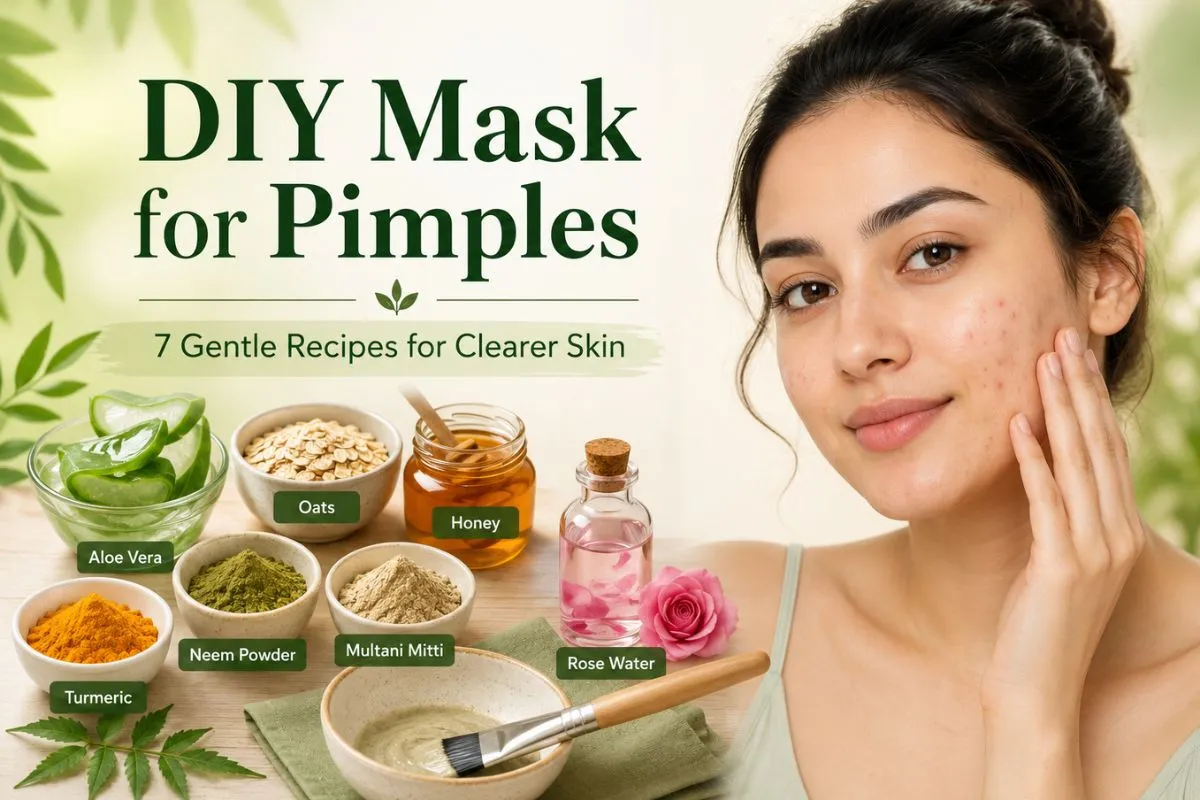
1. Aloe Vera and Oatmeal DIY Mask for Pimples
This gentle diy mask for pimples is ideal for skin that looks red, feels sensitive, or becomes dry after acne treatments. Aloe feels cooling, while finely ground oatmeal helps comfort the skin.
Ingredients
- 1 tablespoon pure aloe vera gel
- 1 tablespoon finely ground plain oats or colloidal oatmeal
- 1 teaspoon cool water, if needed
Method
Mix the aloe vera and oatmeal into a smooth paste, adding water only if needed. Apply a thin layer to clean skin, avoiding the eye area. Leave it on for 10 to 12 minutes, then soften it with lukewarm water and rinse gently.
Best for: Sensitive, dry, or irritated acne-prone skin.
How often: Start once a week.
Do not scrub the oats into active pimples. Gentle rinsing is far more skin-friendly than rubbing.
2. Neem and Multani Mitti Homemade Face Mask for Pimples
Popular in South Asian skincare, this homemade face mask for pimples may absorb surface oil and leave congested skin feeling fresher. Because clay can be drying, do not let it crack completely.
Ingredients
- 1 teaspoon cosmetic-grade Multani Mitti
- ½ teaspoon neem powder
- 1 to 2 teaspoons plain water or alcohol-free rose water
- ½ teaspoon aloe vera gel
Method
Combine all ingredients in a clean bowl. Apply a thin, even layer to oily or blemish-prone areas. Leave it on for 7 to 10 minutes. Rinse while the mask is still slightly damp.
Best for: Oily and combination skin.
How often: Once weekly.
Avoid this recipe if your skin is very dry, eczema-prone, or already irritated from acne medication.
3. Honey and Turmeric DIY Acne Face Mask
A honey and turmeric diy acne face mask can feel comforting when breakouts come with dryness or visible redness. Honey helps retain moisture, while a tiny amount of turmeric adds a traditional botanical touch.
Ingredients
- 1 tablespoon plain honey
- ⅛ teaspoon turmeric powder
- 1 teaspoon plain yogurt or aloe vera gel
Method
Mix the ingredients thoroughly. Apply a thin layer to clean skin and leave it on for 8 to 10 minutes. Rinse carefully with lukewarm water, then pat dry with a soft towel.
Best for: Normal, dry, or combination acne-prone skin.
How often: Once weekly.
Turmeric may temporarily stain very fair skin, towels, or clothing. Use only a small amount and rinse well. Avoid this mask if you are allergic to honey, pollen, or dairy.
4. Green Tea and Aloe Homemade Face Mask for Pimples
This refreshing homemade face mask for pimples suits hot, humid days when skin feels oily. Cooled green tea feels light, while aloe vera helps soothe.
Ingredients
- 1 tablespoon strongly brewed, cooled green tea
- 1 tablespoon aloe vera gel
- 1 teaspoon finely ground oats
Method
Stir the ingredients into a soft, gel-like mixture. Apply it to clean skin and leave it on for 10 minutes. Rinse gently and follow with a non-comedogenic moisturizer.
Best for: Oily, warm, or mildly irritated skin.
How often: One to two times weekly if well tolerated.
Always prepare a fresh batch. Do not store mixtures containing brewed tea or fresh aloe vera for later use.
5. Yogurt and Oatmeal DIY Acne Face Mask
Plain yogurt and oatmeal create a creamy diy acne face mask that may soften rough texture without scrubbing. Because yogurt contains lactic acid, sensitive skin should keep the contact time short.
Ingredients
- 1 tablespoon plain, unsweetened yogurt
- 1 tablespoon finely ground oats
- ½ teaspoon honey, optional
Method
Mix the ingredients until smooth. Apply a thin layer for 5 to 8 minutes. Rinse gently without rubbing.
Best for: Dull, dry, or combination skin with mild breakouts.
How often: Once weekly.
Do not use flavored yogurt, sweetened yogurt, or yogurt containing fruit pieces. Skip this recipe if dairy products irritate your skin.
6. Rose Water and Clay DIY Mask for Pimples
This clay mask works best as a targeted T-zone treatment. Clay can absorb oil around the nose, forehead, and chin.
Ingredients
- 1 teaspoon kaolin clay or Multani Mitti
- 1 to 2 teaspoons alcohol-free rose water
- ½ teaspoon aloe vera gel
Method
Mix until smooth. Apply only to oily areas or individual congested zones. Leave it on for 5 to 8 minutes, then rinse before it becomes hard and flaky.
Best for: Oily T-zones and combination skin.
How often: Once weekly.
Follow with a lightweight moisturizer. Overusing clay may trigger tightness, irritation, and rebound oiliness.
7. Chamomile and Oatmeal Homemade Face Mask for Pimples
A chamomile and oatmeal mask suits a calm, minimalist routine without acids, essential oils, or gritty particles.
Ingredients
- 1 tablespoon cooled chamomile tea
- 1 tablespoon colloidal oatmeal
- 1 teaspoon aloe vera gel
Method
Combine the ingredients and allow the oats to soften for one minute. Apply the mixture for 10 minutes, then rinse with lukewarm water.
Best for: Sensitive-looking, dry, or easily irritated skin.
How often: Once weekly.
People with allergies to ragweed or related plants may also react to chamomile, so patch testing is essential.
Ingredients to Avoid in a DIY Acne Face Mask
Viral before-and-after claims often promote ingredients that create more risk than reward. A safe home recipe should support the skin barrier, not challenge it.
Lemon or Lime Juice
Citrus juice is highly acidic and may sting active pimples. Sun exposure after citrus contact can also cause a serious skin reaction in some people. Lemon juice is not a safe shortcut for fading dark spots.
Baking Soda
Baking soda is alkaline and may disrupt the skin’s natural pH. It can leave the face feeling dry, tight, and irritated.
Toothpaste
Toothpaste is designed for teeth, not facial skin. Flavorings, detergents, whitening agents, and menthol can trigger burning and irritation.
Cinnamon
Cinnamon may cause redness, itching, or contact dermatitis. It should not be used as a “warming” acne ingredient.
Undiluted Essential Oils
Tea tree oil and other essential oils can irritate when used at high concentrations. Never apply them directly to active pimples.
Sugar, Salt, or Coffee Scrubs
Rough particles can create friction and worsen redness. Active acne should be treated gently.
Raw Egg
Raw egg offers no proven advantage that outweighs the inconvenience, allergy risk, and hygiene concerns.
Coconut Oil
Coconut oil may feel moisturizing, but it can clog pores for some acne-prone users. Facial oils are not universally suitable.
How to Apply a DIY Mask for Pimples Correctly
Even gentle ingredients can cause problems when applied aggressively. Follow these steps for a calmer experience:
- Wash your hands and cleanse your face with a gentle cleanser.
- Pat the skin dry instead of rubbing it.
- Apply the mask with clean fingers or a clean silicone brush.
- Use a thin layer. A thicker mask is not automatically more effective.
- Avoid the eyelids, lips, nostrils, and broken skin.
- Keep the mask on only for the recommended time.
- Rinse with lukewarm water. Hot water can worsen dryness and redness.
- Pat dry and apply a simple, fragrance-free moisturizer.
- Use sunscreen during the day, especially when treating post-pimple marks.
A mask should never be peeled aggressively from active acne. If the skin feels hot, painful, or intensely itchy, rinse immediately.
A Simple Routine to Use With Your Mask
A face mask is only one part of acne care. For stronger, more reliable results, keep the rest of your routine simple.
Morning
- Gentle cleanser
- Lightweight, non-comedogenic moisturizer
- Broad-spectrum sunscreen
Evening
- Gentle cleanser
- Acne treatment, if recommended for you
- Moisturizer
Mask Day
- Cleanser
- Chosen mask
- Moisturizer
Introduce one new product at a time so irritation is easier to trace.
When a DIY Mask Is Not Enough
Recognizing the limits of home care is a powerful form of self-care. Consider consulting a dermatologist or qualified healthcare professional if:
- Pimples are deep, painful, or cystic.
- Acne is leaving scars.
- Breakouts cover large areas of the face, chest, or back.
- Your skin suddenly develops severe acne.
- Over-the-counter treatment has not helped after consistent use.
- Acne is affecting your confidence or emotional well-being.
- You are pregnant, breastfeeding, or using prescription treatments and are unsure which ingredients are safe.
Professional advice is a focused choice, not a skincare failure.
Final Thoughts
A thoughtfully chosen face mask can bring a soothing, uplifting moment to your skincare routine, especially when you choose gentle ingredients and realistic expectations. Aloe vera, oatmeal, honey, neem, green tea, plain yogurt, and cosmetic-grade clay can all play a role, depending on your skin type.
The most radiant results usually come from consistency, not intensity. Patch test every recipe, avoid harsh viral hacks, make fresh single-use batches, and protect your skin barrier.
Ready to make your routine easier? Explore Hudira organic products for thoughtfully crafted botanical skincare inspired by traditional ingredients and designed for modern self-care. Discover a more confident and convenient way to support healthy-looking, beautifully balanced skin.
FAQs
Q. Which DIY mask is best for pimples?
The best option depends on your skin type. Aloe vera and oatmeal may suit sensitive skin, while neem and Multani Mitti may be better for oily areas. Patch test every recipe before full application.
Q. Can a face mask clear pimples overnight?
No mask can reliably clear acne overnight. A gentle recipe may temporarily reduce oiliness or soothe the appearance of redness, but lasting improvement usually requires a consistent skincare routine.
Q. How often can I use a homemade acne mask?
Start with a homemade acne mask once weekly. If your skin remains comfortable, a gentle hydrating mask may be used twice a week. Clay-based masks should usually be used less often.
Q. Can I use lemon in a pimple mask?
Lemon juice is not recommended for active acne. It can sting, irritate the skin, increase sensitivity, and potentially worsen the appearance of post-pimple marks.
Q. Should I moisturize after using an acne mask?
Yes. Applying a simple, non-comedogenic moisturizer after a mask helps support the skin barrier and reduces the tight, dry feeling that some masks can cause.

Add comment