
No products in the cart.
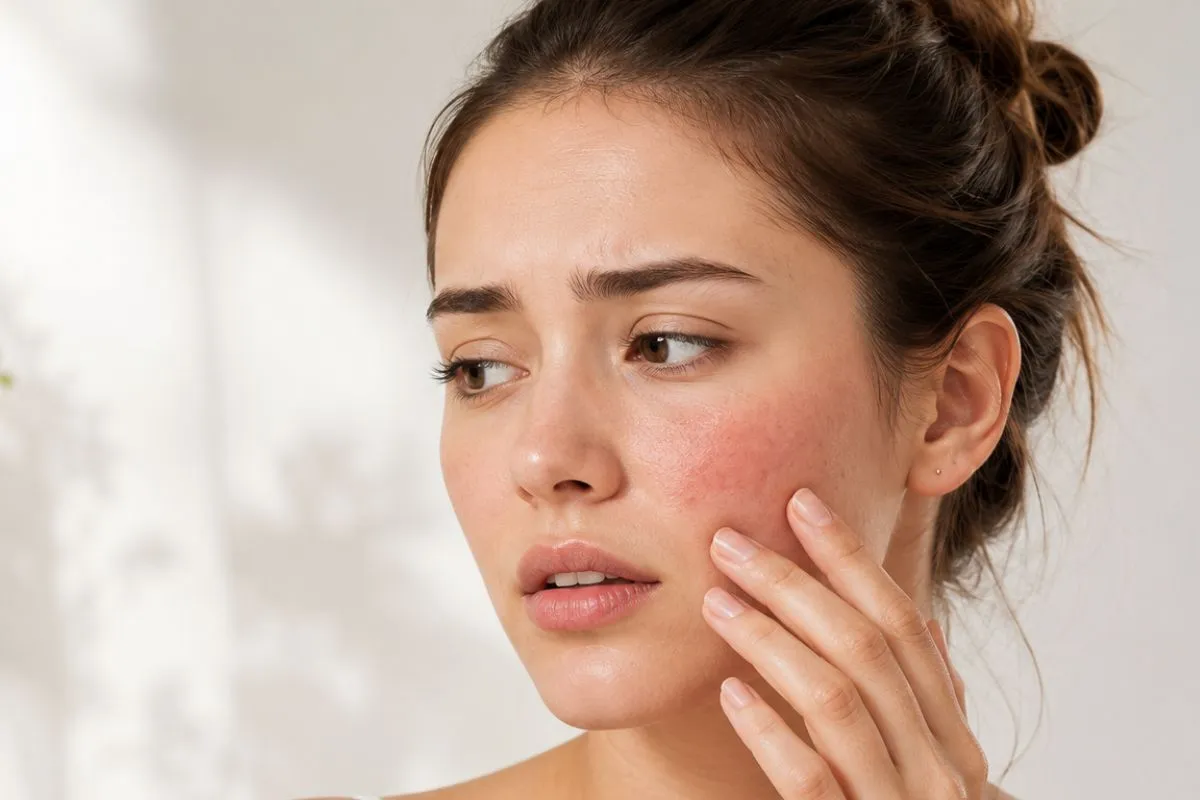
You apply a new serum, moisturizer, or mask expecting soft, glowing skin—then suddenly feel burning on the face. The discomfort may begin as mild face stinging, become intense face burning, or make your face feel hot and painfully tight. Although a brief tingle can occur with certain active ingredients, persistent pain is not a sign that a product is “working.” When your face burns, your skin may be warning you about irritation, an impaired barrier, an allergy, or an unsuitable combination of products.
The good news is that most mild reactions improve when you act early and simplify your routine. But what if a familiar moisturizer suddenly causes a stingy face, or your face burns after skincare you have used for months? The answer often lies in changes happening beneath the surface and one overlooked skincare habit may be making the reaction worse.
Quick Answer: Why Is There Burning on the Face?
Burning on the face after skincare usually happens because an ingredient has irritated the skin, the protective skin barrier has become damaged, or the skin is reacting to an allergen. Over-exfoliation, retinoids, acids, fragrance, essential oils, harsh cleansers, and layering too many active products can all trigger face stinging or face burning.
Stop using the suspected product, gently rinse it away, and avoid exfoliating or applying more active ingredients. Seek medical care promptly if the reaction includes facial or eye swelling, widespread hives, blisters, breathing difficulty, severe pain, or rapidly worsening symptoms.
Is Face Stinging Normal After Skincare?
A faint, short-lived tingling sensation can sometimes occur when using ingredients such as exfoliating acids. However, face stinging that is painful, persistent, worsening, or accompanied by redness should not be ignored. Your skin does not need to hurt for a product to deliver results. The FDA specifically advises users to stop BHA products and consult a physician when irritation or prolonged stinging occurs.
There is also a major difference between mild tingling and a stingy face that feels inflamed. Tingling is usually light and temporary. Irritation may feel sharp, hot, itchy, tender, or increasingly uncomfortable. If your face burns enough that you want to wash the product off, listen to that instinct.
A “stingy face” is not a medical diagnosis. It is a phrase many people use to describe skin that reacts to products that would normally feel soothing. This can happen when the outer skin barrier is no longer protecting the sensitive layers underneath as effectively as it should.
What to Do Immediately When Your Face Burns
When there is burning on the face, adding more products is rarely the answer:
- Stop using the product. Do not add another serum or cream to “neutralize” it.
- Rinse gently with cool or lukewarm water. Avoid hot water, scrubs, brushes, and rough cloths.
- Pat the skin dry. Rubbing can intensify face burning.
- Apply a cool compress. Never place ice directly on the skin.
- Pause active ingredients. Stop retinoids, AHAs, BHAs, scrubs, benzoyl peroxide, and strong vitamin C.
- Keep the routine minimal. Use only familiar, gentle products your skin already tolerates.
- Check for danger signs. Facial swelling, hives, blistering, breathing difficulty, or severe pain needs prompt medical care.
The FDA advises stopping a cosmetic product after a reaction and contacting a healthcare provider. Prolonged stinging from a BHA product is also a reason to stop use and seek professional advice.
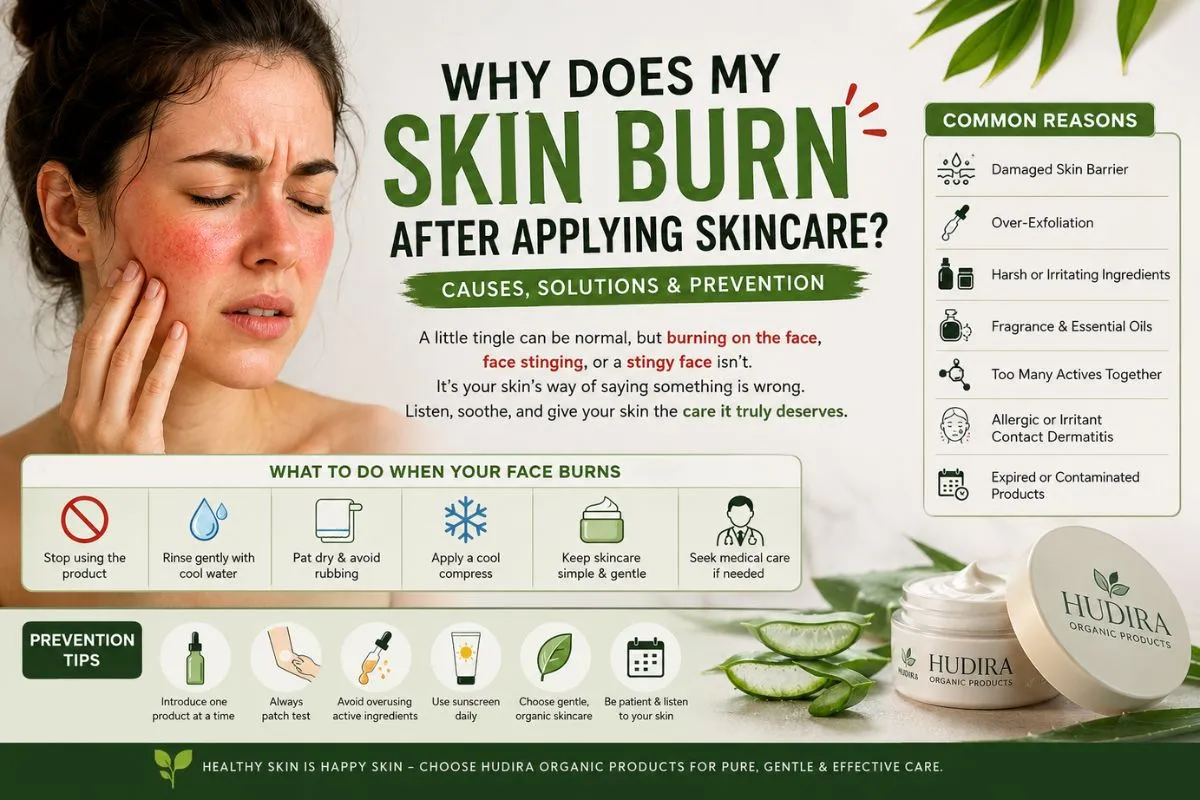
9 Reasons Skincare Can Cause Burning on the Face
1. Your Skin Barrier Is Damaged
The skin barrier is the outer protective layer that helps retain moisture and defend against irritants. When it weakens, even water, cleanser, or moisturizer may produce face stinging. Dryness, flaking, tightness, redness, rough patches, and a stingy face after basic moisturizer are common clues.
2. You Are Over-Exfoliating
Exfoliation removes dead surface cells, but too much can strip away protection. Combining a scrub, exfoliating toner, peeling solution, retinoid, or cleansing brush may quickly create face burning.
Over-exfoliated skin can look shiny while feeling dry, tight, tender, or flaky. More exfoliation does not mean faster results. Repeatedly treating already irritated skin can make your face burn more likely after nearly every product. Harsh scrubbing can also damage the skin’s moisture barrier and increase irritation.
3. You Combined Too Many Active Ingredients
Retinoids, glycolic acid, salicylic acid, benzoyl peroxide, exfoliating enzymes, and acidic vitamin C may be useful when introduced carefully. Layering several at once, applying them too often, or using them after shaving or waxing can trigger burning on face and inflammation.
If several products were started together, pause the new additions. Once your skin is comfortable, rebuild the routine one product at a time.
4. You Have Irritant Contact Dermatitis
Irritant contact dermatitis occurs when a substance directly damages or inflames the skin; it does not require a true allergy. DermNet explains that irritants can remove protective oils and natural moisturizing factors from the outer layer.
The reaction may cause face burning, tenderness, redness, cracking, peeling, or face stinging. Common triggers include strong acids, harsh soaps, alcohol-heavy formulas, excessive washing, friction, and repeated low-level exposure.
5. You Have Allergic Contact Dermatitis
Allergic contact dermatitis involves an immune reaction to a specific ingredient and may develop even after earlier use without trouble. Possible signs include itching, redness, swelling, rash, bumps, or blisters. Burning may occur, but itching is often prominent.
Fragrance, preservatives, hair dyes, and some botanicals can be triggers. A dermatologist may recommend medical patch testing when the responsible ingredient is difficult to identify.
6. Fragrance or Essential Oils Are Irritating Your Skin
Fragrance can cause contact dermatitis in some people, and “unscented” does not always mean fragrance-free. Some unscented formulas contain ingredients that mask odor.
Essential oils are natural, but they are not reaction-proof. DermNet notes that several essential oils can cause allergic contact dermatitis. This does not make all botanical skincare harmful; it means concentration, formulation, skin condition, and individual sensitivity matter. If a scented product leaves a stingy face, discontinue it instead of forcing your skin to adjust.
7. An Active Ingredient Is Too Strong
Retinoids can cause dryness, peeling, redness, and face stinging, especially when used too frequently at the beginning. AHAs and BHAs may also irritate; the FDA has received reports involving burning, rash, swelling, peeling, and chemical burns from AHA products.
Low-pH vitamin C can tingle, while benzoyl peroxide can be drying. Niacinamide is often used in barrier-supporting products, but high-strength formulas may still irritate some people. If an active causes persistent face burning, wash it off and stop using it.
8. Your Skin Is Already Inflamed
Eczema, rosacea, acne inflammation, sunburn, shaving irritation, and very dry skin can make ordinary products feel intense. DermNet describes sensitive skin as involving burning, itching, or stinging, sometimes with redness, peeling, bumps, or hives.
If unrelated products repeatedly cause face stinging, the problem may be a reactive skin condition rather than a single “bad” serum. A dermatologist can evaluate persistent symptoms instead of relying on guesswork.
9. The Product Is Expired or Contaminated
Do not ignore a product that has changed smell, color, texture, or consistency. Heat, sunlight, moisture, repeated finger contact, and improper storage can affect quality.
The FDA advises reporting unexpected cosmetic reactions and product problems such as a bad smell, color change, or foreign material. Check expiry information and storage instructions. Do not keep applying a suspicious product just because the container is still full.
Why Does My Face Burn After Washing?
When face burns begin immediately after cleansing, look closely at both the cleanser and the cleansing method. Hot water, scrubbing, washing too frequently, foaming cleansers with aggressive surfactants, or leaving cleanser on too long may remove too much oil and increase dryness.
A better approach includes:
- Lukewarm water
- Clean hands instead of rough tools
- A gentle, fragrance-free cleanser
- No prolonged massaging
- Patting dry with a soft towel
- Moisturizing soon afterward, if tolerated
If plain water causes a stingy face, your barrier may be significantly irritated. Pause active skincare and consider medical advice if the problem persists.
Irritation, Allergy, or Chemical Burn: What Is the Difference?
These reactions can overlap, so this guide is educational—not diagnostic.
| Reaction | Common clues | Best next step |
| Mild irritation | Brief tingling, dryness, slight redness | Stop if uncomfortable and let the skin settle |
| Irritant contact dermatitis | Face burning, tenderness, dryness, peeling | Discontinue the trigger and simplify the routine |
| Allergic contact dermatitis | Itching, rash, swelling, bumps, blisters | Stop the product and seek medical advice |
| Contact urticaria | Rapid burning, itching, raised welts, swelling | Seek urgent care for breathing trouble or facial swelling |
| Possible chemical burn | Intense pain, marked redness, peeling, blistering | Rinse and obtain prompt medical guidance |
Contact reactions may involve overlapping symptoms, including burning, itching, tingling, redness, swelling, dryness, or blistering.
Never “push through” severe face burning. Pain, blistering, swelling, or broken skin deserves professional care.
How to Calm Face Burning and Support the Skin Barrier
For a few days, keep skincare intentionally simple:
- Use a gentle cleanser at night.
- Apply a familiar, fragrance-free moisturizer only if it feels comfortable.
- Wear broad-spectrum sunscreen during the day.
- Avoid scrubs, acids, retinoids, masks, and new products.
- Do not rub or pick at flaking skin.
- Reintroduce products one at a time only after your skin feels normal.
AAD recommends fragrance-free products for dry, sensitive skin and warns that “unscented” formulas may still contain fragrance-masking ingredients. A simple routine may feel boring, but it gives irritated skin fewer potential triggers while it recovers.
How to Patch Test Skincare Correctly
Patch testing cannot guarantee that a product will never cause a reaction, but it can reduce surprises.
The American Academy of Dermatology recommends applying a product to a small test area, such as the underside of the arm or elbow bend, twice daily for seven to ten days. Use the same amount and leave it on for the same length of time you would during normal use. For a wash-off product, keep it on only as long as the instructions recommend.
Stop the test if you develop redness, itching, swelling, or another reaction. Remember that home testing is different from medical patch testing performed by a dermatologist to investigate allergic contact dermatitis.
Can Natural or Organic Skincare Still Cause Face Burning?
Yes. “Natural,” “organic,” and “plant-based” describe ingredient origin or marketing positioning; they do not guarantee that every formula will suit every person.
Botanical skincare can be gentle, effective, and enjoyable when thoughtfully formulated. However, essential oils, fragrant plant extracts, and even familiar natural ingredients may irritate or sensitize certain individuals. Your skin’s current condition also matters: a product that feels comfortable on a healthy barrier may trigger face burning on over-exfoliated skin.
The healthiest approach is balanced rather than fearful. Choose transparent formulas, follow directions, introduce products gradually, and patch test. Respecting your skin’s feedback is more powerful than assuming that either natural or synthetic automatically means “good” or “bad.”
Final Thoughts: Listen When Your Face Burns
Burning on the face can feel frightening, but it is useful feedback. It may point to over-exfoliation, an unsuitable active, contact dermatitis, fragrance sensitivity, or a weakened barrier.
Do not cover face burning with more products. Pause, simplify, and give your skin room to recover. When your face burns, gentleness is often the most powerful next step.
At Hudira, we believe skincare should feel thoughtful, nurturing, and beautifully uncomplicated. Explore Hudira organic products created to complement mindful routines. Introduce every new formula gradually, patch test first, and stop use if irritation develops. Your glow should never come at the cost of comfort.
FAQs
Q. Why does my skin feel like it’s burning after applying skincare?
Common possibilities include irritation, over-exfoliation, barrier damage, contact dermatitis, or ingredient sensitivity. Remove the product and stop using it if discomfort persists. Seek medical care for swelling, hives, blistering, or severe pain.
Q. Is it normal for skincare to make my face sting?
A very mild, brief tingle can occur with some active ingredients, but persistent face stinging should not be ignored. Wash the product off if the sensation becomes painful, red, or increasingly uncomfortable.
Q. Why does moisturizer cause face burning?
The formula may contain an irritant, or your barrier may already be damaged. When moisturizer triggers face burning, pause exfoliants and retinoids and simplify your routine.
Q. Why does my face burn after skincare I have used before?
Weather, sun exposure, over-cleansing, active ingredients, or a newly developed allergy can change how your skin responds. This is why face burns after skincare can begin unexpectedly.
Q. How long does a stinging face take to calm down?
There is no universal timeline. Mild irritation may settle after the product is removed, while dermatitis or a more serious injury may need treatment. Seek advice if your stinging face is worsening, blistered, swollen, or not improving.


Add comment