
No products in the cart.
Smooth, fresh-looking skin does not come from scrubbing harder. It comes from choosing the right natural face exfoliator for your skin type and using it with care. The wrong ingredient can leave your face dry, tight, irritated, or more prone to breakouts, while the right one can gently lift dull surface buildup and help the rest of your skincare routine work more comfortably.
The surprising truth is that many popular DIY ingredients are not equally suitable for every face. A scrub that feels refreshing on oily skin may be too harsh for sensitive skin, while a rich ingredient that comforts dryness may feel heavy on congested areas. So which option truly belongs in your routine and which familiar kitchen ingredients should stay off your face? Let us uncover the difference.
What Is a Natural Face Exfoliator?
A natural face exfoliator is a product or ingredient that helps loosen and remove dead skin cells from the skin’s surface using naturally derived particles, enzymes, or acids. Used correctly, exfoliation can make skin look smoother, brighter, and more even. It should never leave the face feeling raw, scratched, or painfully tight.
There are three main ways to exfoliate skin:
- Physical exfoliation uses very fine particles to manually lift surface buildup. Examples include colloidal oatmeal and finely milled rice powder.
- Enzyme exfoliation uses enzymes such as papain from papaya or bromelain from pineapple to loosen dead surface cells.
- Acid exfoliation uses carefully formulated ingredients such as lactic acid, mandelic acid, or other alpha hydroxy acids to encourage gentle surface renewal.
A well-formulated natural exfoliant is usually more predictable than a rough homemade mixture. Particle size, product pH, ingredient concentration, contact time, and the presence of soothing ingredients all affect how the skin responds.
Why Skin Type Matters When You Exfoliate Skin

Skin type influences oil production, moisture loss, sensitivity, clogged pores, and irritation. That is why one natural exfoliating scrub cannot work perfectly for everyone.
Dry skin needs gentle renewal without losing more moisture. Oily skin may benefit from ingredients that clear buildup, but aggressive scrubbing can trigger redness. Sensitive skin needs minimal friction. Acne-prone skin requires care because inflamed spots can worsen when rubbed. Combination skin may even need different methods on different facial areas.
Before choosing a product, notice whether your skin feels tight after cleansing, becomes shiny by midday, stings easily, or develops dry patches and clogged pores.
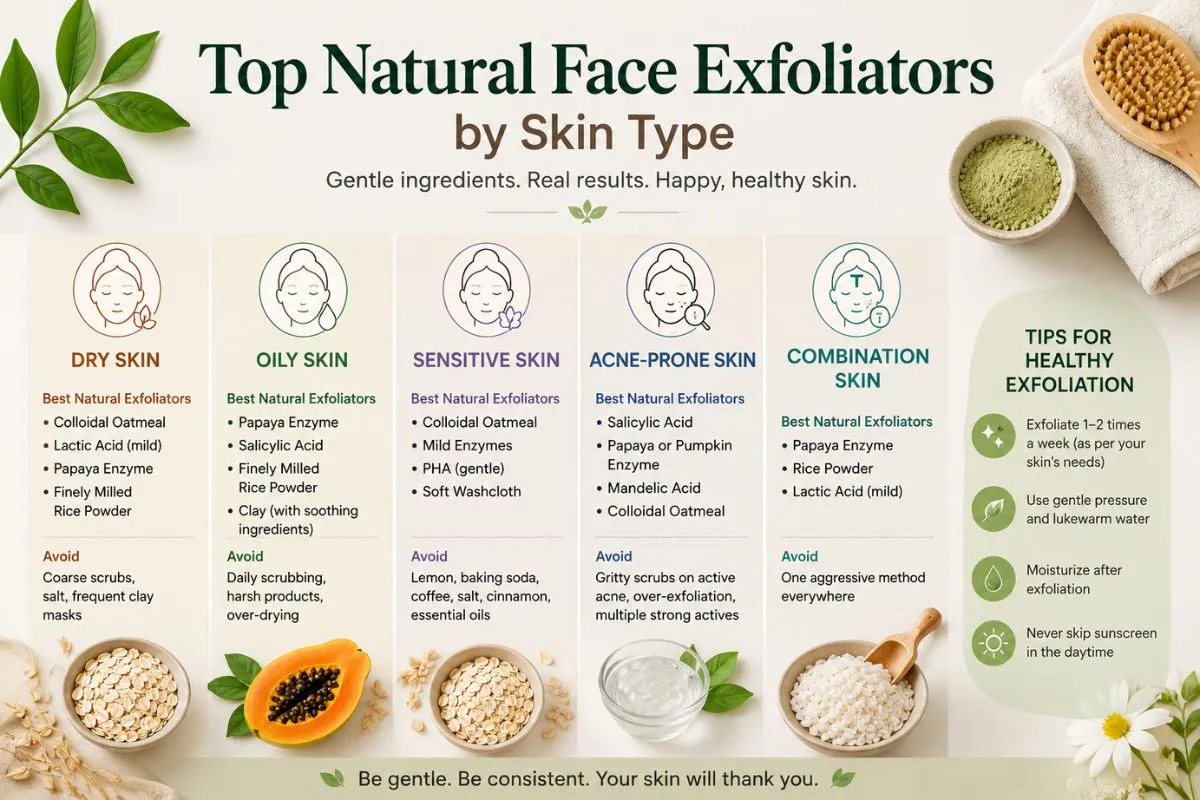
Best Natural Face Exfoliator for Dry Skin
Dry skin often feels tight, flaky, rough, or uncomfortable. The goal is not to polish it aggressively. The goal is to remove loose buildup while protecting the skin barrier.
Best Choices
Colloidal oatmeal: Finely milled oatmeal offers mild physical exfoliation while helping dry skin feel calmer. Its soft texture creates less friction than coarse oats.
Lactic acid: This gentle alpha hydroxy acid can help exfoliate skin while supporting hydration. Choose a mild, professionally formulated product instead of applying dairy ingredients directly.
Papaya enzyme: Papain can loosen dull surface cells without the rough feel of a scrub, making a controlled enzyme mask useful for tired-looking skin.
Finely milled rice powder: In a creamy formula, very fine rice powder provides light polishing without aggressive friction.
What Dry Skin Should Avoid
Avoid coarse salt, rough coffee grounds, large sugar crystals, and frequent clay masks. These may strip surface oils and make dryness more noticeable. A natural exfoliating scrub for dry skin should feel soft and should include soothing or moisturizing ingredients.
How Often?
Begin once a week. If your skin remains comfortable, you may gradually increase the frequency depending on the strength of the formula. Apply moisturizer immediately afterward.
Best Natural Exfoliator for Oily Skin
Oily skin produces more sebum and may look shiny around the forehead, nose, and chin. It can also develop blackheads, clogged pores, and uneven texture. However, oily skin is not dirty, and scrubbing harder will not permanently control oil.
Best Choices
Papaya enzyme: Papain helps lift surface buildup without abrasive particles, making it a useful natural exfoliant for oily skin.
Salicylic acid: This oil-soluble ingredient can work inside congested pores and may be more helpful for blackheads than a rough scrub.
Finely milled rice powder: Smooth rice powder offers mild polishing and may absorb some surface oil.
Clay with soothing ingredients: Multani Mitti may absorb oil, but daily use or letting clay crack completely can leave skin uncomfortable.
What Oily Skin Should Avoid
Do not use a harsh natural exfoliating scrub every day. Too much friction may increase redness, sensitivity, or breakouts. Avoid squeezing blackheads immediately after exfoliation.
How Often?
Start one to two times weekly. If you use retinoids, benzoyl peroxide, or strong acne treatments, use exfoliating products less often and avoid combining several powerful actives in one routine.
Best Natural Face Exfoliator for Sensitive Skin
Sensitive skin may sting, burn, flush, itch, or react quickly to fragrance, weather changes, and new products. For this skin type, “natural” does not automatically mean gentle. Citrus, cinnamon, essential oils, and rough botanical powders can still cause irritation.
Best Choices
Colloidal oatmeal: Its soft texture offers light polishing without the sharp feel of traditional scrubs.
Mild enzyme products: A low-strength mask may help exfoliate skin with less friction. Follow the contact time carefully.
PHA formulas: Their larger molecules generally act more gradually than stronger acids.
A soft washcloth: For very reactive skin, a clean, damp cloth used gently may be enough. Never rub until the face feels hot.
What Sensitive Skin Should Avoid
Avoid crushed nut shells, coarse sugar, sea salt, lemon juice, baking soda, cinnamon, and undiluted essential oils. A familiar ingredient can still damage a weakened skin barrier.
How Often?
Once every seven to ten days may be enough. Patch test any new natural face exfoliator before applying it across the whole face.
Best Natural Exfoliant for Acne-Prone Skin
Acne-prone skin needs exfoliation that reduces congestion without scratching or inflaming active breakouts. Red, painful, picked, or broken spots should never be scrubbed.
Best Choices
Salicylic acid: A properly formulated product may help clear dead skin and oil from clogged pores.
Papaya or pumpkin enzymes: These provide surface renewal with less mechanical friction when introduced slowly.
Finely milled oatmeal: Oatmeal can gently smooth areas that are not actively inflamed.
Mandelic acid: Derived from bitter almonds, this larger-molecule acid may suit some acne-prone or uneven-looking skin, but strength and frequency matter.
What Acne-Prone Skin Should Avoid
Avoid a gritty natural exfoliating scrub over active acne or freshly picked spots. Do not combine multiple acids, retinoids, and acne treatments without guidance. More products do not always mean faster results.
How Often?
Start once weekly. If your face becomes flaky, tight, or more inflamed, stop and allow the skin barrier to recover.
Natural Exfoliation for Combination Skin
Combination skin is oily in some areas and dry or normal in others. The T-zone may become shiny while the cheeks remain comfortable or dry. A smart technique is “zone exfoliation.”
Use an enzyme or salicylic acid product on congested areas such as the nose and forehead. Choose oatmeal, lactic acid, or a hydrating product for drier cheeks. A balanced natural exfoliant may work across the whole face only when it does not leave the cheeks tight.
Finely milled rice powder and papaya enzymes can offer gentle renewal without a heavy finish. Adjust pressure and frequency according to each area rather than treating the entire face identically.
Start one to two times weekly.
Natural Exfoliation for Normal Skin
Normal skin is balanced and can often tolerate more gentle options, but overuse is still possible. A mild natural exfoliating scrub with finely milled oatmeal or rice powder may work well, as may papaya or pineapple enzymes. One or two sessions weekly are usually enough.
Best Natural Face Exfoliator for Mature Skin
Mature skin may feel drier or more delicate, so gentle renewal should be paired with hydration. Lactic acid, papaya enzymes, and finely milled oatmeal or rice powder in creamy formulas may help.
Avoid harsh scrubs and products that leave skin tight. Begin once weekly; consistency matters more than intensity.
Natural Exfoliant Comparison by Skin Type
| Skin Type | Better Options | Use Cautiously or Avoid | Starting Frequency |
| Dry | Oatmeal, lactic acid, papaya enzyme | Coarse sugar, salt, frequent clay | Once weekly |
| Oily | Papaya enzyme, salicylic acid, rice powder | Daily scrubbing and harsh products | 1–2 times weekly |
| Sensitive | Oatmeal, mild enzymes, PHA | Coffee, lemon, salt, cinnamon | Every 7–10 days |
| Acne-prone | Salicylic acid, enzymes, mandelic acid | Gritty scrubs over active acne | Once weekly |
| Combination | Zone exfoliation, papaya, rice powder | One aggressive method everywhere | 1–2 times weekly |
| Normal | Oatmeal, rice powder, enzymes | Overuse | 1–2 times weekly |
| Mature | Lactic acid, enzymes, hydrating powders | Strong scrubs and frequent use | Once weekly |
How to Exfoliate Skin Safely
Follow these steps to exfoliate skin with less risk of irritation:
- Cleanse first to remove makeup, sunscreen, and dirt.
- Apply the product to damp or dry skin according to its directions.
- Use light pressure. More force does not create better results.
- Avoid the eye area and broken, sunburned, or inflamed skin.
- Rinse with lukewarm water.
- Apply a simple moisturizer.
- Wear broad-spectrum sunscreen during the day.
For enzymes or acids, follow the stated contact time. Leaving a product on longer can increase irritation without improving the result.
Signs You Are Over-Exfoliating
Healthy exfoliation should leave the skin smooth and comfortable. Reduce or stop use if you notice:
- Burning or stinging
- Persistent redness
- Tightness or flaking
- Sudden sensitivity
- Increased breakouts
- Moisturizer beginning to sting
Pause exfoliation and focus on a gentle cleanser, moisturizer, and sunscreen until the skin feels normal. When you restart, choose a milder natural exfoliant and use it less often.
How to Choose the Right Natural Exfoliant
Before buying a product, ask:
- Is it designed for the face or body?
- Is the texture finely milled?
- Does it match my skin type?
- Does it contain fragrance or essential oils that may bother me?
- Are the frequency and contact time clearly explained?
- Does it include calming or moisturizing ingredients?
- Can I patch test it first?
The best natural exfoliant is not the strongest or most dramatic one. It is the product you can use consistently while keeping the skin comfortable.
Discover Gentle Skincare With Hudira Organic Products
Beautiful skin does not need harsh treatment. Hudira organic products are created with thoughtfully selected botanical ingredients to support gentle, enjoyable skincare rituals. Explore Hudira’s masks and skincare collection to find an option that complements your skin type, routine, and glow goals.
Choose care over intensity, consistency over quick fixes, and ingredients that make your skin feel respected. Visit Hudira today and discover botanical skincare designed to turn everyday self-care into a positive, confident experience.
FAQs
Q. How to Exfoliate Skin Naturally Without Causing Irritation?
To understand how to exfoliate skin naturally, begin with a gentle product suited to your skin type. Use light pressure, avoid broken or inflamed areas, moisturize afterward, and start once weekly. Oatmeal, mild enzyme formulas, and finely milled rice powder are generally gentler than coarse DIY mixtures.
Q. How to Remove Dead Skin From Face Safely?
Use a mild natural face exfoliator rather than scrubbing aggressively. Choose a fine physical product, enzyme mask, or gentle acid, follow its directions, and stop if you experience burning, tightness, or persistent redness.
Q. Can I Use a Natural Exfoliating Scrub Every Day?
Daily use is usually unnecessary and may cause irritation. Most people should begin with a natural exfoliating scrub once weekly and increase only when the skin remains comfortable. Sensitive, dry, or acne-prone skin may require less frequent use.
Q. Which Natural Exfoliant Is Best for Sensitive Skin?
Colloidal oatmeal is one of the gentlest options. A mild enzyme formula or PHA product may also work. Patch test first, and avoid lemon juice, baking soda, coarse sugar, coffee grounds, salt, cinnamon, and undiluted essential oils.
Q. Can a Natural Face Exfoliator Help With Acne?
A natural face exfoliator may help reduce surface buildup and improve the appearance of clogged pores, but it does not replace acne treatment. Salicylic acid, papaya enzymes, and mandelic acid may suit some acne-prone skin types. Never rub gritty products over active or inflamed spots.

Add comment