
No products in the cart.
Glow doesn’t always come from expensive serums. Sometimes, it starts with something surprisingly simple, a milk toner. Across skincare trends, from Korean routines to herbal beauty traditions, milk toners are being praised for their ability to soften, hydrate, and restore the skin barrier without the harsh sting of alcohol-based formulas. Whether you’re looking for a gentle hydrating milky toner or experimenting with milk as toner in your routine, this guide will help you do it safely and effectively.
But here’s the truth most blogs won’t tell you: not all milk toners are created equal. Some can clog pores. Some spoil quickly. And some don’t actually deliver the milk toner benefits they promise. So how do you make different types of milk toner at home and choose the right one for your skin type? Let’s break it down step by step.
What Is a Milk Toner?
Before we get into recipes, let’s understand what a milk toner actually is.
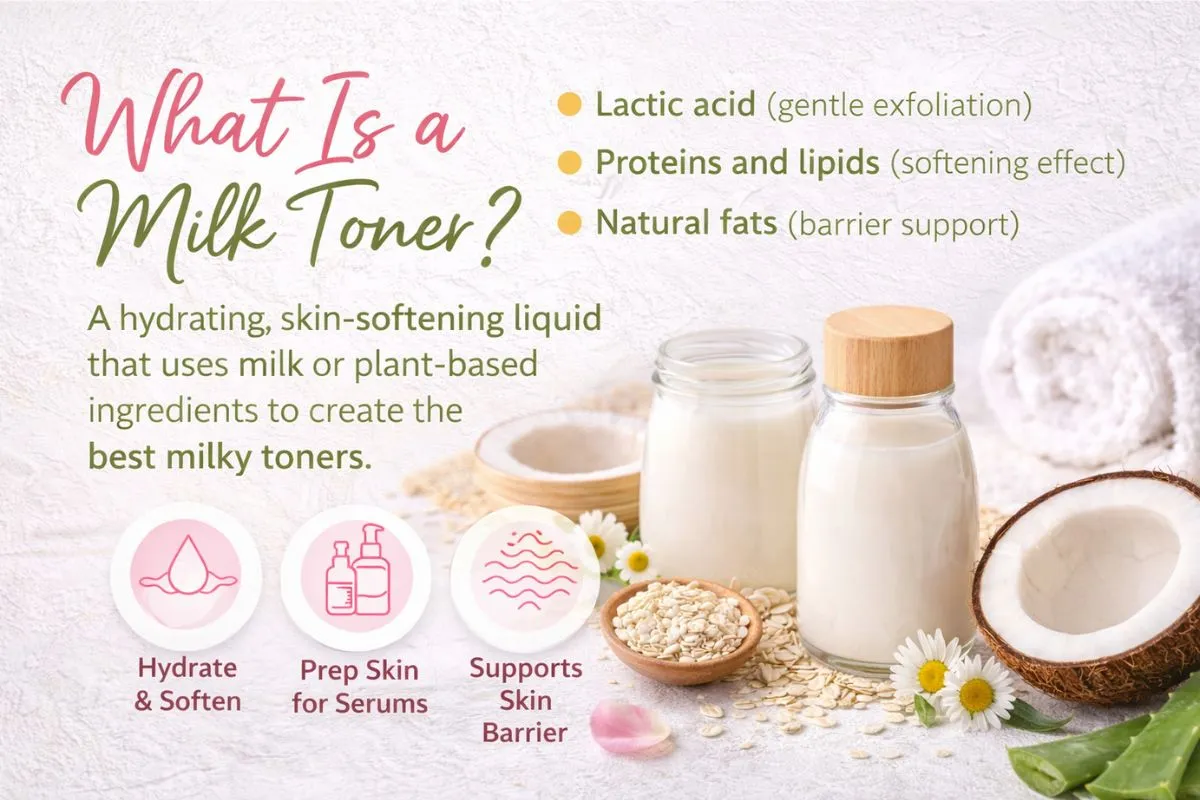
A milk toner is a lightweight, opaque, hydrating liquid that combines soothing and moisturizing ingredients to support the skin barrier. Unlike traditional astringent toners, milk toners focus on comfort, nourishment, and hydration rather than stripping oil.
Many people use milk as toner because milk contains:
- Lactic acid (gentle exfoliation)
- Proteins and lipids (softening effect)
- Natural fats (barrier support)
However, modern milk toners often include ingredients like glycerin, aloe vera, rice extract, oats, or plant milks to create a safer and more stable formula.
What Do Milky Toners Do?
If you’ve ever wondered what do milky toners do, here’s what they are designed for:
- Hydrate and soften skin
- Reduce tightness after cleansing
- Prep skin for serums
- Support the moisture barrier
- Provide mild exfoliation (if dairy-based)
The reason the best milky toners for dry skin are so popular is because they calm irritation without disrupting the skin’s natural oils.
Milk Toner Benefits
Let’s talk about the real milk toner benefits you can expect when used correctly:
1. Deep Hydration
A well-balanced hydrating milky toner works by attracting moisture to the skin and helping reduce post-cleansing tightness. Ingredients like milk lipids, glycerin, or plant extracts create a lightweight moisture layer that softens the surface without feeling greasy. Unlike harsh toners that strip natural oils, milk toners focus on replenishment. Over time, consistent hydration helps skin look plumper, calmer, and more radiant.
2. Gentle Brightening
Milk naturally contains lactic acid, a mild alpha hydroxy acid (AHA) that provides very gentle exfoliation. In small amounts, it helps loosen dead skin cells that cause dullness and uneven tone. This process gradually improves skin clarity without aggressive peeling. With regular use, a properly formulated milk toner can support a brighter, fresher-looking complexion.
3. Barrier Support
Healthy skin relies on a strong moisture barrier made of lipids and natural moisturizing factors. A good milk toner formulation supports this barrier instead of weakening it. The fats and proteins found in milk or soothing plant-based alternatives like oat milk help reduce dryness and irritation. When your barrier is balanced, your skin becomes more resilient against environmental stressors.
4. Smoother Texture
By providing mild exfoliation and consistent hydration, milk toners help refine skin texture over time. They soften rough patches and reduce the appearance of flaky areas. This makes the skin feel silkier and look more even. While not a pore minimizing toner in the traditional sense, smoother skin can make pores appear less noticeable.
5. Suitable for Sensitive Skin (When Done Right)
Unlike alcohol-heavy pore minimizing toner formulas that can cause stinging, properly diluted milk toners are typically calming. They are designed to comfort rather than strip. However, it’s important to use fresh, hygienically prepared mixtures and patch test first. When formulated carefully, milk toners can be a soothing option even for reactive or delicate skin types.
Important Safety Before Using Milk as Toner
Using milk as toner sounds simple but raw milk spoils quickly. DIY milk toners must be:
- Stored in refrigerator
- Used within 2–3 days
- Made in small batches
- Patch tested first
If you have acne-prone or oily skin, dairy fats may clog pores. In that case, plant-based versions are better.
Now let’s get to the recipes.
8 Different Types of Milk Toner You Can Make at Home
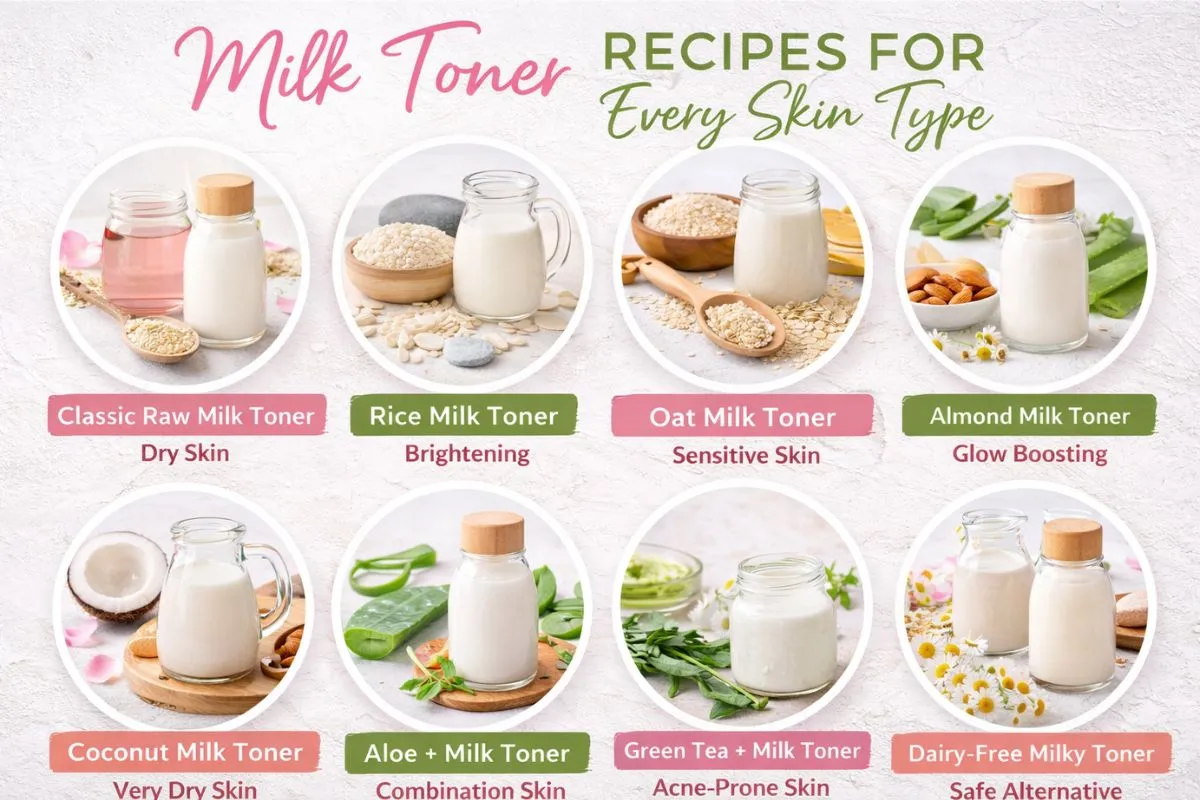
Each milk toner below includes best-for skin type, ingredients, and shelf life.
1. Classic Raw Milk Toner (For Dry Skin)
Best for: Dry, flaky skin
Shelf life: 2 days refrigerated
Ingredients:
- 2 tbsp raw milk
- 1 tbsp rose water
Method:
Mix and store in a glass bottle.
This is one of the simplest milk toners and provides instant softness. It’s among the best milky toners for dry skin, but not suitable for acne-prone skin.
2. Rice Milk Toner (Brightening)
Best for: Dull skin
Shelf life: 3 days
Ingredients:
- Soaked rice water (fermented 12 hours)
- 1 tbsp milk
- ½ tsp glycerin
This milk toner offers mild brightening and hydration.
3. Oat Milk Toner (Barrier Repair)
Best for: Sensitive skin
Shelf life: 3 days refrigerated
Ingredients:
- 2 tbsp soaked oats
- 3 tbsp filtered water
- 1 tbsp rose water
Method: Blend soaked oats with water, strain the liquid, mix with rose water, and store in a glass bottle in the refrigerator.
This plant-based version acts like a hydrating milky toner and is ideal for irritated skin.
4. Almond Milk Toner (Glow Boosting)
Best for: Normal to dry skin
Shelf life: 2 days refrigerated
Ingredients:
- 4 soaked almonds (overnight)
- 3 tbsp filtered water
- 1 tsp aloe vera gel
Method: Blend soaked almonds with water, strain the milk, mix with aloe gel, and refrigerate in a clean container.
5. Coconut Milk Toner (Deep Nourishing)
Best for: Very dry skin
Shelf life: 2 days refrigerated
Ingredients:
- 2 tbsp fresh coconut milk
- 1 tbsp rose water
- ½ tsp glycerin
Method: Mix coconut milk with rose water and glycerin until smooth, pour into a sterilized bottle, and keep refrigerated.
Not recommended as best milk toner for oily skin.
6. Aloe + Milk Balancing Toner
Best for: Combination skin
Shelf life: 2 days refrigerated
Ingredients:
- 2 tbsp diluted milk (1:1 milk + water)
- 1 tbsp fresh aloe vera gel
- 1 tsp rose water
Method: Whisk diluted milk with aloe gel and rose water until evenly combined, then store chilled in a sealed glass bottle.
This mild toner formulation balances hydration.
7. Green Tea + Milk Toner (For Acne-Prone Skin)
Best for: Acne-prone skin
Shelf life: 2–3 days refrigerated
Ingredients:
- 2 tbsp brewed and cooled green tea
- 1 tbsp diluted milk
- ½ tsp aloe vera gel
Method: Combine cooled green tea with diluted milk and aloe gel, mix well, and refrigerate in a sterilized container.
Replace heavy dairy with diluted milk and green tea.
8. Dairy-Free Milky Toner (Safe Alternative)
Best for: Oily or sensitive skin
Shelf life: 3 days refrigerated
Ingredients:
- 3 tbsp homemade oat milk
- 1 tsp glycerin
- 1 tbsp chamomile water
Method: Stir oat milk with glycerin and chamomile water until fully blended, then store in a clean bottle in the refrigerator.
Perfect for those wanting milk toner benefits without clogging pores.
Milk Toner for Oily Skin – What Works?
If you’re looking for the best milk toner for oily skin, choose:
- Diluted milk + green tea
- Oat milk toner
- Aloe-based milk toners
Avoid full-fat dairy milk as toner for acne-prone skin.
How to Choose the Right Milk Toner
| Skin Type | Best Milk Toner Option |
| Dry | Coconut or almond milk toner |
| Oily | Green tea milk toner |
| Acne-Prone | Oat or diluted milk toner |
| Sensitive | Oat milk toner |
Milk Toner vs Traditional Toner
Traditional toners were originally designed to remove leftover cleanser residue and tighten the appearance of pores. Many classic pore minimizing toner formulas contain alcohol or strong astringents that temporarily shrink the look of pores by stripping excess oil from the surface. While this can feel refreshing, it may also disrupt the skin barrier and trigger increased oil production over time — especially in oily or acne-prone skin.
In contrast, a milk toner takes a completely different approach. Instead of focusing on oil removal, milk toners prioritize hydration, comfort, and barrier support. They typically contain moisturizing components such as milk lipids, plant extracts, glycerin, or soothing ingredients that help maintain skin balance after cleansing. Rather than tightening the skin, they replenish moisture and reduce post-wash dryness.
Another key difference lies in skin tolerance. Traditional toners can sometimes cause stinging or irritation, particularly for dry or sensitive skin types. A properly formulated hydrating milky toner is usually gentler and designed to prep the skin for serums without causing discomfort. This makes milk toners especially appealing for people who want nourishment rather than aggressive oil control.
Ultimately, the choice depends on your skin’s needs. If excess oil is your primary concern, a mild balancing toner may help. But if your goal is long-term skin health, improved texture, and barrier resilience, milk toners offer a more supportive and modern solution.
How to Use Milk Toner Correctly
- Cleanse
- Apply milk toner with cotton pad
- Follow with serum
- Moisturize
- Use sunscreen
When to Avoid Milk Toners
- Severe acne
- Fungal acne
- Dairy allergy
- Broken skin barrier
Final Thoughts: Should You DIY or Buy?
DIY milk toners are fresh, affordable, and customizable. However, they lack preservatives and advanced stability found in professionally developed formulas.
If you want safe, stable, herbal-based hydration without risk of contamination, consider switching to a professionally formulated hydrating milky toner.
Call to Action
Ready to elevate your skincare routine? Explore Hudira’s organic, herbal skincare range designed for real skin needs. Our products combine traditional botanical wisdom with safe, modern formulation giving you glow without compromise.
FAQs
Q. What is milk toner?
A milk toner is a hydrating, opaque toner designed to soften and moisturize the skin using milk or plant-based ingredients.
Q. What do milky toners do?
They hydrate, prep skin, and support the barrier without stripping oils.
Q. Can I use milk as toner daily?
Only if properly diluted and refrigerated. For acne-prone skin, choose plant-based options.
Q. Are milk toners good for oily skin?
Yes, but choose the best milk toner for oily skin such as green tea diluted milk toner.
Q. How long does homemade milk toner last?
2–3 days refrigerated.


Add comment