
No products in the cart.
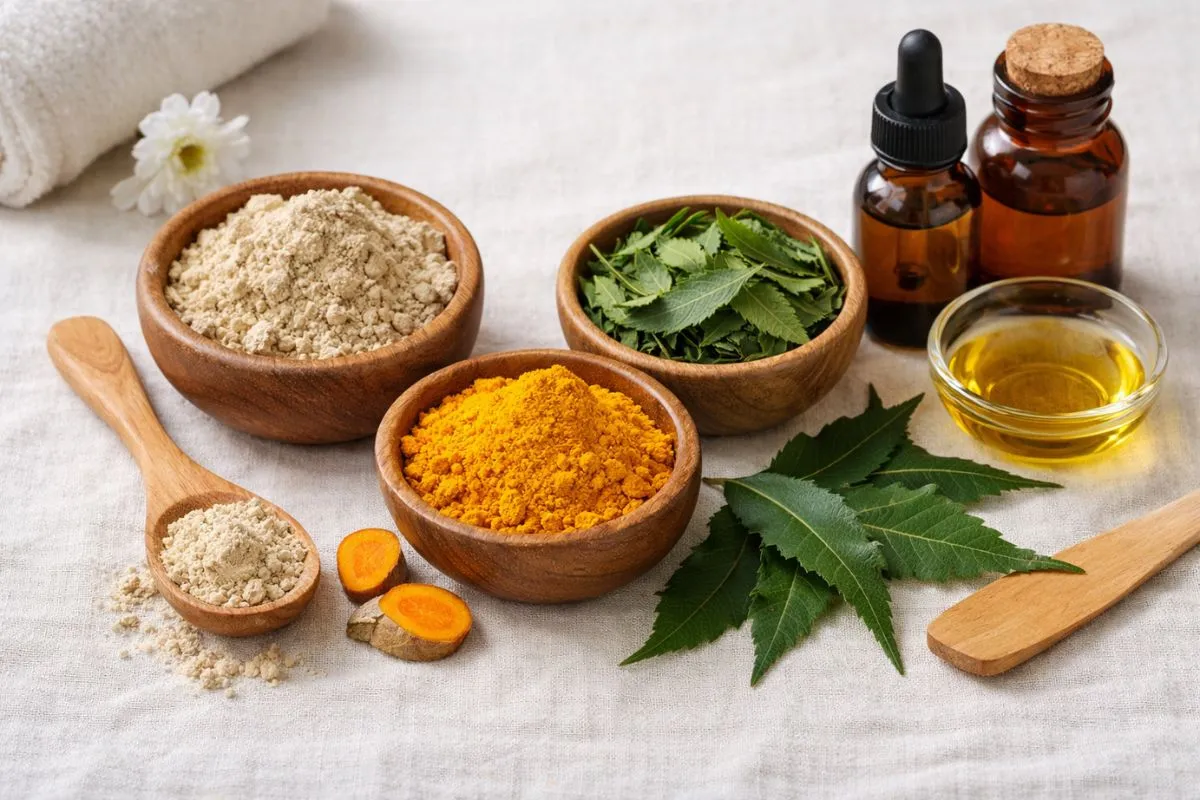
Your skin has moods. Some days it feels oily and congested. Other days it’s dry, irritated, or just… tired. If you’ve ever stood in front of the mirror wondering why your glow disappeared, you’re not alone. The truth is, choosing the right herbal facial mask can completely change how your skin looks and feels. When the herbs match your skin type, they don’t just sit on the surface — they calm inflammation, balance oil, restore hydration, and bring back radiance naturally.
But not every herbal facial mask works for every skin type. That’s where most people go wrong.
Let’s break it down so you can confidently choose a herbal facial mask that actually works for your skin — not against it.
Quick summary
- Match to skin: Choose the mask format that targets your main concern. Clay and charcoal are best for oily, acne-prone skin, while gel, cream, or sleeping masks work for dry or sensitive types and enzymes give gentle exfoliation.
- Prioritize actives: Pick products that list specific herbs or standardized extracts such as turmeric, or neem. Formulation and delivery matter more than a long plant list.
- Check formulation: Avoid vague “botanical blends” and high fragrance. Confirm stable preservatives and review ingredient order to reduce irritation risk.
- Patch test first: Perform a patch test for 10 to 15 minutes, then observe the area for up to 24 hours and log any reactions. Follow recommended contact times and introduce masks slowly so you can spot irritation early.
- Safe DIY choices: Use simple, measured recipes with mild ingredients and skip citrus or strong actives on inflamed skin. Store perishable mixes properly and discard any that change color, smell, or texture.
What an herbal facial mask is and how it works
An herbal facial mask is a topical vehicle that delivers plant-derived actives to the skin in a controlled way.
How to match mask types to your skin concern?
Oily or Acne-Prone Skin:
If your skin tends to be oily or acne-prone, choose oil-absorbing clays such as kaolin or bentonite and charcoal blends combined with antimicrobial botanicals like neem or tea tree. Pick light, water-based formulations and avoid heavy oils that can trap sebum. Use detox masks one to two times per week and follow with a light hydrator to protect the barrier; stop use if you notice increased redness or tightness.
Dry or Dehydrated Skin:
For dry or dehydrated skin, reach for hydrating gel or cream masks that contain aloe vera, honey, squalane, and humectants such as glycerin or hyaluronic acid. Sheet masks and overnight sleeping masks can lock in moisture after active treatments. Apply hydrating masks two to three times per week or use as an emergency moisture boost when skin feels flaky, and follow removal with a rich moisturizer.
Sensitive or Reactive skin:
Sensitive or reactive skin responds best to calming botanicals such as oat, chamomile, and rose water while avoiding fragrance, citrus, and concentrated essential oils. Introduce new products slowly, starting with an application every two weeks so you can spot irritation early. If you have rosacea or eczema, check with a dermatologist before trying enzyme or clay treatments to avoid flares.
Mature or dull skin:
Mature or dull skin benefits from antioxidant-rich botanicals and gentle enzymatic exfoliation to lift dead cells and support cell turnover. Look for green tea, saffron, mild papaya enzyme, and turmeric in balanced formulas, and follow exfoliating masks with a hydrating, peptide-rich moisturizer. Limit exfoliating treatments to about once a week to protect aging skin.
Herbal facial mask ingredients: what each herb does
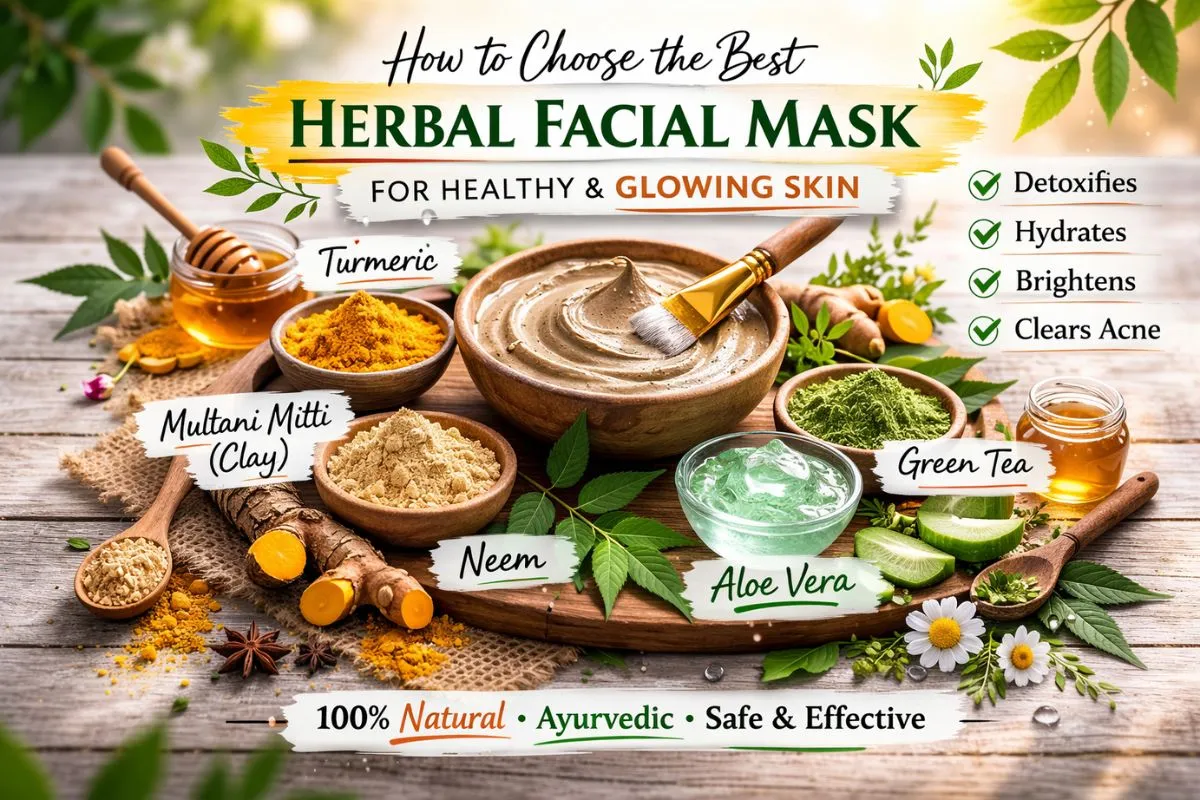
Many common herbs act through a few repeatable mechanisms: calming inflammation, neutralizing free radicals, fighting microbes, and providing enzymatic exfoliation. Ingredient performance varies with concentration, extraction method, and mask format, so evaluate each product as a delivery system rather than assuming effect from the plant name alone.
Turmeric provides anti-inflammatory and antioxidant benefits through curcumin and has clinical research supporting topical curcumin for certain inflammatory skin effects. Aloe vera soothes, hydrates, and supports barrier repair, while saffron contributes antioxidant and brightening effects in balanced formulas. Neem offers antimicrobial and anti-inflammatory action useful for acne-prone skin, and papaya contains papain, a mild chemical exfoliant that can sting compromised or highly sensitive skin. Green tea supplies EGCG to calm inflammation and regulate sebum, and besan (gram flour) works as an absorbent and mild physical exfoliant in DIY packs.
Step-by-step application: preparation, timing and aftercare
Begin with a clean face and a brief patch test behind the ear or on the inner forearm: apply a small dab, leave it for 10 to 15 minutes, then watch the area for up to 24 hours for redness, burning, or swelling. Check for interactions with prescription topicals such as retinoids or topical antibiotics and avoid masks over broken skin or active infections. If you use prescription actives, consult your clinician before introducing enzyme- or citrus-based masks.
Apply an even layer and be deliberate with thickness. For clay masks aim for about a 1 to 2 millimetre coating.Leave gel or cream masks for 15 to 20 minutes and clay or detox masks for 10 to 15 minutes, then rinse gently with lukewarm water, pat dry, and follow with a hydrating serum or moisturizer.
Always wear broad-spectrum sunscreen during the daytime after using resurfacing masks. If irritation appears, rinse immediately, apply a cool compress and a bland moisturizer, and pause use until the reaction subsides. Below, find guidance on picking and evaluating commercial options.
How to pick, evaluate and buy commercial masks
Start by prioritizing formulas that list the active herb or extract near the top of the ingredient list. Vague phrases like “botanical blend” without disclosure are a red flag, as are heavy fragrance, multiple strong essential oils, elevated denatured alcohol, or undisclosed preservatives. Certifications and third-party testing add confidence, but the ingredient list remains the primary evidence of quality.
Compare cost per use rather than headline price to judge real value. Divide the jar or bottle price by the number of recommended applications, and check whether the premium reflects measurable active concentrations or only luxe packaging. Transparent sourcing and small-batch production can justify higher cost when brands share extraction methods and potency.
Group masks by function before you buy and then apply a label checklist to your shortlist. Typical categories include clay or charcoal masks for oil control and pore clearing; enzyme masks (papaya, pumpkin) for texture and gentle exfoliation; gel or cream masks for hydration and barrier support; and ayurvedic face mask blends for multi-herb balance.
Read recent user reviews to spot repeated praise or reports of irritation, and prioritize formulas that list concentrations or extraction types. Pay attention to how the brand recommends patch testing and stores perishable products.
DIY herbal masks you can make today, with recipes and safety
These simple recipes use pantry or garden ingredients so you can test a DIY herbal facial mask without guesswork. Brightening mask: mix 1 tablespoon raw honey, 1 tablespoon plain yogurt, 2 teaspoons fresh lemon juice, 1/2 teaspoon turmeric powder, and 1 teaspoon jojoba or baobab oil if your skin tolerates oil. Apply to clean skin for 15 minutes, rinse with lukewarm water, and follow with a moisturizer. For sensitive skin, reduce frequency to once every two weeks and avoid sun exposure immediately after using lemon.
Hydrating mask: blend half a small cucumber with 1 tablespoon fresh aloe vera gel and 1 tablespoon plain Greek yogurt, then add 1/2 teaspoon honey or 1 teaspoon cooled green tea for extra soothing. Apply for 15 to 20 minutes, rinse, pat dry, and follow with a hydrating serum and moisturizer; use two to three times weekly for dry skin. For acne control, mix 1/2 teaspoon turmeric, 1 tablespoon raw honey, and 1 teaspoon yogurt for a 10 to 15 minute application once or twice weekly. A clay option combines 1 tablespoon fuller’s earth or kaolin with 1 teaspoon neem powder and enough water to form a paste; apply for 10 minutes and rinse, and avoid clay on open lesions.
Or you can buy Hudira`s herbal facial mask which includes all these ingredients to boot your glow naturally without any side effects.
Store perishable blends in the refrigerator for 24 to 48 hours and discard any mixture that changes smell, color, or texture. Avoid combining strong actives such as prescription topicals or concentrated acids with enzyme or citrus masks, and consult a clinician if you have chronic skin conditions or are on medication. Choose recipes by skin type: match clays and antimicrobial botanicals to oily skin, humectant-rich masks to dry skin, and fragrance-free, calming mixes for sensitive skin.
Ready to Try the Right Herbal Facial Mask?
Now that you understand how to choose the best herbal facial mask for your skin type, your next step is simple:
- Identify your primary skin concern
- Choose one mask with a proven herbal active
- Patch test it
- Track your skin for 7 days
If you’re looking for thoughtfully formulated herbal skincare made with carefully selected plant ingredients, explore Hudira’s herbal range designed to balance, soothe, and restore skin naturally.
Your glow isn’t gone — it just needs the right support.
Final thoughts on picking the right herbal facial mask
Picking the right herbal facial mask comes down to matching the mask type to your main skin concern and understanding what each herb contributes. Clay and charcoal address oil control and pore clearing, soothing botanicals calm sensitivity, and antioxidant-rich herbs brighten and protect. When shopping, read labels for active herbs and concentrations, and always patch-test new products.
Your next step is practical: pick a single skin concern, choose a herbal facial mask that lists a recommended active, patch-test it today, and log results for seven days so you can make evidence-based choices going forward.
FAQs:
Q. How often should I use a herbal facial mask?
Most people can use a herbal facial mask 1–3 times per week depending on skin type. Oily skin may benefit from clay masks twice weekly, while dry or sensitive skin should use hydrating or calming masks once or twice weekly.
Q. Can I use a herbal facial mask every day?
Daily use is generally not recommended, especially for clay or exfoliating masks. Overuse can disrupt the skin barrier. Gentle hydrating masks may be used more frequently if the formula is mild.
Q. Is a herbal facial mask safe for sensitive skin?
Yes, but it depends on the ingredients. Look for calming herbs like chamomile, oat, or aloe vera and avoid fragrance, citrus, and strong essential oils. Always perform a patch test first.
Q. Which herbal facial mask is best for acne?
Clay-based masks with neem, turmeric, or green tea work well for acne-prone skin because they help absorb excess oil and reduce inflammation.
Q. Can I make a herbal facial mask at home?
Yes, simple DIY masks using honey, aloe vera, yogurt, or turmeric can be safe if properly measured and patch-tested. Avoid strong acids or citrus if your skin is sensitive.
Q. How long should I leave a herbal facial mask on?
Most clay masks should stay on for 10–15 minutes, while gel or cream masks can remain for 15–20 minutes. Avoid letting clay masks fully crack and over dry on the skin.

One comment
Pingback:
7 Herbal Beauty Rituals for Relaxation and Glowing Skin