
No products in the cart.
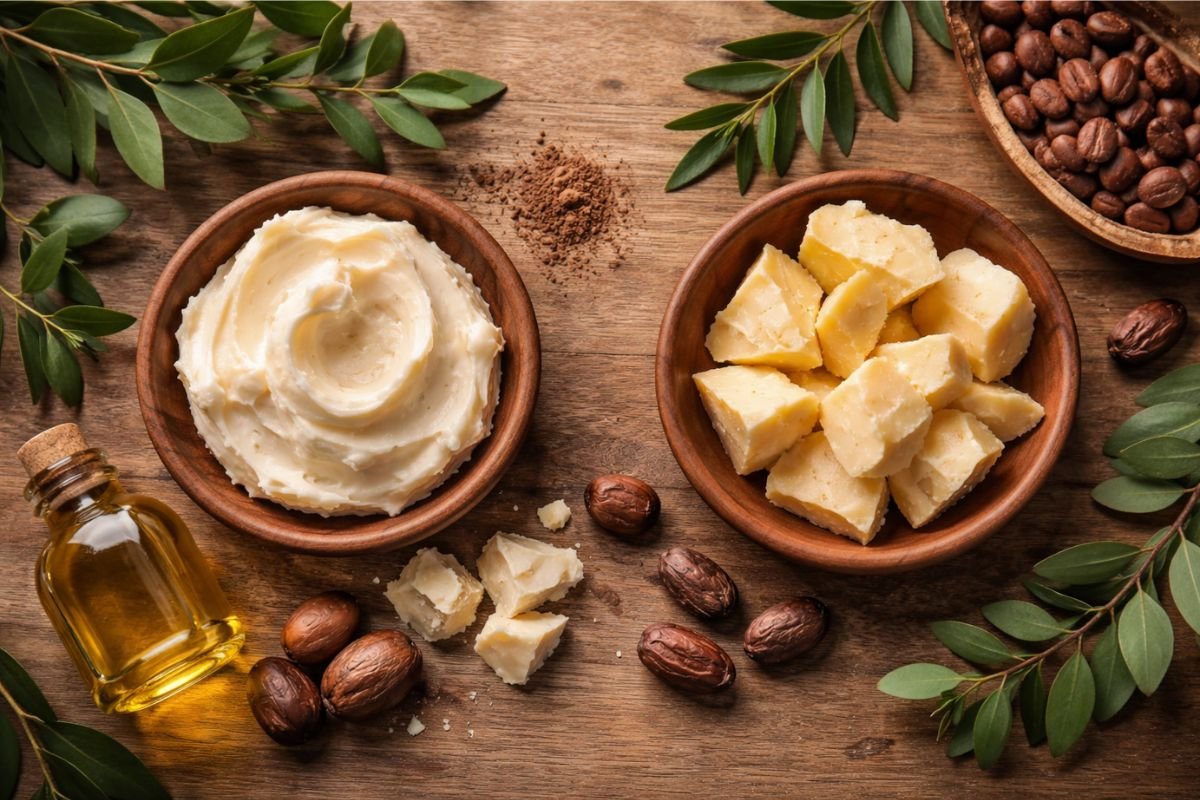
When it comes to natural skincare, few ingredients spark as much curiosity as shea vs cocoa butter. Both are celebrated for their deeply nourishing properties, rich textures, and skin-protective benefits. They appear in body butters, creams, balms, and even facial products but choosing between them isn’t always straightforward. While they may look similar at first glance, their effects on your skin can be surprisingly different.
So, how do you decide which one your skin truly needs? Is it about texture, absorption, scent, or skin type? In this in-depth guide, we’ll unpack the real story behind shea vs cocoa butter, revealing what makes each unique, how they work on the skin, and when one may be better than the other. By the end, you’ll know exactly which butter deserves a place in your skincare routine and why.
What Is Shea Butter?
Shea butter is a creamy, nutrient-rich fat extracted from the nuts of the African shea tree (Vitellaria paradoxa). Used for centuries in traditional skincare, shea butter is revered for its soothing, repairing, and deeply moisturizing qualities.
Rich in fatty acids and natural antioxidants, shea butter helps strengthen the skin barrier and lock in moisture. This makes it a favorite for dry, sensitive, and compromised skin. In the ongoing debate of cocoa butter vs shea butter, shea butter often stands out for its versatility and gentler feel on the skin.
Key Characteristics of Shea Butter
- Soft, creamy texture
- Mild, nutty scent
- Absorbs relatively quickly
- Suitable for face and body
- Well-tolerated by sensitive skin
What Is Cocoa Butter?
Cocoa butter is derived from cocoa beans, the same beans used to make chocolate. It is solid at room temperature and melts upon contact with skin, forming a protective layer that seals in moisture.
In the comparison of shea butter vs cocoa butter, cocoa butter is best known for its intense richness and long-lasting hydration. It’s widely used in body care products designed for extremely dry skin, stretch marks, and rough areas.
Key Characteristics of Cocoa Butter
- Firm, dense texture
- Naturally chocolate-like aroma
- Slower absorption
- Strong occlusive properties
- Best for body care and dry climates
Shea vs Cocoa Butter: A Quick Comparison
| Feature | Shea Butter | Cocoa Butter |
| Texture | Creamy & soft | Hard & dense |
| Absorption | Medium-fast | Slow |
| Scent | Mild, nutty | Chocolate-like |
| Skin Feel | Lightweight, breathable | Rich, protective |
| Best For | Sensitive, combination skin | Very dry skin |
| Face Use | Yes (in moderation) | Usually not recommended for all skin types than dry and non-acne prone skin |
This table alone helps clarify the difference between shea and cocoa butter, but let’s dive deeper.
Shea vs Cocoa Butter for Skin: What’s the Real Difference?
1. Texture & Absorption
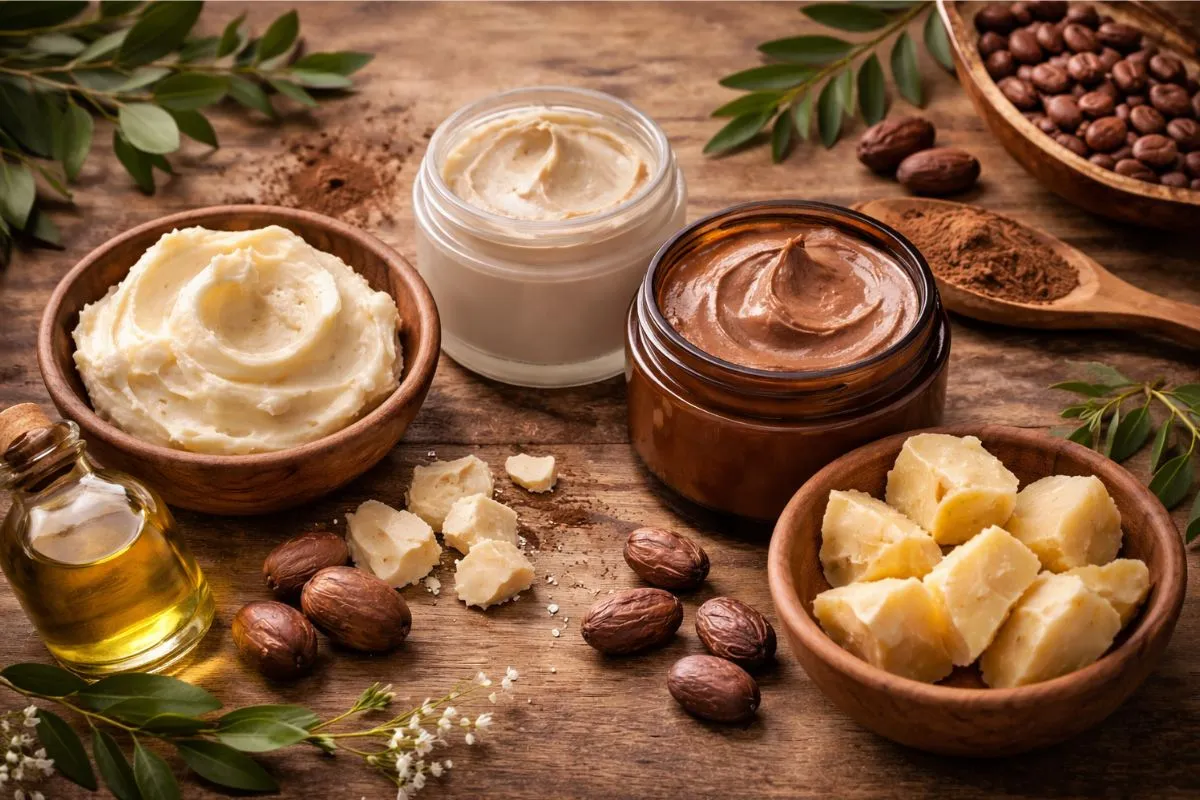
A key distinction in shea butter vs cocoa butter lies in how each interacts with the skin after application. Shea butter has a softer consistency that melts quickly with body heat, allowing it to glide smoothly and sink in without lingering residue. This makes it comfortable for regular use, even in areas that don’t need heavy occlusion. Cocoa butter is firmer and takes longer to melt, creating a richer layer on the skin’s surface. Because it absorbs more slowly, it is better suited for areas that require long-lasting moisture rather than quick absorption.
2. Skin Barrier Support
Both ingredients play an important role in protecting the skin barrier, but they do so through different mechanisms. Shea butter supports the skin by replenishing lipids and soothing stressed or weakened skin, helping improve overall comfort and resilience. It works well for skin that feels tight, reactive, or easily irritated. Cocoa butter, in contrast, acts more like a protective shield by forming a seal over the skin. This helps reduce moisture loss and shields skin from environmental dryness, making it especially useful in cold or dry conditions.
3. Pore Friendliness
Pore compatibility is an important factor when comparing cocoa butter vs shea butter for skin, particularly for facial use. Shea butter is often favored because it feels lighter on the skin and is less likely to cause a congested sensation when used in moderation. It suits a wider range of skin types, including combination skin. Cocoa butter’s dense nature can feel heavy, especially on the face, and may overwhelm skin that already produces excess oil. For this reason, cocoa butter is typically better reserved for body care rather than daily facial routines.
Shea Butter Benefits for Skin
Shea butter is a powerhouse ingredient in natural skincare. Its benefits go beyond basic moisturization.
Deep Hydration Without Heaviness
Shea butter delivers long-lasting moisture by replenishing the skin’s natural lipids without creating a greasy or suffocating layer. It absorbs well into the skin, helping maintain softness while still feeling comfortable throughout the day. This balanced hydration is why it’s often preferred in shea butter versus cocoa butter comparisons for facial and daily skincare use.
Calms Sensitive & Irritated Skin
One of shea butter’s standout qualities is its ability to soothe stressed skin. It helps reduce the feeling of dryness, tightness, and discomfort caused by weather changes or over-cleansing. Regular use can support skin that is prone to redness or sensitivity by restoring comfort and balance.
Supports Skin Repair
Shea butter contributes to a stronger skin barrier by nourishing the outer layer of the skin. This helps the skin retain moisture more effectively and improves its ability to recover from everyday environmental stress. Over time, consistent use can lead to skin that feels healthier, smoother, and more resilient.
Multi-Purpose Use
Shea butter’s gentle yet effective nature makes it incredibly versatile across skincare routines. It can be used in face creams, body lotions, lip care, and hand balms without overwhelming the skin. This adaptability makes it a staple ingredient in natural and herbal skincare formulations.
Cocoa Butter Benefits for Skin
Cocoa butter shines when intense moisture is needed.
Locks in Moisture
Cocoa butter is highly effective at sealing moisture into the skin due to its dense, occlusive structure. It forms a protective layer that slows down water loss, helping skin stay hydrated for longer periods. This makes it especially beneficial for very dry, rough, or weather-exposed skin that needs lasting moisture retention.
Improves Skin Softness
With consistent use, cocoa butter helps soften the skin’s surface by smoothing rough texture and improving overall suppleness. Its rich fatty acid content conditions the skin, making it feel more comfortable and less tight. Over time, skin appears smoother and better nourished, especially in dry-prone areas.
Ideal for Body Care
Cocoa butter is particularly well-suited for body care because it provides deep nourishment where skin is thicker and drier. Areas such as elbows, knees, heels, and stretch-prone zones benefit from its long-lasting, protective feel. This is why, in the discussion of shea butter or cocoa butter, cocoa butter is often preferred for intensive body moisturization rather than facial use.
Shea Butter vs Cocoa Butter: Which Is Better for Your Skin Type?
Dry Skin
Both butters can benefit dry skin, but cocoa butter is especially effective in extreme dryness due to its dense, protective nature. It helps reduce moisture loss by forming a long-lasting barrier over the skin. This makes it ideal for harsh weather, winter care, or areas prone to cracking. Shea butter also hydrates dry skin but feels lighter and more breathable for everyday comfort.
Sensitive Skin
Sensitive skin tends to respond better to shea butter because of its gentle and soothing properties. It helps calm discomfort, reduce dryness-related irritation, and support the skin’s natural barrier. Shea butter’s lighter texture makes it less likely to overwhelm reactive skin. For those prone to sensitivity, it is often the safer option in shea butter vs cocoa butter for skin comparisons.
Oily or Acne-Prone Skin
For oily or acne-prone skin, shea butter is generally the preferred choice when used sparingly. It provides nourishment without feeling excessively heavy on the skin. Cocoa butter’s thick and occlusive texture may feel too rich and can contribute to a congested sensation. This is why cocoa butter is usually avoided in facial routines for oily skin types.
Combination Skin
Combination skin benefits from ingredients that can balance both dry and oily areas, and shea butter fits this need well. It moisturizes dry patches without overwhelming oil-prone zones. Its adaptable texture allows it to work comfortably across different areas of the face or body. This flexibility makes shea butter more suitable than cocoa butter for mixed skin concerns.
This is why many dermatology-inspired routines favor shea butter vs cocoa butter for skin when recommending facial products.
How to Use Shea Butter Correctly
- Apply a small amount on damp skin
- Use at night for face care
- Warm between palms before applying
- Ideal for daily use
Shea butter works best when used consistently but sparingly.
How to Use Cocoa Butter Correctly
- Best applied after showering
- Focus on dry body areas
- Ideal for winter skincare routines
- Avoid heavy use on face
Understanding proper use is key when deciding shea butter or cocoa butter for your routine.
Can You Mix Shea and Cocoa Butter?
Yes and many high-quality body butters do exactly that. Combining both allows you to enjoy the softness of shea with the protective seal of cocoa butter. This blend approach is becoming popular in premium herbal formulations.
Shea vs Cocoa Butter in Herbal Skincare
At Hudira, we believe skincare should work with your skin, not against it. That’s why herbal formulations matter. Shea butter aligns beautifully with botanical extracts, oils, and herbs—making it a cornerstone ingredient in natural skincare.
If you’re looking for gentle, effective, plant-powered care, shea-based formulations often offer a better balance than heavy butters alone.
Final Verdict: Shea vs Cocoa Butter — Which Should You Choose?
The choice between shea vs cocoa butter isn’t about which is “better” overall—it’s about what your skin needs right now. Shea butter offers balance, comfort, and versatility, while cocoa butter delivers intense nourishment and protection.
If your goal is healthy, calm, naturally glowing skin, shea butter often becomes the everyday hero especially when blended thoughtfully with herbal ingredients.
Ready to experience the power of plant-based skincare?
Explore Hudira’s herbal formulations, crafted with skin-loving ingredients designed to nourish, protect, and restore your skin—naturally.
FAQs
Q. Is shea butter better than cocoa butter?
For sensitive or facial skin, yes—shea butter is often the better choice.
Q. Is shea butter better than cocoa butter for daily use?
Shea butter is more suitable for everyday use due to its lighter feel.
Q. Is shea butter better than cocoa butter for acne-prone skin?
Generally, yes. Shea butter is less likely to feel heavy on pores.
Q. Is shea butter better than cocoa butter for the face?
Yes, when used in small amounts, shea butter is more face-friendly.
Q. Is shea butter better than cocoa butter in hot climates?
Shea butter performs better in humid or warm weather conditions.


Add comment