
No products in the cart.
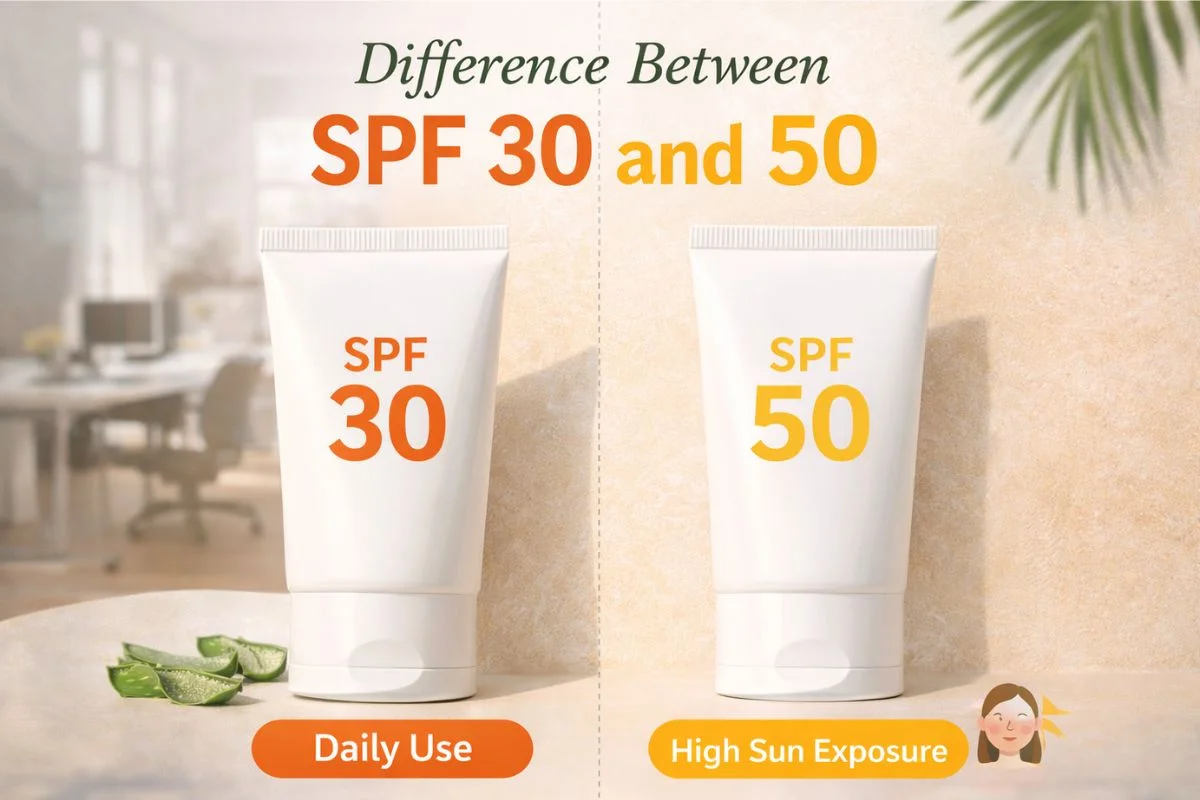
Sun protection looks simple on the surface, but the truth is it’s confusing. Standing in front of a shelf filled with sunscreens, many people pause at one question: what’s the real difference between SPF 30 and 50, and does it actually matter for my skin? Some assume higher SPF means double protection, while others believe SPF 30 is more than enough for everyday use. The result? Guesswork instead of informed skincare.
Here’s where it gets interesting. The difference between SPF 30 and 50 is not as dramatic as marketing makes it seem but it can make a meaningful difference depending on your skin type, lifestyle, and how you use sunscreen. Once you understand how SPF works, you’ll never choose sunscreen blindly again. Let’s break it all down clearly, honestly, and without the hype.
What Does SPF Stand For and Why It Matters
SPF stands for Sun Protection Factor. It measures how well a sunscreen protects your skin from UVB rays, the type of ultraviolet radiation responsible for sunburn, surface skin damage, and increased skin cancer risk.
SPF is not about how “strong” a sunscreen is, it’s about how much UVB radiation reaches your skin when sunscreen is applied correctly. This is where many misconceptions begin, and understanding this alone helps clarify the difference between SPF 30 and 50.
Understanding the Difference Between SPF 30 and 50 (In Simple Terms)
Let’s simplify the science.
- SPF 30 blocks about 97% of UVB rays
- SPF 50 blocks about 98% of UVB rays
At first glance, a 1% difference may sound insignificant. But here’s the catch: that 1% represents about 50% more UV radiation passing through when compared proportionally. This subtle difference becomes important for people with sensitive, acne-prone, or hyperpigmentation-prone skin.
This is the core difference between SPF 30 and 50 not double protection, but extra insurance for skin that needs more care.
Difference Between 30 and 50 Sunscreen: A Quick Comparison
| Feature | SPF 30 | SPF 50 |
| UVB Protection | ~97% | ~98% |
| Best for | Daily indoor / short exposure | Long outdoor exposure |
| Ideal skin types | Normal to oily | Sensitive, acne-prone |
| Reapplication needed | Every 2 hours | Every 2 hours |
| Protection duration | Does NOT last longer | Does NOT last longer |
This table alone clears one huge myth: SPF 50 does not last longer than SPF 30.
Does SPF Mean Time in the Sun? Let’s Clear This Up
A common misunderstanding is that SPF equals minutes of protection. For example, people think SPF 30 protects for 300 minutes and SPF 50 for 500 minutes. In reality, SPF testing happens under controlled lab conditions not real life.
Sweat, wiping your face, humidity, and uneven application all reduce effectiveness. That’s why dermatologists agree: reapplication every two hours is essential, regardless of whether you choose SPF 30 or SPF 50.
So when evaluating the difference between SPF 30 and 50, remember—application matters more than the number.
Is SPF 30 Enough for Daily Use?
One of the most searched questions is: is SPF 30 enough?
For many people, yes—SPF of 30 is enough for daily protection, especially if you:
- Spend most of your time indoors
- Have minimal direct sun exposure
- Reapply when outdoors
- Use broad-spectrum sunscreen
For office workers, short commutes, and everyday errands, SPF 30 offers reliable coverage. However, this doesn’t mean SPF 50 is unnecessary, it simply serves a different purpose.
When SPF 50 Becomes the Better Choice
SPF 50 is especially helpful if you:
- Have very fair or sensitive skin
- Struggle with acne marks or pigmentation
- Use active skincare (retinol, acids)
- Spend extended time outdoors
- Live in hot, high-UV climates
In these cases, the difference between 30 and 50 sunscreen becomes more meaningful because your skin has less margin for error.
Best Sunscreen for Oily Skin: SPF 30 or SPF 50?
People with oily or acne-prone skin often avoid sunscreen, fearing breakouts. The truth is, the best sunscreen for oily skin isn’t about SPF number—it’s about formulation.
Look for:
- Gel-based or lightweight textures
- Non-comedogenic labels
- No heavy fragrance or pore-clogging oils
Both SPF 30 and SPF 50 can work beautifully for oily skin if the formula is right. The real mistake is skipping sunscreen altogether.
Hand Lotion with SPF: An Overlooked Essential
Your hands age faster than your face and yet most people ignore them. Using a hand lotion with SPF helps prevent:
- Sunspots
- Wrinkles
- Loss of elasticity
Hands are exposed daily, even during short outdoor moments. A hand lotion with SPF of 30 or higher is an easy way to maintain youthful-looking skin without effort.
How Much Sunscreen Should You Actually Apply?
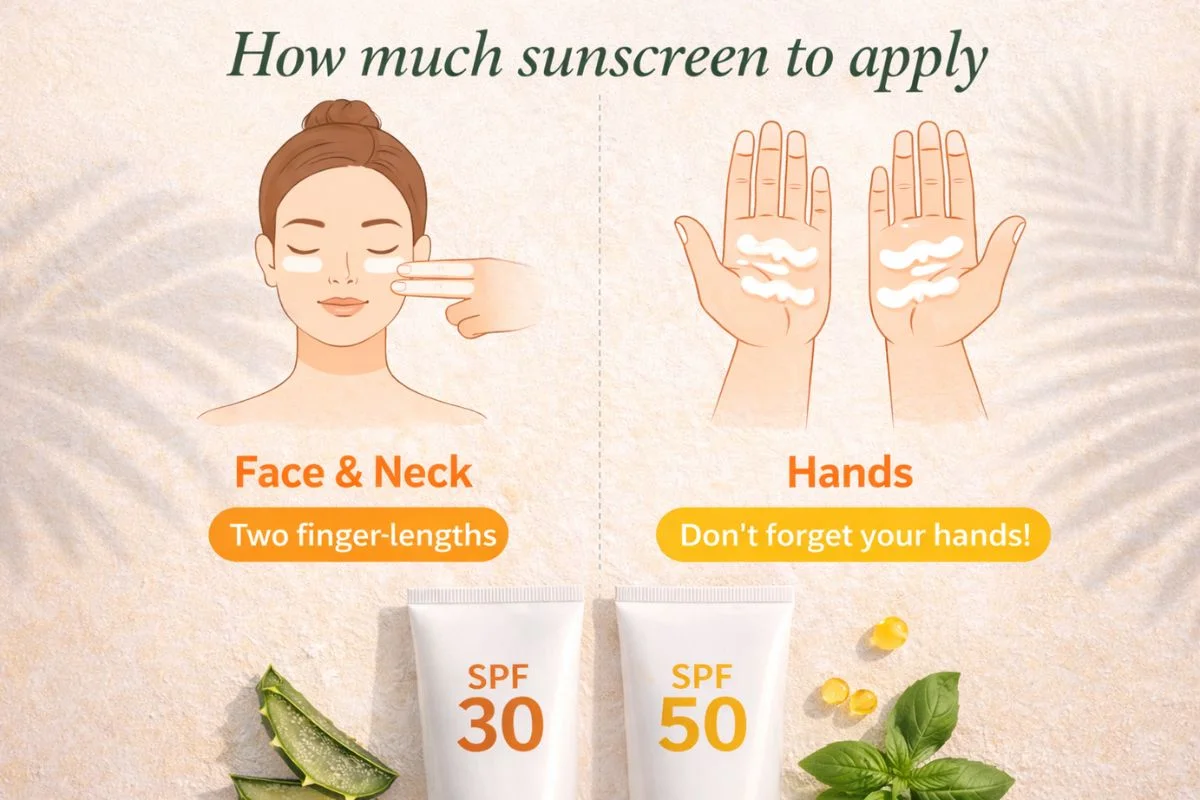
Even the best SPF fails if you don’t apply enough. For your face and neck, you need about two finger-lengths of sunscreen. Under-application is one of the biggest reasons people still tan or burn despite using SPF 50.
This is another reason the difference between SPF 30 and 50 can feel dramatic in real life because most people apply far less than recommended.
Difference Between SPF 30 and 50 for Skin Health Long Term
Over time, consistent sunscreen use helps:
- Prevent premature aging
- Reduce pigmentation
- Protect skin barrier
- Maintain even tone
Whether you choose SPF 30 or SPF 50, daily use matters more than the number itself. Think of SPF as long-term skin investment, not a one-time shield.
Why Broad-Spectrum Protection Matters More Than SPF Alone
SPF mainly measures UVB protection, but UVA rays penetrate deeper into the skin and cause aging. Always choose a broad-spectrum sunscreen to protect against both.
Without UVA protection, even SPF 50 won’t fully protect your skin.
SPF Myths You Should Stop Believing
- SPF 50 means all-day protection
- SPF 30 is “too weak”
- Higher SPF replaces hats or shade
- Dark skin doesn’t need sunscreen
Understanding these myths helps you make smarter choices and truly understand the difference between SPF 30 and 50.
Why Sunscreen Works Best with a Complete Skincare Routine
Sunscreen protects, but skin health thrives on balance. Pairing SPF with calming, nourishing skincare supports the skin barrier and reduces irritation.
This is where herbal skincare shines.
Final Thoughts:
The difference between SPF 30 and 50 isn’t about choosing the “stronger” product, it’s about choosing the right one for your lifestyle. SPF 30 is excellent for everyday use, while SPF 50 offers extra reassurance when sun exposure increases.
At Hudira, we believe in supporting your skin naturally before and after sun exposure. Pair your daily sunscreen with Hudira’s herbal face masks to soothe, nourish, and restore your skin after long days in the sun.
Protect smart. Heal naturally. Glow confidently.
Explore Hudira’s herbal masks and let your skin feel the difference.
FAQs
Q. What does the SPF number mean?
It indicates how much UVB radiation is blocked when sunscreen is applied correctly.
Q. How long will SPF 50 last?
About two hours—reapplication is still necessary.
Q. Is SPF 30 enough for daily use?
Yes, for most people with limited sun exposure.
Q. Is higher SPF sunscreen better?
Only slightly, application and consistency matter more.
Q. What does SPF stand for?
SPF stands for Sun Protection Factor.


3 comments
Pingback:
20 Dermatologist Suggested Skin Care Tips You`d LovePingback:
10 Desi Skin Care Myths That Need to Go: What Actually WorksPingback:
How to Achieve a Naturally Pretty No Make Up Look in Summer