
No products in the cart.
Sun protection isn’t just another skincare step, it’s your skin’s first line of defense against premature aging, sunburn, and long-term damage. Yet when you’re standing in front of a shelf full of sunscreens, one question quietly steals the spotlight: SPF 50 vs SPF 60—does that small number change really matter?
At first glance, SPF 60 sounds stronger, safer, and more protective. But skincare isn’t always that straightforward. Behind those numbers lies a mix of science, myths, marketing, and real-world skin behavior. Choosing the right SPF isn’t about chasing the highest number, it’s about understanding what your skin actually needs.
Now here’s the twist most brands won’t tell you. The difference between SPF 50 and SPF 60 looks impressive on paper, but on your skin, the story shifts. What if the real protection doesn’t come from the number at all? What if the way you apply sunscreen matters more than upgrading the SPF level? Let’s unpack the truth and help you make a confident, skin-smart choice.
Understanding SPF: What Do These Numbers Really Mean?
Before comparing SPF 50 vs SPF 60, it’s important to understand what SPF actually measures.
SPF stands for Sun Protection Factor. It indicates how well a sunscreen protects your skin from UVB rays, the type of ultraviolet radiation responsible for sunburn and surface-level skin damage.
What Does SPF 50 Mean on Sunscreen?
When people ask “what does SPF 50 mean on sunscreen?”, the simple answer is this:
SPF 50 allows only 1/50th of UVB radiation to reach your skin, blocking about 98% of UVB rays when applied correctly.
That sounds powerful, and it is. But “correctly” is the keyword most people overlook.
Is Higher SPF Levels Always Better?
Let’s break down common SPF levels and how much UVB protection they provide:
| SPF Level | UVB Rays Blocked |
| SPF 30 | ~97% |
| SPF 50 | ~98% |
| SPF 60 | ~98.3% |
| SPF 100 | ~99% |
Notice something? The jump from SPF 50 to SPF 60 is very small. That tiny fraction doesn’t automatically translate to noticeably better skin protection especially in real-life use.
This is where the SPF 50 vs SPF 60 debate becomes more about practical skincare, not numbers.
SPF 50 vs SPF 60: What’s the Real Difference?
Protection Difference (In Reality)
- SPF 50 blocks around 98% of UVB rays
- SPF 60 sunscreen blocks roughly 98.3%
That extra 0.3% sounds reassuring, but in everyday use, factors like sweat, humidity, under-application, and forgetting to reapply have a far bigger impact on protection than the SPF jump.
The Psychological Trap of Higher SPF
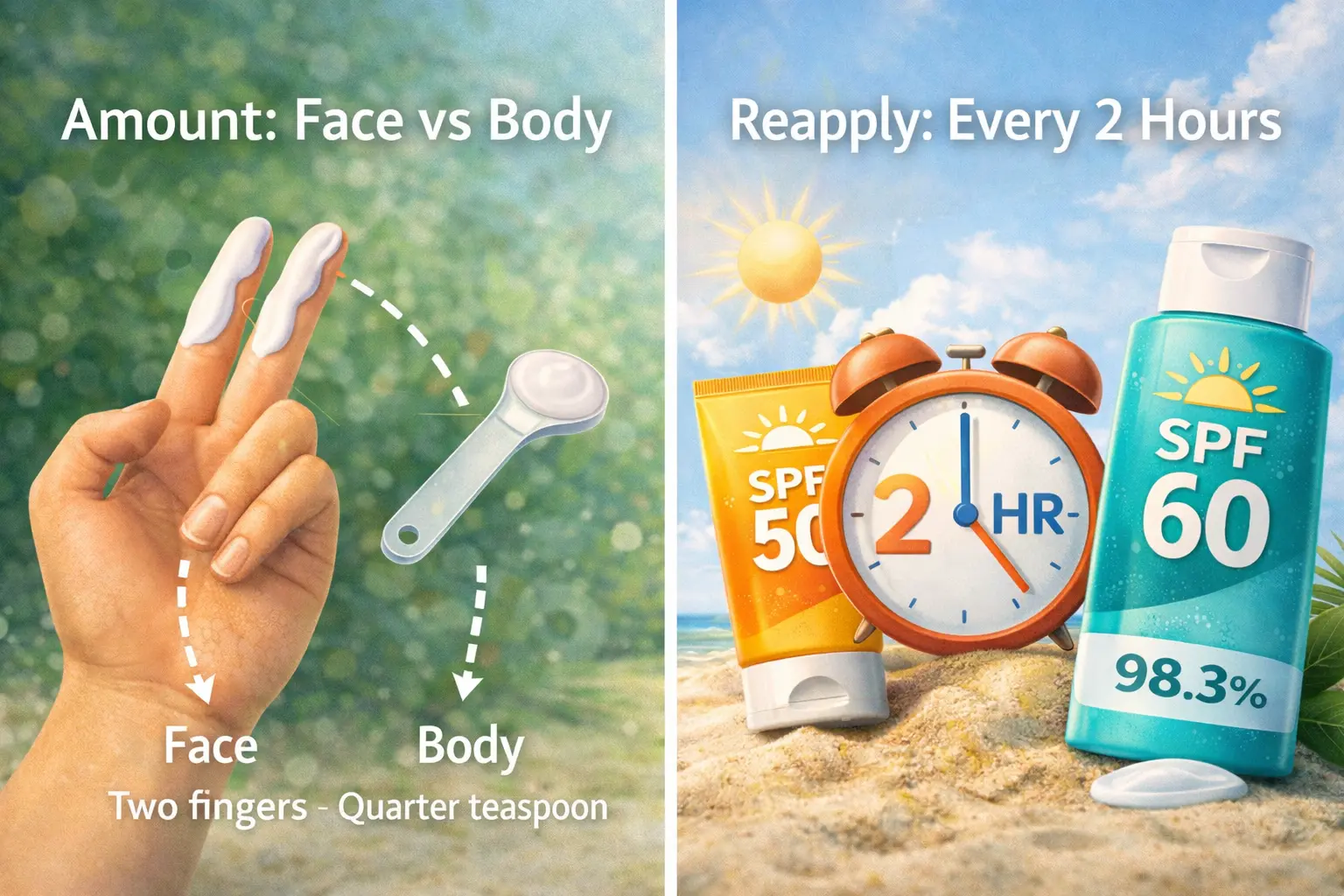
Many people using SPF 60 sunscreen unknowingly apply less product or delay reapplication, assuming higher SPF lasts longer. In reality, all SPF levels need reapplication every 2 hours.
This false sense of security is why dermatologists often say:
A well-applied SPF 50 beats a poorly applied SPF 60.
Is SPF 50 Good Enough for Daily Use?
One of the most common questions people ask is: is SPF 50 good for everyday sun exposure?
Yes, SPF 50 is more than sufficient for daily use when:
- Applied generously
- Reapplied regularly
- Used as a broad-spectrum sunscreen (protects against UVA + UVB)
For most people living normal indoor-outdoor lives, SPF 50 offers excellent daily protection without feeling heavy or greasy.
When Does SPF 60 Sunscreen Make Sense?
While SPF 50 works for most people, SPF 60 sunscreen may be a better choice if you:
- Have very fair or sun-sensitive skin
- Spend long hours outdoors
- Live in high-UV or coastal climates
- Sweat heavily or swim often
- Have a history of sun damage or hyperpigmentation
In these cases, SPF 60 adds a small safety buffer, especially if reapplication is delayed.
What Matters More Than SPF Level? (This Is Key)
Here’s the skincare truth:
1. Application Amount
Most people apply less than half the recommended sunscreen amount. For the face alone, you need roughly ½ teaspoon.
2. Reapplication
No SPF—50 or 60—lasts all day. Reapply every 2 hours, especially outdoors.
3. Broad-Spectrum Protection
SPF measures UVB only. UVA rays cause aging, pigmentation, and collagen damage. Always choose broad-spectrum formulas.
4. Skin Compatibility
The best SPF sunscreen face product is the one your skin tolerates daily without irritation, breakouts, or heaviness.
Choosing the Best SPF Sunscreen for Your Face
When selecting the best SPF sunscreen face option, focus on more than just SPF numbers.
By Skin Type
- Oily / acne-prone: lightweight gel or mineral sunscreen
- Dry skin: creamy or lotion-based formulas
- Sensitive skin: fragrance-free, mineral-based sunscreen
Texture & Finish Matter
If sunscreen feels uncomfortable, you won’t reapply and that defeats the purpose.
SPF 50 vs SPF 60 for Natural Skincare Routines
For those following a herbal or natural skincare routine, SPF 50 often blends better into daily care without clogging pores or layering issues.
Pair sunscreen with:
- Antioxidants (like aloe or green tea)
- Gentle cleansers
- Barrier-supporting moisturizers
This combination supports long-term skin health beyond sun protection alone.
Common Myths About SPF Levels
Myth 1: SPF 60 lasts longer than SPF 50
False. Reapplication rules are the same.
Myth 2: Higher SPF means no sun damage
False. UVA protection and reapplication matter more.
Myth 3: SPF is only for sunny days
False. UV rays penetrate clouds and windows.
Final Verdict: SPF 50 vs SPF 60—Which Should You Choose?
If you want a clear, honest answer:
- SPF 50 is ideal for daily use, urban life, and consistent skincare routines
- SPF 60 sunscreen is helpful for intense sun exposure or extra-sensitive skin
The real winner isn’t the higher number—it’s proper use, consistency, and choosing a sunscreen your skin loves enough to wear every day.
Call to Action
Healthy skin isn’t built overnight, it’s protected daily. Whether you choose SPF 50 or SPF 60, make sunscreen a non-negotiable habit. Explore gentle, skin-supportive routines that pair sun protection with natural nourishment, and let your skin glow with confidence every single day.
FAQs:
Q. Is SPF 50 good for everyday use?
Yes, SPF 50 is excellent for daily protection when applied properly and reapplied regularly.
Q. What does SPF 50 mean on sunscreen?
It means the sunscreen blocks about 98% of UVB rays when applied in the recommended amount.
Q. Does SPF 60 sunscreen protect significantly more than SPF 50?
Only slightly. The real difference comes from application and reapplication habits.
Q. Which SPF levels are best for the face?
SPF levels between 30–60 are ideal for facial skin when combined with broad-spectrum protection.
Q. What is the best SPF sunscreen face option?
The best option is one that suits your skin type, feels comfortable, and encourages daily use.


One comment
Pingback:
Why Is Tinted Body Sunscreen Suddenly So Popular?