
No products in the cart.

Natural skincare isn’t just a trend anymore, it’s a conscious choice. As people move away from harsh chemicals and overloaded formulations, herbal oils are making a powerful comeback. Among them, rosemary oil for face has quietly earned a reputation as a skin-reviving botanical that does more than just smell refreshing. From balancing oily skin to supporting clearer, healthier-looking complexion, rosemary has a story that goes far beyond your kitchen shelf.
But here’s the real question most people hesitate to ask: Is rosemary oil actually safe for facial skin? Can it really help your skin glow or could it cause irritation if used the wrong way? In this guide, we’re breaking through the confusion. You’re about to discover the real benefits, the science, the safety rules, and the exact way to use rosemary oil for your face so you can decide confidently, without fear or guesswork.
What Is Rosemary Oil? (And Why It Matters for Your Face)
Rosemary oil is extracted from the aromatic leaves of Rosmarinus officinalis, a Mediterranean herb known for its antioxidant and purifying properties. When people talk about rosemary oil for skin, they’re usually referring to rosemary essential oil, which is highly concentrated and potent.
This potency is exactly why rosemary oil can be powerful for skincare but also why it must be used correctly, especially on delicate facial skin.
Important distinction:
- Rosemary essential oil → concentrated, must be diluted
- Rosemary infused oil → gentler, infused in a carrier oil
- Rosemary extract → commonly used in cosmetic formulations
For facial use, understanding this difference is non-negotiable.
Is Rosemary Oil Good for Skin?
Yes—when diluted properly and used thoughtfully, rosemary oil can support skin health in several ways. Its natural compounds such as rosmarinic acid, cineole, and antioxidants work together to cleanse, balance, and refresh the skin.
However, rosemary oil is not a miracle cure, and it’s not meant to be used raw or undiluted. Its real power lies in supporting your skin’s natural processes, not overpowering them.
Rosemary Oil Benefits for Skin (Backed by Science + Tradition)
Here’s why rosemary oil has remained a skincare staple across cultures and why rosemary oil benefits for skin are still relevant today.
1. Helps Balance Oily and Acne-Prone Skin
Rosemary oil is known for its purifying nature. It helps reduce excess oil buildup, which can minimize clogged pores and breakouts when used correctly.
2. Supports Clearer-Looking Skin
Thanks to its antimicrobial properties, rosemary oil for face may help reduce acne-causing bacteria, making it a supportive ingredient for blemish-prone skin.
3. Boosts Skin Vitality and Glow
The antioxidants in rosemary oil help fight environmental stressors that contribute to dullness. Over time, this can support a healthier, more radiant complexion.
4. Helps Reduce the Appearance of Enlarged Pores
By balancing oil production and improving circulation, rosemary oil for skin can help pores appear more refined.
5. Supports Skin Renewal
Traditionally, rosemary has been used to stimulate circulation. Improved blood flow means better nutrient delivery to skin cells essential for a fresh, awake look.
Rosemary Oil for Face: Which Skin Types Can Use It?
Not all skin types are the same, and rosemary oil should never be used blindly.
Best suited for:
Use with caution if you have:
- Sensitive skin
- Rosacea
- Compromised skin barrier
Avoid if:
- You are pregnant (unless approved by a professional)
- You have epilepsy or high blood pressure
- Your skin is inflamed or broken
How to Use Rosemary Oil for Face Safely (Step-by-Step)
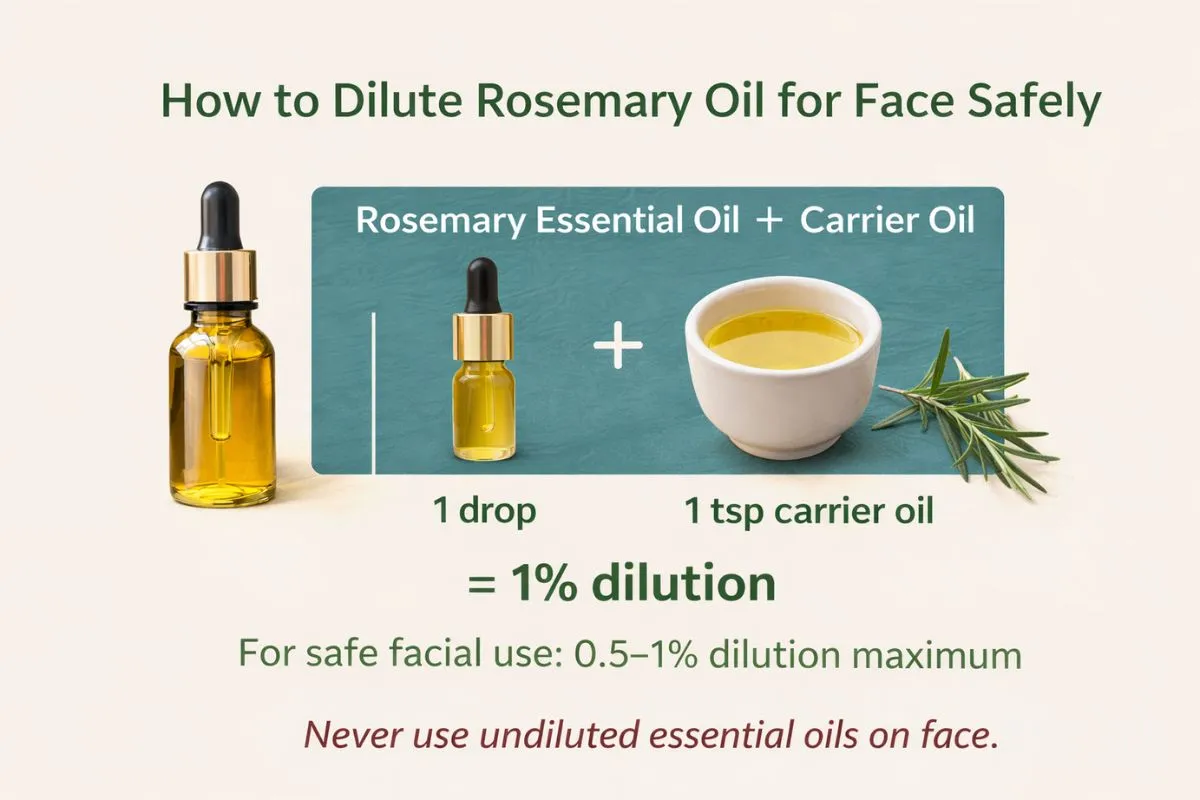
Step 1: Always Dilute (Non-Negotiable)
For facial skin, use 0.5%–1% dilution only.
Simple dilution guide:
- 1 drop rosemary essential oil
- 1 teaspoon (5 ml) carrier oil (jojoba, sunflower, argan)
This dilution makes rosemary for face gentle yet effective.
Step 2: Choose the Right Carrier Oil
- Oily skin: Jojoba oil
- Dry skin: Sweet almond or argan oil
- Sensitive skin: Sunflower oil
Step 3: Patch Test First
Apply a small amount behind your ear or inner arm. Wait 24 hours.
Step 4: Application Method
- Cleanse your face
- Apply 2–3 drops of the diluted blend
- Gently massage upward
- Use at night, 2–3 times a week
Can You Use Rosemary Oil Overnight on Face?
Yes—but only when diluted properly.
Overnight use allows rosemary oil for skin to work slowly without exposure to sun or environmental stress. However:
- Start with 2 nights per week
- Stop immediately if irritation occurs
- Never apply near eyes
Common Mistakes to Avoid When Using Rosemary Oil for Face
- Using undiluted essential oil
- Applying daily without tolerance testing
- Mixing with harsh actives (retinol, acids)
- Assuming “natural” means “risk-free”
Smart skincare is about balance, not overload.
Rosemary for Face in a Natural Skincare Routine
If you’re building a herbal routine, rosemary oil works best when paired with calming, supportive ingredients like:
- Aloe vera
- Rose water
- Jojoba oil
At Hudira, we believe natural skincare should support the skin barrier, not fight it.
Final Thoughts: Is Rosemary Oil Worth It for Facial Skin?
When used with respect and knowledge, rosemary for face can be a beautiful addition to a natural skincare routine. It’s not about chasing instant results, it’s about consistency, safety, and letting nature work in harmony with your skin.
At Hudira, we stand for clean, herbal, and mindful skincare—where every ingredient has a purpose, and every routine respects your skin’s natural balance.
If you’re exploring herbal skincare that’s rooted in care, not hype, you’re already on the right path.
FAQs
Q. Is rosemary oil good for skin if I have acne?
Yes, rosemary oil for face can support acne-prone skin when diluted and used 2–3 times weekly.
Q. Can rosemary oil lighten dark spots?
Rosemary oil supports skin renewal but does not bleach or instantly lighten pigmentation.
Q. How often should I use rosemary oil for face?
2–3 times per week is ideal for most skin types.
Q. Can sensitive skin use rosemary oil for skin?
Only at very low dilution and after patch testing. Some sensitive skins should avoid it.
Q. Is rosemary oil for face better than chemical treatments?
It’s gentler and supportive, but not a replacement for medical treatment when needed.


Add comment